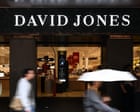
David Jones entering voluntary administration marks a brutal turning point for Australian retail, putting thousands of jobs on the line and virtually guaranteeing a wave of permanent store closures across the country. While surface-level reporting blames inflation and sluggish consumer spending, the actual story runs much deeper. The collapse of Australia’s oldest department store is the culmination of a decade-long identity crisis, crippling commercial leases, and a catastrophic misreading of how modern shoppers spend money. For workers, suppliers, and landlords, the fallout will reshape the physical footprint of major Australian shopping centers for years to come.
To understand how an institution founded in 1838 ended up in the hands of administrators, you have to look past the checkout counter. Department stores operate on a fragile economic model that relies on high foot traffic, massive square footage, and healthy profit margins on mid-tier apparel and homewares. When any single pillar of that equation cracks, the entire building shakes. At David Jones, all three pillars gave way simultaneously.
The Structural Rot Behind the Administration
Voluntary administration is not an overnight accident. It is a legal mechanism used when a company’s directors realize they can no longer pay their debts as they fall due, effectively freezing creditor claims while external accountants decide whether to restructure the business, sell it off in pieces, or liquidate it entirely.
For years, David Jones suffered from a chronic mismatch between its operating costs and its actual revenue per square meter. Legacy department stores occupy the largest, most prominent spaces in major central business districts and suburban malls. Those spaces come with astronomical fixed overheads—rent, utilities, staffing, and inventory holding costs—that do not shrink just because foot traffic drops by twenty percent.
Consider the mechanics of a traditional department store floor plan. Roughly half of the space is dedicated to concessions—brands like Chanel, Ralph Lauren, or Dyson that essentially rent floor space and pay David Jones a percentage of sales. The other half consists of wholesale goods bought outright by the retailer, alongside private-label brands. Concession models provide steady, low-risk income, but the margins are capped. Wholesale and private-label goods offer higher potential margins, yet they carry immense inventory risk. When fashion trends shift or the weather stays warm into May, the retailer gets stuck with mountains of unsold winter coats that must be marked down by fifty percent just to clear the racks. That discounting destroys profitability.
The Illusion of the Luxury Pivot
Over the past decade, various ownership groups—most notably South Africa's Woolworths Holdings, which bought the chain in 2014 before selling it to private equity firm Anchorage Capital Partners in 2023—tried to rescue the brand by pushing it upmarket. The strategy looked logical on a spreadsheet. If online retailers like Amazon and The Iconic were eating away at basic apparel and electronics, David Jones would become an exclusive luxury destination.
It was a costly miscalculation. True luxury shoppers do not want to buy a five-thousand-dollar handbag next to a rack of discounted polyester work shirts and a noisy kitchenware department. Global luxury houses like Louis Vuitton, Gucci, and Hermès realized this years ago, pulling back from wholesale department store partnerships to open their own flagship boutiques. In those standalone stores, the brands control the lighting, the scent, the staff training, and every cent of the retail margin.
Caught in the middle, David Jones alienated its core middle-class shoppers with prices that felt out of reach, while failing to offer the white-glove exclusivity demanded by the genuinely wealthy. You cannot be a mass-market department store and an ultra-luxury boutique under the same roof. Trying to be both left the company standing for nothing at all.
Why Private Equity Ownership Changed the Math
When Anchorage Capital Partners acquired David Jones, the deal was widely viewed by retail analysts as a classic turnaround play—or, more cynically, a real estate and balance-sheet restructuring exercise. Private equity firms do not buy distressed retailers out of nostalgia for heritage brands. They buy them to strip out inefficiencies, renegotiate liabilities, and exit at a profit within three to five years.
In retail, the single biggest liability is almost always property leases. A store locked into a fifteen-year lease signed during a retail boom becomes an anchor dragging the parent company underwater when consumer habits shift. Under normal trading conditions, landlords rarely agree to tear up profitable contracts. Voluntary administration changes the rules of engagement entirely.
Administrators possess statutory powers under Australian corporate law that ordinary executives do not. Specifically, they can disclaim onerous property leases, effectively walking away from unprofitable suburban stores without triggering the massive penalty clauses that would normally apply outside of administration. While landlords can lodge claims as unsecured creditors for lost future rent, they typically receive only cents on the dollar.
This is why store closures are an absolute certainty rather than a mere possibility. A leaner, profitable version of David Jones might consist of twelve or fifteen flagship locations in high-income metropolitan corridors—think Elizabeth Street in Sydney or Bourke Street in Melbourne—rather than forty sprawling stores scattered across outer suburbs and regional centers where demographics no longer support high-end retail.
The Human Toll on Retail Workers and Suppliers
Behind the corporate restructuring sits an immediate, devastating reality for thousands of retail workers. Department stores are major employers, relying on a mix of full-time career staff, part-time parents, and casual students to keep massive multi-level stores running seven days a week.
During an administration, employees are technically classified as priority creditors, meaning unpaid wages, accrued annual leave, and redundancy entitlements rank ahead of unsecured suppliers and landlords. If the company lacks the cash to cover these payouts, the federal government’s Fair Entitlements Guarantee scheme usually steps in as a safety net for eligible workers. Yet that legal protection does little to soften the immediate shock of losing a livelihood during a tight job market.
Regional and outer-suburban store closures hit hardest. In a major city center, an experienced retail manager can often transition to a standalone luxury boutique or a competing chain within weeks. In a suburban shopping center, the closure of a major department store removes hundreds of local retail jobs at once, flooding the immediate area with job seekers competing for a shrinking pool of hospitality and specialty retail roles.
Suppliers face an even bleaker financial outlook. Unlike employees, trade creditors—the local fashion labels, cosmetics distributors, and homeware importers that stock the shelves—sit near the bottom of the creditor hierarchy. When a major retailer enters administration, unpaid invoices for stock delivered over the previous sixty to ninety days are instantly frozen.
For a small Australian clothing label that relied on David Jones for forty percent of its seasonal revenue, a frozen six-figure invoice is not an accounting inconvenience; it is an existential threat. Many suppliers also find themselves trapped in legal disputes over Retention of Title clauses—contractual terms stating that the supplier still owns the physical goods until they are paid for in full. In the chaos of an administration, proving which specific dresses or blenders on a warehouse pallet belong to which unpaid vendor becomes a logistical nightmare, often forcing small businesses to write off huge losses just to move on.
The Landlord Domino Effect in Shopping Centers
The collapse of an anchor tenant sends shockwaves straight through the commercial property sector. For decades, major shopping center owners—companies like Scentre Group, Vicinity Centres, and GPT—built their entire architectural layouts around two anchor tenants, usually David Jones at one end and Myer at the other.
Those anchors were never the primary profit centers for mall owners; in fact, department stores traditionally paid drastically lower rent per square meter than small specialty shops. Their job was to act as magnets, pulling shoppers through the doors so they would walk past dozens of high-rent jewelers, phone repair kiosks, and fashion boutiques along the way.
When a David Jones closes, that magnetic pull vanishes overnight. Specialty retailers located in the wing adjacent to a shuttered department store routinely see foot traffic plummet by thirty to forty percent. Worse still, many specialty retail leases contain "co-tenancy clauses"—provisions that allow smaller tenants to demand rent reductions or terminate their leases early if a major anchor tenant leaves the center.
Landlords are now stuck with massive, awkward concrete boxes spanning ten thousand square meters across multiple levels. You cannot easily lease that kind of footprint to a single replacement tenant in 2026. Instead, property owners have to spend tens of millions of dollars carving the dead department store space into smaller footprints for gyms, medical clinics, entertainment venues, supermarkets, and fast-fashion giants like Zara or Uniqlo. That conversion takes years, leaving gaping dead zones in the middle of once-thriving malls.
Did Online Shopping Actually Kill the Department Store?
It is easy to point at e-commerce as the primary culprit, yet that explanation lets retail executives off the hook too easily. Online shopping has existed for over twenty-five years. Retailers that adapted early—by integrating their physical inventory with seamless digital fulfillment, offering click-and-collect within an hour, and building personalized loyalty ecosystems—survived and thrived.
David Jones, like many legacy department stores globally, treated its website as an afterthought for far too long. For years, its digital storefront felt clunky, plagued by inaccurate stock counts where items listed as available online were actually sitting buried in a suburban stockroom with no system to pick and pack them efficiently.
Even as the company invested millions into catching up digitally, it ran straight into the brutal economics of online fulfillment. Shipping a single pair of shoes or a discounted toaster across a continent as vast and sparsely populated as Australia eats directly into retail margins. When customers order three sizes of the same dress online and return two of them for free, the retailer absorbs double shipping costs plus the labor required to inspect, steam, and restock the returned garments. E-commerce grew top-line revenue while quietly hollowing out bottom-line profit.
The Generational Shift in Spending
Beyond logistics, consumer psychology has fundamentally changed. Younger shoppers—Millennials and Gen Z—do not view department stores as aspirational temples of commerce the way their parents and grandparents did.
To a twenty-five-year-old shopper, walking through a cavernous, fluorescent-lit store filled with dozens of competing brands feels overwhelming and dated. They discover products through social media algorithms, buy directly from brand websites, or shop secondhand through resale platforms. When they do visit a physical store, they want an experience, community, or immediate convenience—not a maze of perfume counters and static mannequins.
Meanwhile, older, loyal customers who grew up with the David Jones brand have aged out of their peak spending years. Retirees buy fewer work suits, fewer formal dresses, and fewer household appliances. The brand failed to replace its aging customer base with a younger generation, leaving it stranded on a shrinking demographic island.
What Happens Next in the Administration Process
Over the coming weeks, the appointed administrators will run a rapid, forensic triage of the entire business. Every single store, distribution center, and corporate department will be graded on its cash-flow contribution.
Stores that are marginally profitable or losing money will be marked for immediate closure, triggering massive clearance sales designed to convert physical inventory into cash as quickly as possible. While shoppers will inevitably flock to those liquidation sales looking for bargains, the discounts signal the dismantling of the company rather than a revival.
Simultaneously, the administrators will test the market for buyers. Because the entire chain proved unviable in its current form, any potential buyer will likely cherry-pick only the most profitable flagship locations, the brand name, and the e-commerce database, leaving the administrators to wind down the remaining leases and corporate debts.
If no buyer emerges willing to take on even a slimmed-down version of the business, the administration will pivot straight to liquidation—the permanent erasure of a 188-year-old retail name from Australian streets.
The Sobering Reality for Australian Retail
The crisis at David Jones serves as a stark warning for every legacy retailer still clinging to twentieth-century business models. Heritage, brand recognition, and prime real estate offer zero protection when unit economics stop making sense.
Rival Myer faces many of the exact same structural headwinds, even if its balance sheet currently looks more stable. High wages, rising energy costs, relentless discounting cycles, and shifting consumer priorities have squeezed traditional retail margins down to razor-thin levels.
For consumers, the practical takeaway is immediate: anyone holding a David Jones gift card or credit note should spend it right away, as administrators frequently restrict gift card redemptions or require customers to spend matching cash amounts during insolvency proceedings. For the broader retail industry, the lesson is far harder to swallow—scale without profitability is simply a faster way to go broke.