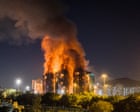
Hong Kong’s top leader has issued a formal public apology following a catastrophic residential fire that claimed 168 lives, acknowledging severe institutional failures in building safety enforcement and emergency response oversight. For decades, urban safety advocates warned that the city’s aging high-rise infrastructure and dense subdivided housing created a powder keg waiting for a spark. That warning has now materialized into one of the deadliest urban disasters in the territory's modern history.
The apology came after days of mounting public grief and intense scrutiny from lawmakers, structural engineers, and surviving families. While government officials initially framed the blaze as an isolated tragedy driven by freak circumstances, investigative pressure forced a sharp reversal. The chief executive’s statement marks a rare admission of systemic accountability from an administration typically insulated from direct blame. Yet for residents living in thousands of similarly compromised buildings across Kowloon and Hong Kong Island, words from Government House do little to clear blocked fire exits or replace faulty alarm systems.
How a Single Spark Became a Mass Casualty Event
High-rise fires in dense cities rarely turn fatal on this scale unless multiple safety barriers fail simultaneously. In modern fire engineering, compartmentation is the primary defense against vertical spread. Concrete floors, fire-rated doors, and sealed utility shafts are designed to trap heat and smoke within a single unit for at least one to two hours, giving firefighters time to reach the floor and evacuate residents.
When investigators examined the aftermath of the 168-fatality blaze, they found that compartmentation had effectively collapsed before the first fire engine arrived.
Subdivided flats—known locally as tong fau partitions—played a central role in accelerating the disaster. To maximize rental yields in the world’s most expensive property market, landlords routinely carve single 600-square-foot apartments into four or five windowless cubicles using cheap plywood, thin drywall, and unsealed PVC piping. When fire breaks out in one cubicle, these non-fire-rated materials act as kindling rather than barriers. Worse, illegal modifications frequently puncture load-bearing walls and ventilation ducts to run makeshift electrical wiring and plumbing, creating hidden chimneys that funnel superheated toxic gases directly into upper floors.
Smoke, not flame, kills the vast majority of high-rise fire victims. Modern synthetic furniture, foam mattresses, and plastic wall coverings release hydrogen cyanide and carbon monoxide within minutes of ignition. Once smoke enters an unpressurized stairwell because a fire door has been propped open with a brick or removed entirely to accommodate storage, the building’s primary escape route transforms into a lethal gas chamber.
The Regulatory Blind Spot in Aging Private Buildings
Hong Kong boasts some of the strictest building codes in Asia for new commercial developments. The disconnect lies in the enforcement gap governing private residential buildings constructed between the 1950s and 1980s.
Under the Fire Safety (Buildings) Ordinance, owners of older composite and domestic buildings are legally required to upgrade fire service installations—such as automated sprinkler systems, emergency lighting, and pressurized hydrants—to modern standards. On paper, the legislation is thorough. In practice, compliance has stalled for years.
Consider a hypothetical example of how this bureaucratic paralysis plays out in a typical 14-story walk-up in Yau Ma Tei or Sham Shui Po. Suppose the building contains 80 individual units owned by 80 different landlords, many of whom are elderly retirees living on fixed incomes or absentee investors operating through shell companies. To install a rooftop water tank and a pressurized sprinkler system, the owners must first form an Owners' Corporation, agree on a contractor, collect millions of Hong Kong dollars in levies, and obtain structural clearance from the Buildings Department. If a third of the owners refuse to pay or cannot be located, the project freezes. The government issues advisory letters, extends deadlines, and occasionally levies minor fines that cost far less than the renovation itself.
The Inspection Bottleneck
The Fire Services Department and the Buildings Department operate under chronic manpower constraints relative to the sheer volume of aging stock. Out of tens of thousands of older private buildings across the territory, only a fraction undergo proactive, unannounced physical inspections each year. Most enforcement relies on complaint-driven reporting.
Tenants living in subdivided units rarely file complaints. Reporting an illegal fire hazard to authorities almost always triggers a demolition order against the landlord, which results in the immediate eviction of the tenant. Faced with the choice between living next to a blocked stairwell or sleeping on the street, low-income residents stay silent.
What the Official Apology Actually Changes
Political apologies in Hong Kong carry specific procedural weight, even when critics dismiss them as damage control. By publicly accepting responsibility for the regulatory lapses surrounding the 168 deaths, the administration has effectively locked itself into a set of mandatory policy shifts that cannot easily be walked back once media attention fades.
First, the apology clears the political hurdle for establishing an independent statutory inquiry or a high-level interdepartmental task force with subpoena powers. Previous fatal fires—such as the 1996 Garley Building blaze that killed 41 people and the 2011 Fa Yuen Street market fire that killed nine—led to major overhauls of commercial and street-stall regulations. Those tragedies resulted in mandatory fire-door upgrades for commercial towers and strict licensing for hawker stalls. Residential subdivided housing, however, remained politically untouchable because aggressive enforcement would displace tens of thousands of working-poor residents with nowhere else to go.
Second, the government has signaled that it will expand direct intervention powers. Under current proposals, rather than waiting years for fragmented building owners to organize repairs, the Buildings Department and Fire Services Department will step in to execute mandatory fire-safety upgrades directly, recovering the costs from owners afterward through property liens.
The Limits of Government Intervention
Even with aggressive political will, the physical realities of Hong Kong’s older districts impose hard limits on how fast buildings can be made safe.
Many 60-year-old tenements simply lack the structural load capacity to support heavy rooftop water tanks required for modern sprinkler systems. Narrow alleys packed with parked vehicles and street-level shop extensions physically block standard aerial ladder trucks from positioning close to building facades. In these neighborhoods, firefighters often have to haul heavy hoses up ten or twelve flights of narrow concrete stairs on foot while navigating pitch-black, smoke-filled landings cluttered with bicycles, cardboard boxes, and discarded appliances.
Furthermore, aggressive crackdowns on illegal subdivisions without a parallel increase in transitional public housing risk creating an immediate homelessness crisis. Every time inspectors seal off an unsafe floor, displaced families simply move two blocks away into another uninspected building with identical hazards.
Lessons from Global High-Rise Disasters
The tragedy in Hong Kong mirrors painful lessons learned in other global cities where rapid urban density collided with deregulated or poorly enforced building maintenance.
Following the 2017 Grenfell Tower fire in London, which killed 72 people, British investigators uncovered a systemic culture of "value engineering"—cutting costs by substituting flammable exterior cladding for fire-resistant materials—paired with a "stay put" evacuation policy that failed once fire breached the exterior envelope. That disaster forced the United Kingdom to overhaul its entire building safety regime, outlawing combustible cladding on high-rises and creating a dedicated Building Safety Regulator with criminal enforcement teeth.
Similarly, after the 2010 Jing'an apartment fire in Shanghai killed 58 people, authorities discovered that unlicensed welders working on exterior insulation had ignited polyurethane foam while building fire alarms and sprinklers were turned off during renovations. The aftermath prompted nationwide bans on flammable exterior insulation and strict criminal liability for project contractors.
Hong Kong’s challenge is uniquely stubborn because the hazard is not concentrated on the outside of a single tower or at an active construction site. It is distributed across thousands of privately owned interior partitions hidden behind ordinary apartment doors.
Immediate Warning Signs in High-Density Buildings
While systemic reform moves through legislative committees, residents living in multi-story residential blocks face immediate, tangible risks. Fire safety engineers point to four observable indicators that signal a building’s passive defenses have been compromised:
- Wedged or missing fire doors: Self-closing fire doors separating stairwells from corridors must latch completely on their own. A door propped open with a wedge, tied back with wire, or missing its intumescent smoke seals renders the stairwell useless during a fire.
- Obstructed escape corridors: Storing shoe racks, bicycles, gas canisters, or commercial inventory in common hallways narrows evacuation paths and adds fuel load directly inside the exit route.
- Unsealed utility penetrations: Visible gaps around water pipes, air-conditioning conduits, or electrical cables passing through walls and floors allow toxic smoke to migrate silently from unit to unit.
- Disabled or silent alarm panels: Glass break-glass call points with missing hammers, covered smoke detectors, or main lobby fire panels flashing persistent fault lights indicate that early-warning systems are offline.
Hong Kong’s leadership has apologized for the 168 lives lost, but true accountability will not be measured at a press podium. It will be measured in the number of illegal partitions dismantled, the number of sprinkler systems forcefully installed over landlord objections, and whether the city finally prioritizes human survival over property yields before the next alarm rings.



