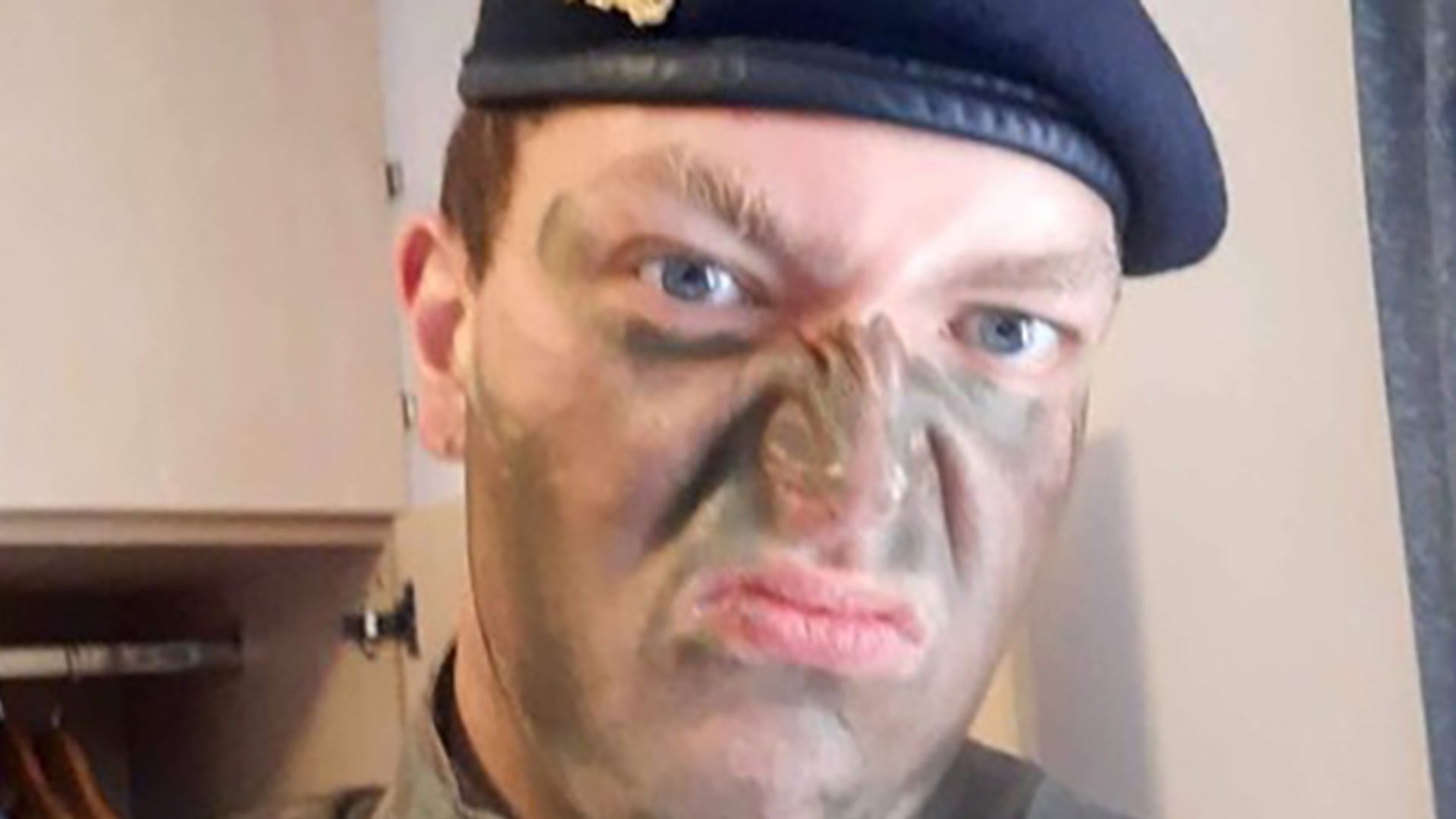
A serving British soldier found with an improvised cannon and charged with promoting extreme right-wing ideology was sentenced to prison, exposing a recurring blind spot inside modern military vetting and counter-extremism policing. Headlines tend to treat cases like this as bizarre outliers—a lone eccentric tinkering in a shed while posting hateful tracts online. Spent enough years covering defense policy and counter-terrorism courts, and you learn to read past the headline. Improvised weapons paired with extremist propaganda inside armed forces rarely begin in a vacuum. They sit at the intersection of technical curiosity, online radicalization pipelines, and institutional reluctance to confront ideological rot among personnel trained in violence.
Courts and defense authorities have wrestled for years with how to classify and punish extremists who wear a uniform. When a British soldier faces jail for possessing a homemade cannon alongside extremist material, the legal charges usually separate weapons offenses from terrorism or public-order offenses, yet investigators know the two behaviors reinforce one another. One side supplies the worldview and grievance; the other supplies the hardware or the rehearsal of hardware. Even a crude or improvised firearm or artillery piece signals intent beyond mere keyboard bravado. Prosecutors treat that combination seriously because history shows how fringe fantasies harden into physical preparation when left unchallenged.
How Improvised Weapons Meet Online Radicalization
Improvised ordnance looks absurd on paper until you examine how people build it. A homemade cannon does not require a defense contractor's cleanroom or high-grade metallurgy. Basic machining skills, accessible metal tubing, black powder or propellant substitutes, and online blueprints can produce a device capable of firing projectiles with lethal force or catastrophic barrel failure. When a British soldier has a homemade cannon, investigators do not dismiss it as a harmless toy. They test its construction, trace the materials, and look for what else was stored alongside it.
Online radicalization accelerates this progression in ways older counter-intelligence models struggled to track. Fringe forums, encrypted chats, and algorithm-fed video feeds normalize grievances around race, migration, nationhood, and perceived institutional betrayal. A soldier spending hours in those digital spaces absorbs a vocabulary of collapse and defense. Even if the individual never issues a formal operational order to a cell, the self-conception shifts from public servant to militant vanguard.
The Mechanics of Bedroom Arsenals
Homemade weapons occupy a gray zone in public imagination. People picture either a military-grade assault rifle or a rustic novelty piece meant for reenactments. Reality sits somewhere messier in between. Improvised launchers, slam-fire devices, and home-built cannons sit in a category that forensic armorers scrutinize closely because reliability is unpredictable and lethality depends on charge weight, projectile mass, and confinement.
In criminal proceedings, possession of improvised weaponry triggers scrutiny of intent. Was the device built out of mechanical obsession, survivalist posturing, or preparation for violent action? Jurors and judges look at digital search histories, chat logs, white supremacist or extreme right-wing literature, and any evidence of testing. Propaganda does not automatically prove a plot, yet it strips away plausible deniability about worldview. Together, the hardware and the ideology turn a curious tinkerer into a security risk.
Why Extremist Networks Target Service Personnel
Extreme right-wing movements have long courted soldiers, veterans, and reservists. The reason is straightforward. Military training confers weapons familiarity, tactical literacy, physical conditioning, and a sense of camaraderie that civilian life often fails to replicate. Groups obsessed with societal breakdown view trained personnel as force multipliers, even if most recruits never join an organized cell.
Recruitment rarely looks like a dramatic initiation. It often starts with memes, dark humor, shared frustration with civilian leadership, or complaints about rules of engagement and administrative bureaucracy. Extremist actors slip ideological framing inside grievances that already exist in barracks life. Once a person accepts the premise that traditional institutions have abandoned them, conspiratorial explanations start feeling like insider knowledge.
Vetting Gaps Inside Modern Armed Forces
Defense establishments pride themselves on rigorous security clearance and character screening. Yet vetting is a snapshot in time, not a continuous X-ray of a person's changing beliefs. A young recruit can enter basic training with clean records and ordinary motives, then drift toward extreme right-wing material years later through social media or off-base friendships.
Periodic reviews catch financial distress, foreign contacts, or criminal convictions more reliably than shifting ideological sympathies. Extremist reading and posting can happen quietly behind screens, outside base perimeters, or under pseudonyms. Unless someone reports concerning behavior or police uncover material during an unrelated investigation, command chains may remain completely unaware of what is happening in a soldier's private life.
The Reluctance to See Ideological Rot
Institutions dislike admitting that their own ranks harbor hatred. Admitting a problem invites political scrutiny, media criticism, and uncomfortable questions about unit culture. Historically, defense organizations have preferred framing misconduct as individual bad behavior rather than a broader cultural vulnerability.
That instinct carries a cost. When commanders treat extreme right-wing sympathies as mere eccentricity or edgy politics, early warning signs get brushed aside. Jokes about minorities, flirtations with ethno-nationalist slogans, or obsessive fixation on civil unrest get written off as harmless blowing off steam. By the time a homemade cannon or explicit extremist promotion lands a soldier in court, dozens of smaller signals were often missed or minimized.
Discipline Versus Criminal Prosecution
Military justice and civilian criminal law overlap in ways that confuse observers outside the courtroom. A serving soldier who commits offenses involving extreme right-wing ideology or illegal weapons faces both criminal liability and service consequences, including dismissal or imprisonment depending on the severity and jurisdiction of the charges.
Jailing a British soldier sends an unmistakable message that wearing the uniform does not confer immunity or leniency. Still, punishment after the fact is a blunt instrument. Prison sentences deter some and incapacitate an immediate threat, yet they do not automatically fix the upstream conditions that allowed radicalization to mature inside or alongside military service.
What Headline Coverage Misses
Media reports on cases involving a homemade cannon and extreme right-wing views naturally gravitate toward shock value. The phrase "homemade cannon" is irresistible to copy editors because it sounds straight out of a pulp adventure. That framing is catchy, and it is also incomplete.
Focus too heavily on the oddity of the weapon, and you miss the mundane mechanics of radicalization. Most real-world security threats do not look like Hollywood masterminds with underground bunkers. They look like ordinary-seeming individuals accumulating grievances, consuming extremist media, and experimenting with dangerous tools in spare hours.
- Sensationalism obscures pattern recognition: Treating every case as a freakish one-off prevents analysts from spotting shared online ecosystems, common reading lists, or recurring behavioral warning signs.
- Hardware alone misleads: A crude device can look comical until ballistics experts explain what happens when pressure builds inside an uncertified tube.
- Ideology without action still matters: Promoting extreme right-wing views while serving erodes unit cohesion, public trust, and democratic accountability within the armed forces.
- Digital trails outlast deleted posts: Investigators routinely recover messages, browser histories, and cloud backups that suspects assumed were gone forever.
Consider a hypothetical example to see how easily blind spots form. Imagine a junior technician who is quiet at work, punctual on parade, and technically sharp in the workshop, but spends evenings on fringe channels glorifying racial conflict and building black-powder devices at home. Without a tip-off or a search warrant, routine workplace evaluations would rate that person competent and dependable right up until the moment everything unraveled.
Counter-Extremism Dilemmas in Democratic Militaries
Democratic armed forces face a delicate balancing act. They must protect freedom of thought and political privacy in ordinary life while enforcing strict standards incompatible with extremism, racism, and violence. Drawing that line cleanly is harder than drafting a policy memo.
Overreach creates its own hazards. Heavy-handed surveillance or vague definitions of extremism can chill legitimate dissent, alienate service members, or trigger claims of politicization inside the ranks. Under-enforcement, by contrast, lets hostile ideologies fester under the guise of free expression until criminal lines are crossed.
| Approach | Primary Strength | Key Limitation |
|---|---|---|
| Pre-entry vetting | Screens out obvious prior criminal or extremist records before enlistment | Cannot predict future radicalization or private online drift |
| Peer and chain-of-command reporting | Catches behavioral shifts early in daily routines | Relies on colleagues overcoming loyalty, fear, or apathy |
| Digital and intelligence monitoring | Uncovers hidden online networks and weapons acquisition | Raises privacy concerns and resource constraints |
| Criminal prosecution and prison | Delivers clear accountability and removes dangerous offenders | Acts only after unlawful acts or possession occur |
Effective counter-extremism requires combining these layers without pretending any single measure is a cure-all. Intelligence alone cannot read every mind. Criminal courts cannot arrest people for unpleasant thoughts that stop short of illegal acts or incitement. Leadership culture remains the daily test of whether extremist attitudes are confronted early or tolerated quietly.
The Broader Security Picture
Cases involving a British soldier jailed over a homemade cannon and extreme right-wing promotion sit at the edge of two worlds: domestic extremism policing and military security. Neither world owns the problem completely on its own. Extremist ideas flow freely across civilian internet platforms into military communities and back out again through veterans, family networks, and online groups.
Policymakers often debate whether extreme right-wing threats are organized or decentralized. In practice, they are frequently both. Loose networks share symbols, tactics, and grievances without needing a formal chain of command, allowing isolated individuals to act on shared scripts. A sentence behind bars closes one file, yet the underlying pipeline of grievance, propaganda, and accessible hardware remains active.
Watch how the next generation of security reviews handles cases like this. Real reform will not show up in press releases or stern speeches about zero tolerance. It will show up when a supervisor takes a quiet warning seriously before the metal is cut and the court date is set.



