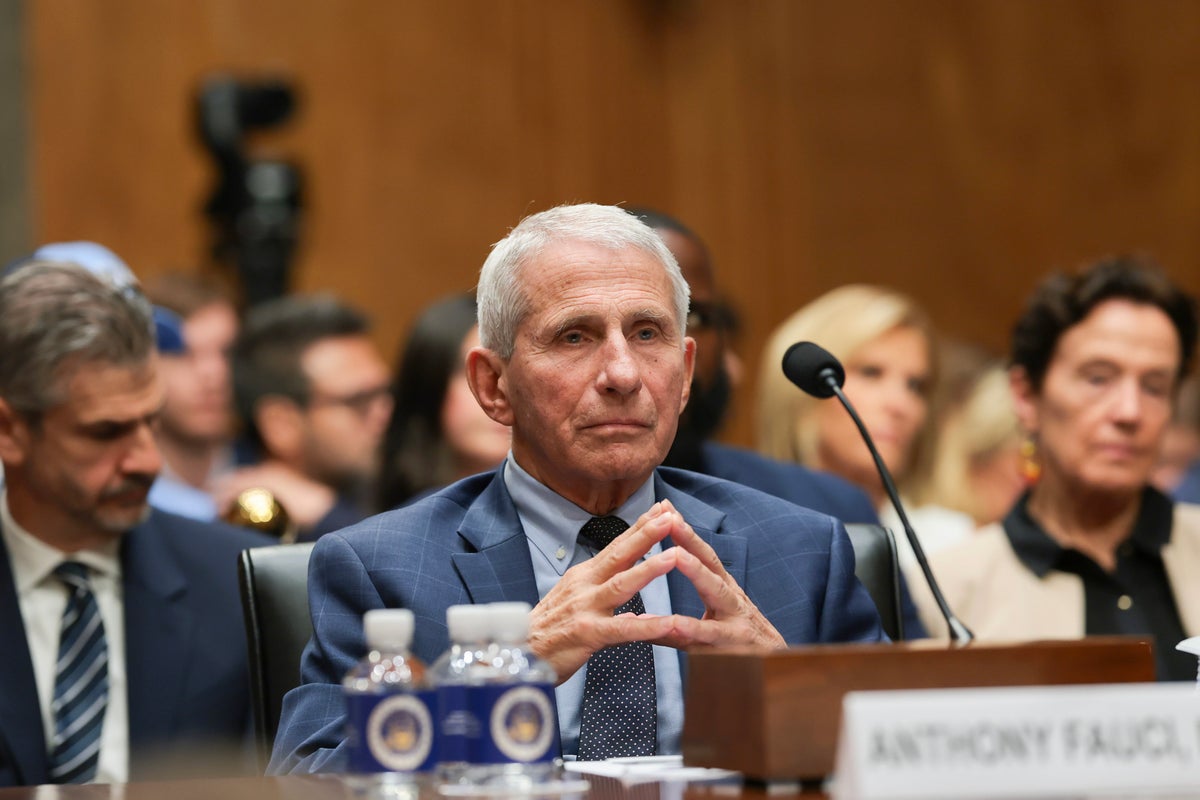
Federal investigators and prosecutors have dramatically widened their criminal and administrative scrutiny surrounding the origins of COVID-19, setting their sights directly on Dr. Anthony Fauci and a broader circle of prominent biomedical researchers. The sweeping inquiry, driven in part by FBI field offices and federal prosecutors, examines whether government scientists coordinated to suppress the lab-leak hypothesis during the critical opening weeks of 2020. This escalation turns years of partisan congressional posturing into active, hard-edged investigative casework.
The mechanics of this probe reveal a stark shift in how federal law enforcement interacts with the scientific establishment. Decades ago, public health officials operated with an almost untouchable aura of institutional deference. Today, grand juries, subpoenaed email threads, and communication logs define the interaction between prosecutors and the nation's premier infectious disease architects.
The Anatomy of an Investigation
Investigators are parsing through the digital footprints left behind during the frantic transition from winter 2019 to spring 2020. At issue is not just where SARS-CoV-2 originated, but how elite virologists communicated behind closed doors while formulating public messaging.
Subpoenas and investigative requests have targeted communication channels across multiple academic and governmental tiers. Federal agents have sought personal email records, phone metadata, and grant allocation documents from roughly a dozen high-profile scientists and administrators. This includes scrutiny over whether federal officials improperly influenced early scientific consensus papers—such as the influential "Proximal Origin" correspondence published in early 2020—which heavily discounted accidental laboratory escape scenarios.
The investigation also intersects with fallout from administrative records compliance. Recent guilty pleas by former agency insiders regarding the concealment or deletion of federal records have emboldened prosecutors. Investigators want to know if routine transparency laws were systematically bypassed to shield controversial grant funding paths, particularly financial pipelines connecting the National Institutes of Health to bat coronavirus research at the Wuhan Institute of Virology via intermediaries like EcoHealth Alliance.
The Political and Scientific Fault Lines
Within the scientific community, the reaction to these federal inquiries runs the gamut from profound apprehension to outright outrage. Defenders of Dr. Fauci and his peers view the prosecutorial push as an act of political retribution designed to criminalize policy disagreements and deflect accountability from the structural failures of the early pandemic response. They argue that chilling effect warnings are becoming reality; premier researchers may now think twice before advising governments during global health emergencies, fearing subsequent legal jeopardy if consensus shifts.
Conversely, critics and congressional investigators view the active involvement of federal law enforcement as a long-overdue accounting. For years, skeptics argued that dismissing the lab leak theory as a fringe conspiracy was an exercise in image preservation rather than pure science. To this camp, uncovering whether federal dollars funded risky gain-of-function experiments—and whether officials actively obscured those links—demands judicial clarity.
The evidentiary hurdles facing prosecutors remain steep. Proving criminal intent in the murky realm of scientific debate is notoriously difficult. Virologists revise hypotheses constantly as data trickles in; showing that an early scientific misdirection crossed the legal threshold of fraud or obstruction requires an extraordinary evidentiary chain. Furthermore, pre-emptive executive pardons issued during prior political transitions complicate the enforcement landscape for specific federal figures, shifting the focus toward document preservation, grant oversight, and secondary actors.
Beyond the Headlines
The long-term impact of these inquiries extends far beyond individual reputations. Funding structures for international biological research are undergoing unprecedented legislative and regulatory stress tests. Grant mechanisms that once operated with minimal public oversight now face fierce congressional scrutiny. Academic institutions are rewriting internal protocols regarding electronic communications and record retention, acutely aware that today's casual chat message could become tomorrow's federal exhibit.
As the legal machinery churns forward, the fundamental question of how SARS-CoV-2 entered the human population remains officially unresolved by consensus intelligence, yet the mechanisms used to manage that question are permanently altered. The era of unquestioned autonomy for public health technocrats has closed, replaced by a permanent posture of adversarial oversight.