When aviation regulators issue a national ground stop, it rarely stems from a single catastrophic failure. Instead, it is almost always the predictable result of aging digital infrastructure, centralized single points of failure, or cascading airline IT outages colliding with rigid federal safety protocols. When the Federal Aviation Administration (FAA) or a major carrier halts all departures across the country, it means the core systems responsible for flight planning, crew scheduling, or airspace safety have lost integrity. Rather than risk flying blind, the system pulls the emergency brake.
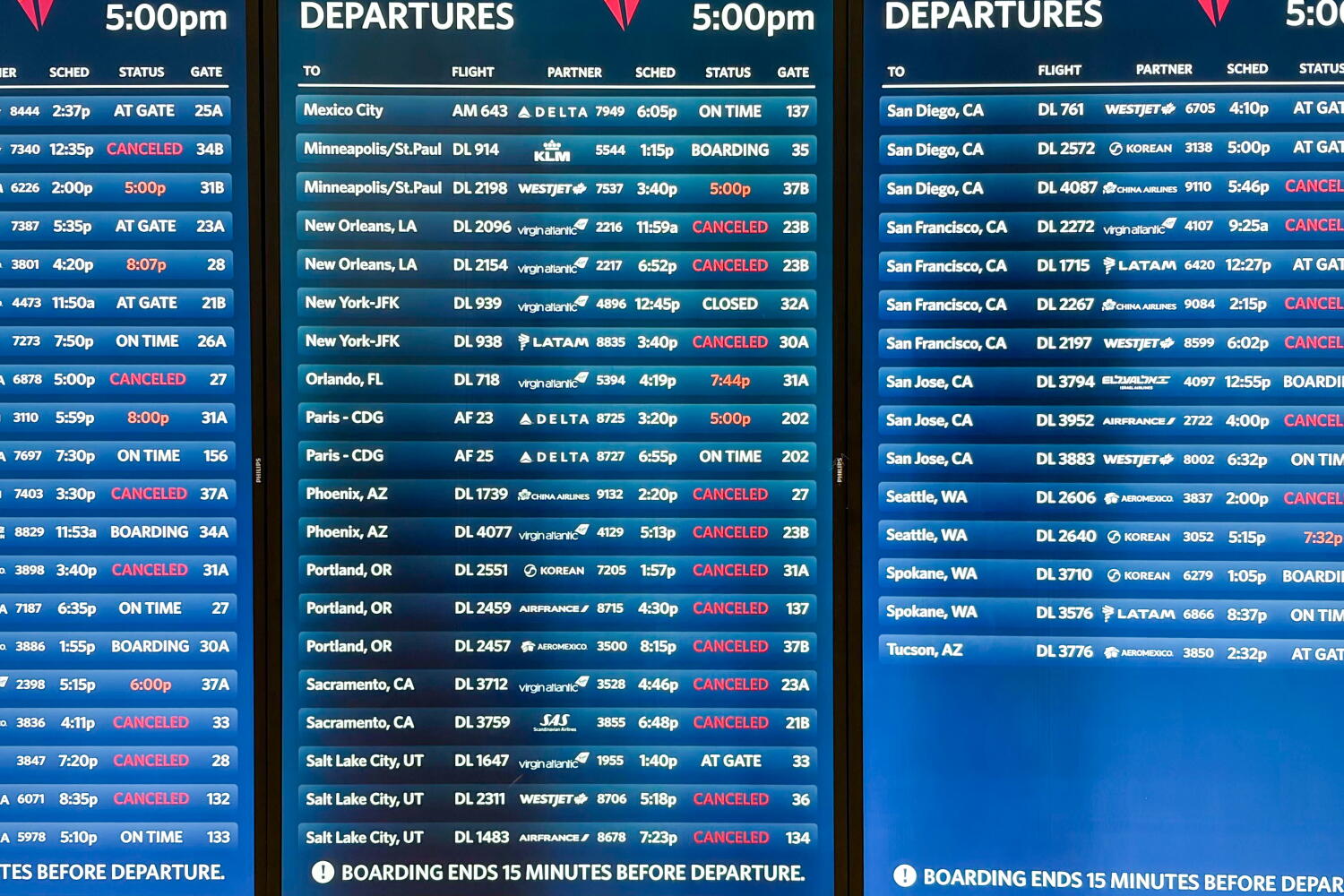
Passengers see red cancellation boards. What they do not see is a decades-old patchwork of legacy mainframe computers struggling to talk to modern cloud architectures.
How a Ground Stop Actually Works
A national ground stop is the blunt-force trauma of air traffic management. In standard operations, Air Traffic Control (ATC) uses miles-in-trail restrictions or metering programs to slow down traffic heading into congested hubs or bad weather. Those are surgical adjustments. A ground stop is total paralysis.
When the FAA’s Air Traffic Control System Command Center in Warrenton, Virginia, initiates a ground stop, no aircraft meeting the specified criteria is permitted to take off. Planes already in the air remain aloft and land normally. Planes pushing back from the gate are ordered to hold position, often shutting down engines to conserve fuel while thousands of passengers sit trapped in aluminum tubes.
The mechanism falls into two distinct categories, though the public rarely hears the difference until hours later.
- Regulatory Ground Stops: Issued directly by the FAA when the national airspace system itself is compromised. This happens during severe, widespread weather events, military airspace closures, or failures in foundational FAA safety networks.
- Airline-Initiated Ground Stops: Requested by a specific carrier when its internal operational systems collapse. An airline cannot legally dispatch a flight without verified weight-and-balance calculations, weather briefings, and crew legality checks. If an airline's dispatch server goes dark, the carrier asks the FAA to hold its fleet on the ground to prevent gridlock at airport gates.
Both scenarios produce the exact same visual chaos at terminals across the country. Yet the root causes—and the accountability—are entirely different.
The Architecture of Fragility
To understand why modern aviation grinds to a halt over a single corrupted database file or a severed fiber-optic line, you have to look under the hood of the industry’s technology stack.
Aviation safety relies on extreme redundancy. Modern commercial airliners have triple-redundant flight control computers. If one fails, two others immediately take over without the pilot even noticing. The ground infrastructure that manages those planes enjoys no such luxury.
Much of the backbone supporting North American air traffic was designed in the late twentieth century. While radar displays and cockpit avionics have been upgraded, the underlying messaging protocols and databases often run on legacy code written decades ago. Upgrading these systems is notoriously difficult because you cannot turn off the national airspace for a weekend to install a software patch. Everything must be modernized while 45,000 flights a day are actively moving through the sky.
The NOTAM Vulnerability
Consider the Notice to Air Missions (NOTAM) system, a critical feed that alerts pilots to closed runways, broken navigational aids, or temporary flight restrictions near presidential movements. For years, aviation insiders warned that the system was brittle, text-heavy, and prone to information overload.
When a database synchronization error corrupted both the primary and backup files of the NOTAM system in early 2023, the FAA had no choice. Without reliable safety notices, commercial aviation could not legally operate. For the first time since September 11, 2001, every domestic departure was halted. One corrupt file took down the entire United States aviation network.
The Airline IT Bottleneck
Commercial carriers face a parallel crisis. Over the past thirty years, waves of airline mergers stitched together incompatible computer systems. When two mega-carriers merge, they rarely rebuild their reservation, crew scheduling, and dispatch software from scratch. Instead, they build middleware—digital bridges designed to translate data between two aging platforms.
When a thunderstorm rolls through a major hub like Atlanta, Dallas, or Chicago, these stitched-together systems are pushed beyond their design limits. A hypothetical disruption illustrates how quickly this unravels. Imagine a major carrier loses power to a primary data center during a summer storm. Its automated crew-tracking software falls four hours behind real-time flight movements. Suddenly, the airline no longer knows which pilots are legally rested and available to fly. Federal regulations strictly forbid a pilot from exceeding maximum duty hours. Because the computer cannot verify legality, dispatchers must manually check spreadsheets and phone logs. Within ninety minutes, the backlog becomes insurmountable, and the airline requests a nationwide ground stop just to catch its breath.
The Ripple Effect Across the Network
A ground stop does not end when the computer reboots. In aviation, time is not linear; it is geometric.
If an airline halts operations for two hours on a Tuesday morning, the recovery does not take two hours. It takes days. Commercial aircraft are scheduled with brutal efficiency, often flying four to six legs a day with turnaround times as tight as thirty-five minutes. There is almost zero slack built into the schedule.
When planes sit idle during a ground stop, three distinct dominoes fall simultaneously:
- Gate Gridlock: Arriving flights still need places to park. If departing planes cannot leave the gates, incoming aircraft are forced to sit on taxiways. Eventually, the tarmac fills up, forcing ATC to hold inbound flights at their origin airports.
- Crew Timeout: Pilots and flight attendants are governed by strict federal rest mandates. A two-hour delay on the tarmac eats directly into a crew's maximum duty day. Even after the ground stop lifts, flights cancel anyway because the crew has legally timed out and must be sent to a hotel.
- Aircraft Displacement: The plane that was supposed to fly from Denver to Boston, and then from Boston to Miami, is still sitting in Denver. The passengers in Boston now have no airplane, even though the weather in Massachusetts is clear and the computer outage is resolved.
This cascading failure explains why an IT glitch resolved by 9:00 AM routinely triggers thousands of cancellations lasting well into Thursday afternoon.
Why Redundancy Keeps Failing
Whenever a major ground stop makes headlines, executives and regulators inevitably promise investments in "modernization" and "backup systems." The public is left wondering how a multi-billion-dollar industry lacks a working spare tire.
The uncomfortable truth is that redundancy in complex software systems often creates new avenues for failure. In traditional hardware engineering, a backup generator sits idle until the main power grid fails. In modern networked software, backup databases must constantly mirror the primary database in real time to remain useful.
If a human engineer accidentally deletes a critical routing table or deploys a flawed software update, the primary system executes the mistake—and immediately replicates that exact mistake onto the backup system within milliseconds. Redundancy protects against hardware breaking; it rarely protects against bad code or human error.
Furthermore, the aviation sector relies heavily on third-party technology vendors. A single weather-data provider, a single cloud hosting region, or a single telecommunications carrier often underpins the operations of multiple competing airlines simultaneously. When one upstream vendor suffers an outage, half the industry goes dark at the exact same moment.
The Regulatory Blind Spot
For decades, aviation oversight focused almost entirely on physical airworthiness—metal fatigue, engine reliability, pilot training, and maintenance logs. Regulators knew how to inspect a wing spar. They were far less equipped to audit millions of lines of proprietary airline dispatch code.
That regulatory gap has become the industry's Achilles' heel. While the FAA enforces strict standards on the avionics inside the cockpit, the ground-based enterprise software used by airlines to schedule crews and calculate flight plans operates with far less technical scrutiny. Airlines are businesses, and for years, capital expenditure favored customer-facing upgrades like mobile apps, lie-flat seats, and inflight Wi-Fi over invisible back-end server architecture.
Passengers tolerated the trade-off until the back-end servers began collapsing during peak travel seasons.
Surviving a National Ground Stop as a Traveler
When a national ground stop hits, standard travel advice becomes useless. Waiting in line at the airport customer service desk is a losing game; hundreds of people are ahead of you, and the agent behind the counter is staring at the exact same frozen computer screen you are.
If you find yourself caught in a systemic shutdown, speed and self-reliance dictate whether you get home that night or sleep on terminal carpet.
- Bypass the Gate Agent: Immediately open the airline’s mobile app while simultaneously calling the carrier’s international support line (such as the UK or Canadian desk), which often has shorter hold times than the main US number during a domestic crisis.
- Demand Interline Rebooking: If the ground stop is caused by an airline-specific IT failure rather than an FAA airspace shutdown, major carriers have interline agreements allowing them to put you on a competitor's flight. Agents will rarely volunteer this option unless you explicitly ask for it.
- Track the Inbound Aircraft: Do not rely on the airline’s estimated departure time, which often moves forward in fifteen-minute increments to keep passengers near the gate. Use a public flight-tracking service to find the tail number of your specific plane. If that plane has not even taken off from its previous city, your flight is not leaving on time.
- Book a Refundable Backup: If a nationwide system failure occurs early in the day, seat inventory on rival airlines will vanish within thirty minutes. Booking a fully refundable ticket on an unaffected carrier immediately gives you an exit strategy before the masses realize the scale of the outage.
Until airlines and federal agencies decouple legacy mainframes from single-point-of-failure networks, national ground stops will remain an inevitable feature of modern air travel rather than a rare anomaly.