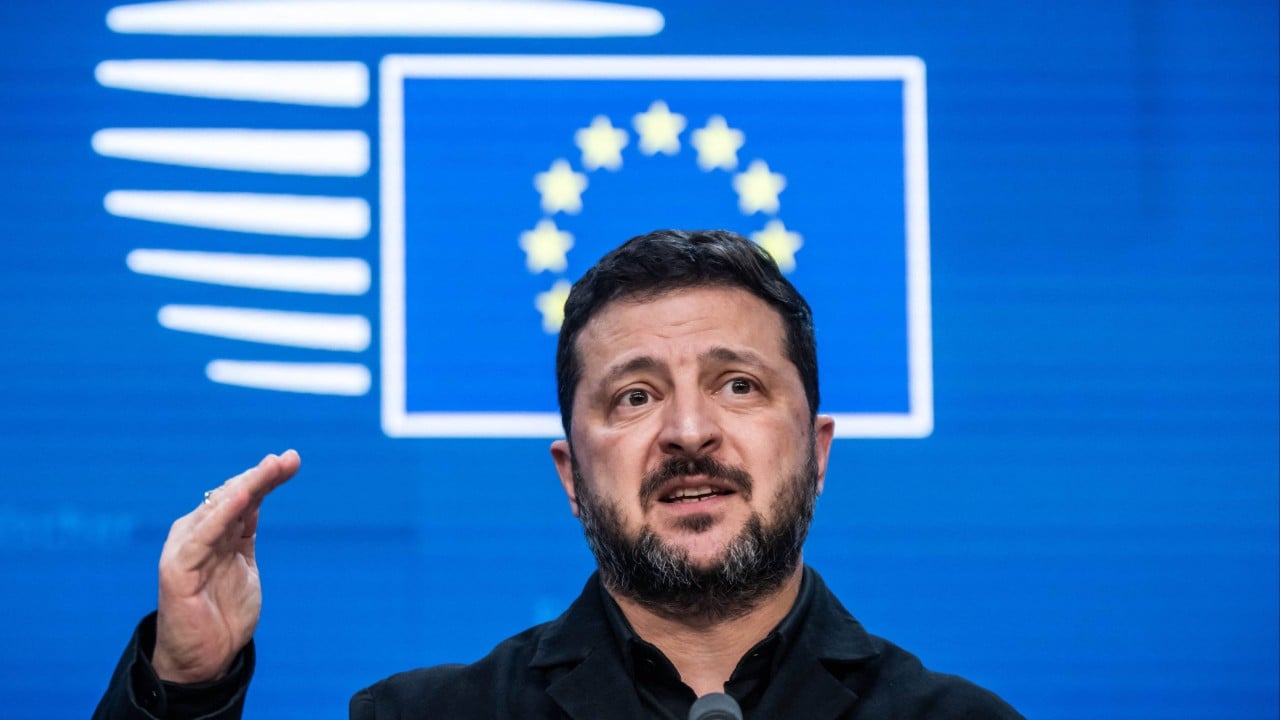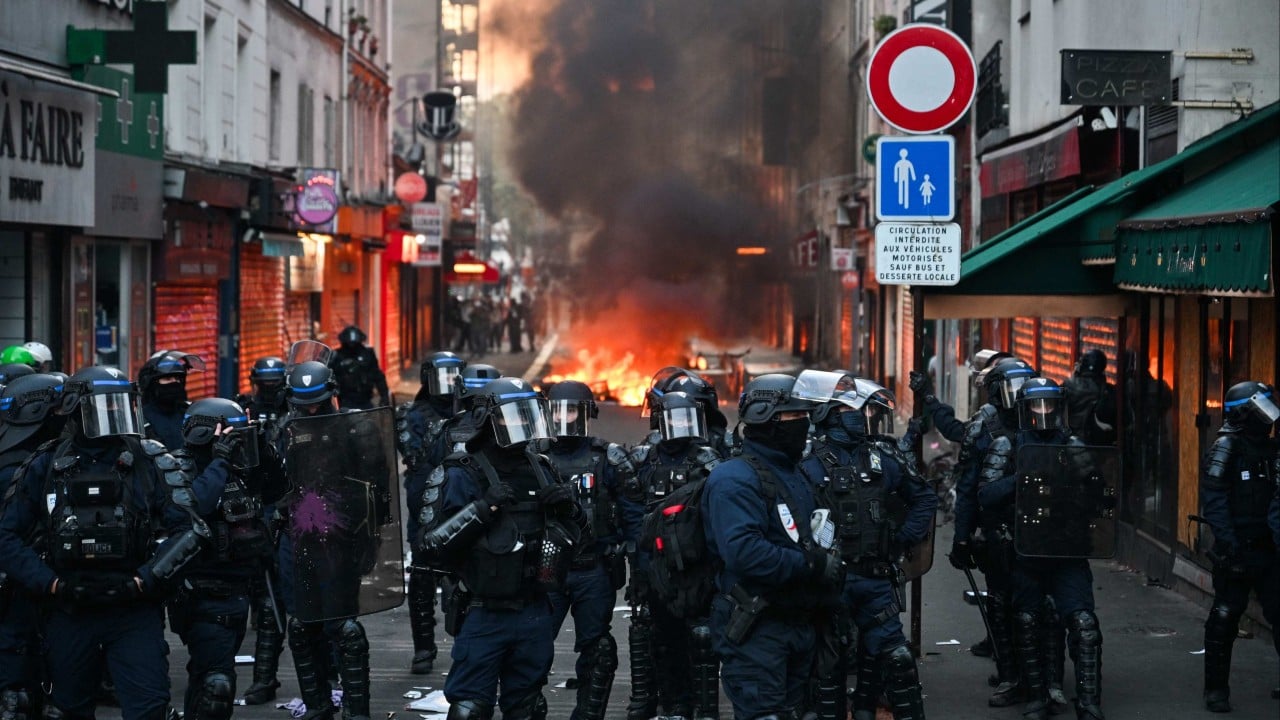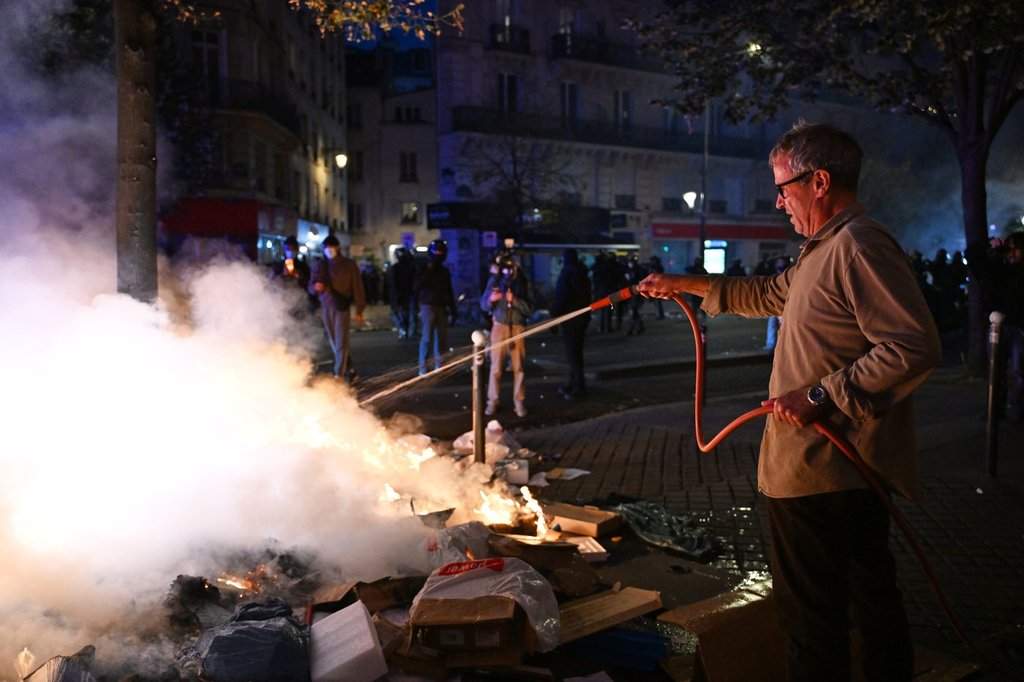
President Emmanuel Macron’s fierce condemnation of nationwide rioting following mass demonstrations in France exposes a deeper political trap: moral outrage does not substitute for state capacity or resolve structural grievances. When hundreds of thousands marched across French cities in mid-October 2026 over cost-of-living pressures, strained public services, and overcrowded schools, violent breakaway factions turned streets from Limoges and Marseille to Paris into flashpoints of arson and looting. Macron drew a sharp line between peaceful protesters and agitators accused of trying to topple the Republic. Yet his speeches arrived after municipal offices burned, shops were ransacked, and public trust in crowd control fractured.
Standard wire dispatches treat a presidential rebuke as the centerpiece of the story. Macron says violence is unacceptable; opposition figures blame the government; police tally arrests and injuries. That surface narrative misses how French street protests mutate into riots, why police deployments sometimes fail to protect key neighborhoods evenly, and how every round of disorder reshapes the electoral map ahead of the next presidential race. For a deeper dive into similar topics, we recommend: this related article.
Why French Protests Slide Into Riots
Mass mobilization in France rarely runs on a single organizational track. The autumn 2026 wave combined secondary school students angry over dilapidated facilities, long timetables, and admissions bottlenecks under Parcoursup with union workers and households squeezed by everyday expenses. Large marches create cover. Peaceful demonstrators show up to voice legitimate demands, while smaller, confrontational groups arrive looking for clashes, property damage, or chaos.
Once tear gas and stun grenades enter a crowded avenue, the dynamics shift fast. Bystanders get pushed toward volatile edges. Teenagers who came out to blockade a high school find themselves alongside older agitators or opportunistic looters who have little interest in education policy. For further context on the matter, detailed coverage is available at USA Today.
Street anger in France feeds on a bitter feedback loop: unaddressed economic and institutional strain brings crowds into the streets, heavy-handed clashes inflame resentment, and burned storefronts harden voters against the very movement that started the day.
Critics of the French policing model argue that security forces often treat demonstrations as incipient insurrections rather than civic assemblies to be safely stewarded. That posture has drawn recurring warnings from human rights monitors over munition use and injury counts among both officers and demonstrators. At the same time, local officials have pointed to the opposite problem: stretched or unevenly distributed forces leaving municipal buildings, transit gear, and small businesses exposed when violence erupts simultaneously in multiple districts.
In parliamentary testimony following the October 17 unrest, Paris Mayor Emmanuel Grégoire raised concerns over perceived disparities in enforcement across the capital, noting impressions that police intervened more heavily in western Paris while eastern districts faced severe disruption. Interior Ministry officials and Prime Minister Sébastien Lecornu pushed back against blaming law enforcement, insisting that officers faced organized violence and disproportionate hostility. Both claims can be true in part. A police force can be genuinely attacked with projectiles and fireworks while still struggling with command coordination, resource allocation, and de-escalation under pressure.
The Limits of Rhetoric and Bans
Condemnation is the easiest tool in a president’s kit. It costs nothing to say that looting is shameful or that no grievance excuses torching a town hall. Voters who watch a historic municipal building burn or a neighborhood shop stripped bare expect clarity from the Élysée.
Rhetoric alone, however, does not calm a high schooler stuck in a 35-pupil classroom or a family watching grocery and housing costs outpace wages. When grievances remain raw, condemnation without credible policy movement sounds like scolding from above.
Crackdowns carry their own hazards. Moving to ban demonstrations around sensitive sites or float proposals that hold broader protest groups or participants liable for damage may project firmness in the short term. Legal scholars and civil liberties critics warn that sweeping restrictions risk penalizing peaceful citizens for crimes committed by rioters, eroding the constitutional right to protest and feeding the very distrust that fuels street anger.
Consider a hypothetical scenario in a mid-sized French city. Suppose a scheduled afternoon march draws four thousand peaceful students and parents, while two hundred masked agitators gather two blocks away with fireworks and iron bars. If authorities blanket-ban the entire march rather than isolating the violent pocket, peaceful residents lose a lawful outlet while determined troublemakers still find ways to clash elsewhere. Conversely, if authorities allow an uncontained crowd to drift past unguarded municipal offices without clear perimeters, small acts of vandalism can snowball into hours of destruction. Neither extreme solves the underlying friction.
Who Gains When Order Breaks Down
Street violence rarely helps the center. Over decades of French politics, chaotic protests and riots have repeatedly strained moderate coalitions while handing talking points to the extremes.
On the hard right, images of burning cars, looted shops, and attacks on police reinforce demands for stricter border controls, tougher sentencing, and unyielding law-and-order measures. Figures like Marine Le Pen have long sought to convert public exhaustion with disorder into durable electoral strength. On the far left, leaders such as Jean-Luc Mélenchon frame the turmoil as the predictable fallout of government austerity, mismanagement, and heavy-handed policing, aiming to rally disaffected youth and working-class voters.
| Political Camp | Core Narrative on Unrest | Primary Electoral Risk |
|---|---|---|
| Macron & Government | Condemns rioters as threats to the Republic; defends police; offers targeted policy adjustments | Appearing reactive, out of touch, or unable to guarantee public order |
| Far Left | Blames government policies, social strain, and aggressive policing for igniting anger | Alienating moderate voters unsettled by property destruction and street chaos |
| Far Right | Emphasizes breakdown of order, threats to businesses, and need for tough authority | Drawing criticism over aggressive rhetoric or divisive scapegoating |
| Protest Unions & Students | Demands concrete fixes to school conditions, funding, and living costs while urging calm | Losing public sympathy when violent factions hijack headlines |
Polling after the October escalation underscored how volatile that realignment has become, with Le Pen holding a clear lead and Mélenchon climbing in the rankings ahead of the next presidential contest. Even when surveys show a large majority of citizens holding the government responsible for letting tensions boil over, anger at the incumbent does not automatically translate into support for calm governance.
Practical Fixes Beyond the Press Conference
If French leaders want fewer burning barricades and fewer emergency speeches after the fact, they have to separate crowd management from political theater. That starts with sharper operational planning before marches step off. Police commanders need clear intelligence, rapid containment of violent splinter groups, and equitable protection of neighborhoods and civic buildings so local mayors and shopkeepers are not left feeling abandoned.
Equally important is opening real negotiation channels before frustration reaches a boiling point. When the Lecornu government moved later in October toward timetable adjustments and concrete reforms to Parcoursup, student leaders welcomed tangible movement even while keeping pressure on the administration. Tangible policy concessions take oxygen away from street escalation far faster than a stern television address.
A republic does not stay standing on speeches alone. It holds together when citizens believe the rules apply fairly, the state can protect ordinary people without crushing peaceful dissent, and grievances get answered before the first window breaks.