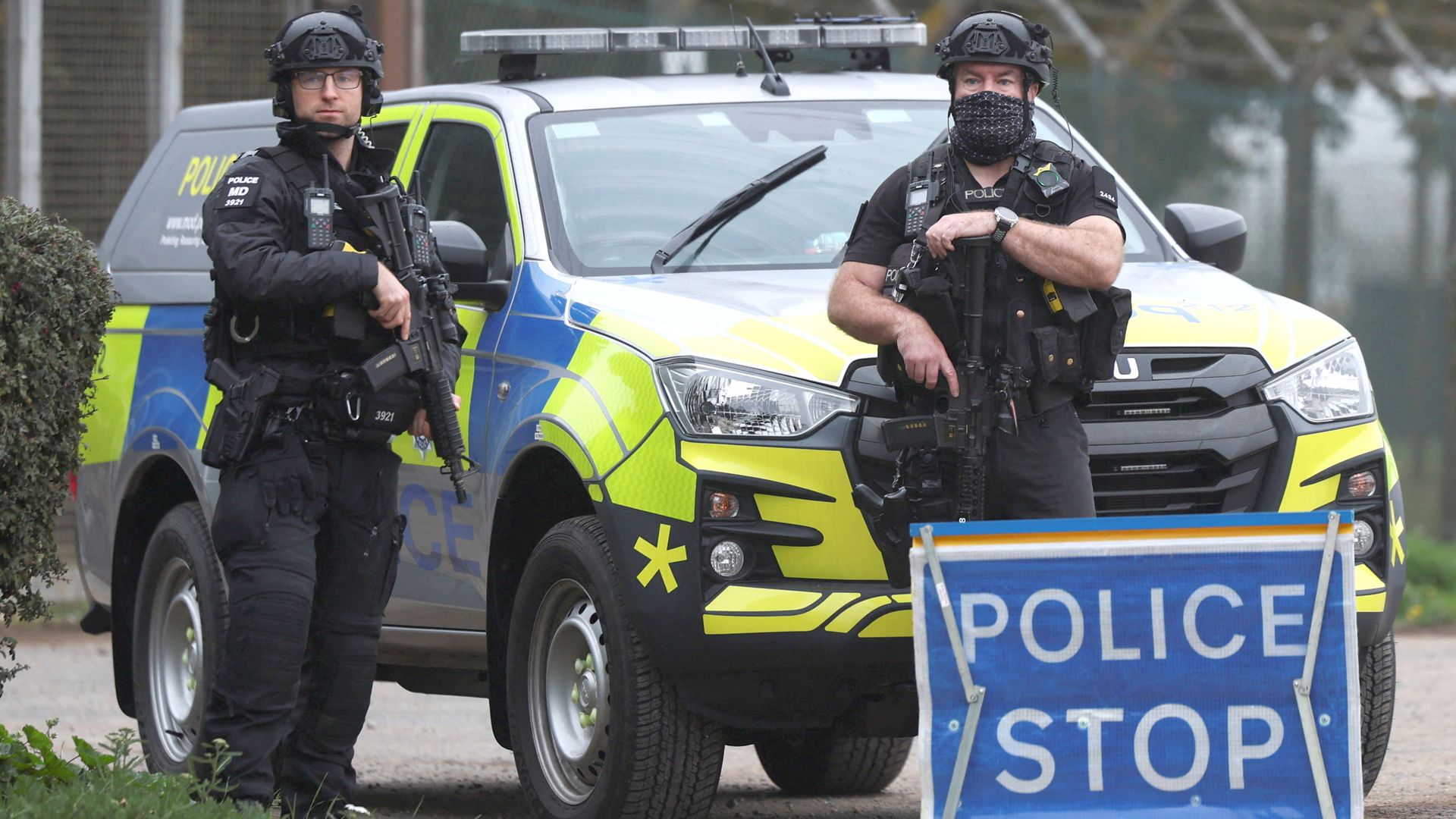
Security breaches at critical military installations rarely happen in a vacuum. When counter-terrorism police descended on Gloucestershire following an alert near RAF Fairford, the operation triggered immediate international shockwaves. The base, regularly used by United States Air Force heavy bombers, suddenly found itself at the center of a geopolitical firestorm.
What began as a tense response to suspicious vehicles quickly spiraled into a complex national security investigation. Multiple arrests followed across London, drawing high-level scrutiny from Downing Street and intelligence agencies on both sides of the Atlantic. Recently making news in related news: The Final Shadow on the Tigris.
Unpacking the Timeline of the Alert
The sequence of events around RAF Fairford exposed vulnerabilities in how vital defense hubs handle immediate threats. Local residents faced strict lockdowns and evacuations as bomb disposal teams examined vans recovered near the perimeter. Authorities later confirmed that while no traditional explosive devices were inside those vehicles, a significant quantity of petrol was recovered.
That discovery shifted the operational focus completely. Investigators weren't just looking at a localized trespass or a minor security lapse. They were staring down the barrel of a coordinated sabotage plot. More details on this are detailed by The Washington Post.
The Foreign State Connection
British officials didn't hesitate to point fingers. Prime Minister Andy Burnham publicly stated that there were strong indications pointing toward state-backed coordination, specifically naming Iran's Islamic Revolutionary Guard Corps. Unsurprisingly, the Iranian embassy rejected the claims outright, dismissing them as unfounded speculation.
Yet subsequent legal developments told a much deeper story. Investigators rearrested suspects under the National Security Act, focusing squarely on individuals accused of assisting a foreign intelligence service. Further light was shed when international indictments, including filings from United States prosecutors, exposed wider networks directing proxy operations targeting Western and allied military infrastructure.
Why This Incident Changed Base Security Permanently
Incidents of this magnitude force immediate operational overhauls. The presence of foreign proxies attempting to probe military readiness serves as a harsh wake-up call for defense planners. Following the scare, strategic assets like heavy bombers were temporarily repositioned, demonstrating how seriously military commanders take threats of localized arson or sabotage attacks.
Public vigilance plays a massive role in stopping these plots before they materialize. Counter-terrorism units continue to urge anyone noticing unusual reconnaissance or suspicious behavior near sensitive sites to report it immediately. The legal proceedings moving through the courts underline a sobering reality. Modern security threats rarely look like traditional invasions. Instead, they rely on local proxies, encrypted communications, and calculated operational pacing designed to test the limits of domestic defense networks.