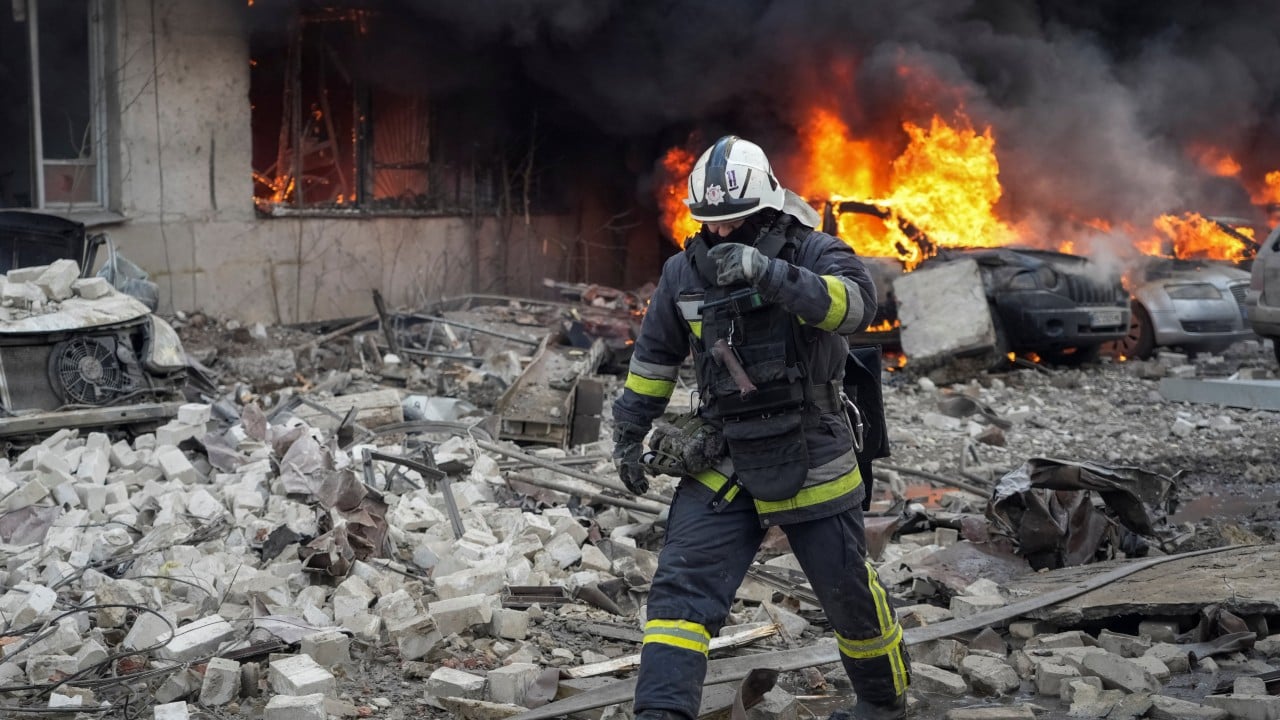
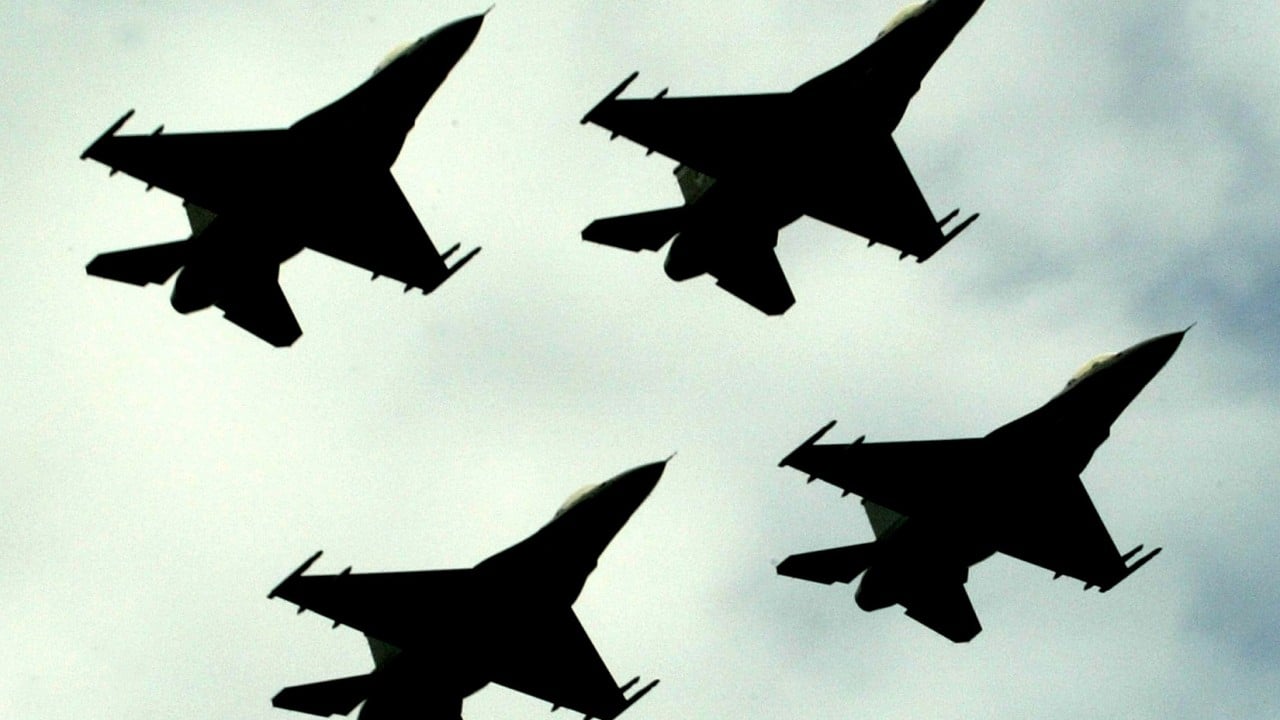
President Donald Trump is openly threatening to "destroy the rest" of Iran, telling reporters in the Oval Office that Tehran will "know soon enough" whether Washington chooses total escalation or a Qatari-brokered nuclear settlement. Behind the characteristically blunt ultimatum lies a severe strategic bind. Eight months into an armed conflict that began with joint American and Israeli strikes in late February 2026, the White House is caught between an incomplete military campaign, a crippled Strait of Hormuz choking global energy supplies, and a bruised Republican party looking for an exit ramp after losing control of Congress in the November midterm elections.
The rhetoric is designed to project absolute control. It masks deep uncertainty.
When Trump stood before cameras on November 5 to declare that the United States controls "everything that we want to control" inside Iran, he was speaking just forty-eight hours after voters delivered a stinging rebuke to his party at the ballot box. The administration's central challenge is no longer merely degrading Iranian nuclear infrastructure. It is figuring out how to conclude an open-ended war without handing Tehran the diplomatic breathing room to rebuild, and without triggering another wave of global inflation that could sink conservative political prospects for the remainder of the decade.
The Illusion of Total Control
To understand why the Oval Office is oscillating between apocalyptic warnings and quiet diplomatic backchannels, one has to look at the gap between political messaging and battlefield reality. Since launching Operation Epic Fury alongside Israel's Operation Roaring Lion on February 28, Washington and Jerusalem have hammered Iranian nuclear sites, naval assets, and missile depots with thousands of munitions. Trump has repeatedly asserted that Iran's nuclear ambitions have been set back twenty-five to thirty years.
Yet an aerial bombardment campaign, no matter how massive, rarely produces clean political surrender.
Even after months of sustained strikes, Iran retains enough asymmetric capability to keep the region on edge. In the days surrounding Trump's November warning, Islamic Revolutionary Guard Corps forces continued to harass maritime traffic, reporting that two oil tankers caught fire after striking mines while using unauthorized routes in the Strait of Hormuz. Meanwhile, Iranian missile stockpiles, though heavily depleted, have not been eliminated. The administration's claim that Tehran is "not doing anything without our approval" clashes directly with the reality of burning tankers and stalled shipping lanes.
This is the core dilemma of air-dominant warfare. You can flatten above-ground facilities, destroy air defenses, and sink surface fleets. Forcing a hardened ideological leadership to sign an instrument of capitulation without putting hundreds of thousands of ground troops into hostile territory is an entirely different proposition. Trump's question to reporters—"Do we want to go further and certify it, meaning it'll never happen again?"—is an implicit admission that previous rounds of bombing did not permanently settle the question.
What "Certifying" Destruction Actually Means
When Washington insiders talk about going further to "certify" that Iran can never build a weapon, they are referring to a specific set of target lists that the Pentagon has largely held in reserve until now.
During the spring and summer phases of the conflict, U.S. and Israeli planners focused heavily on military installations, enrichment centers, and naval infrastructure. Aside from brief, fierce threats in April to target Iranian bridges and power plants during disputes over maritime access, the coalition stopped short of systematically dismantling the civilian economic backbone of the Islamic Republic.
Escalating to "destroy the rest of the country" would mean crossing that threshold.
- Energy and Grid Infrastructure: Knocking out domestic power generation, refineries, and fuel distribution networks would paralyze a nation of nearly ninety million people, risking humanitarian collapse and massive internal displacement.
- Deeply Buried Bunkers: Reaching the deepest subterranean enrichment halls requires sustained, repetitive penetrator strikes that carry high operational risks and uncertain battle-damage assessments.
- Regime Leadership and Internal Security: Targeting the administrative and policing apparatus of the state directly could fracture central authority, potentially leading to either a sudden collapse or a chaotic multi-front civil conflict on the borders of Iraq, Turkey, and Pakistan.
The risks of this next tier of escalation are enormous. Iran has already warned that renewed large-scale attacks would trigger retaliation without geographic boundaries. Regional allies in the Gulf, who have spent the last eight months absorbing the economic shockwaves of a disrupted energy corridor, have little appetite for a scorched-earth campaign that could turn their own desalination plants and oil terminals into retaliatory targets.
The Qatari Backchannel and the Enrichment Trap
While the president projects maximum lethality from the Resolute Desk, his envoys are actively studying a very different off-ramp. Mediators in Doha have spent weeks shuttling proposals between Washington and Tehran aimed at freezing the conflict in exchange for verifiable nuclear restrictions and phased sanctions relief.
The mechanics of the Qatari track highlight the central contradiction in U.S. policy.
Officially, Trump insists that whatever paper Tehran is reviewing "doesn't make a difference" because Iran will never be permitted a nuclear weapon under any circumstances. Practically, the administration needs a formal verification mechanism if it wants to declare victory and pull back. Bombing rubble does not provide long-term intelligence visibility; only international inspectors on the ground or binding technical caps can confirm whether surviving centrifuges and enriched uranium stockpiles have been neutralized.
Before the war began in February, technical assessments from arms-control observers noted that Tehran was using its higher-enriched uranium stockpiles primarily as diplomatic leverage, signaling a willingness to dilute or ship material abroad if crippling economic sanctions were lifted. Eight months of war have hardened positions on both sides. Hardliners in Tehran argue that surrendering their remaining nuclear ambiguity while under fire amounts to suicide, while hawks in Washington and Jerusalem warn that any deal leaving Iran's clerical establishment intact merely buys the regime time to recover.
Furthermore, a fundamental divergence has emerged between Washington and Jerusalem over the war's ultimate end state. Israeli leadership has long viewed the weakening of the Islamic Republic as an existential necessity, with voices in Jerusalem pushing for the complete toppling of the regime. Trump, by contrast, has described regime change as something that is "probably doable" while explicitly stating it is not his primary objective. For the White House, the war is transactional: neutralize the nuclear threat, reopen the maritime chokepoints, and get out before the domestic political bill grows any larger.
How the Midterm Elections Changed the Math
Foreign policy never happens in a vacuum, and the timing of Trump's latest ultimatum is inseparable from what happened in American voting booths on November 3.
The 2026 midterm elections handed Democrats control of Congress in a sweeping defeat for the GOP. Post-election analyses and voter surveys pointed overwhelmingly to two intertwined grievances: the stubborn cost of living at home and an unpopular foreign war abroad. When Iranian retaliation throttled tanker traffic through the Strait of Hormuz earlier in the year, global crude prices spiked, feeding directly into gasoline prices and consumer inflation across the United States.
Even Trump acknowledged in post-election interviews that the conflict played a role in the Republican losses, at one point framing public frustration around the price at the pump rather than the military campaign itself.
The political fallout has immediately hit the Pentagon. Defense Secretary Pete Hegseth now faces fierce pushback from an incoming Democratic House majority, with House Minority Leader Hakeem Jeffries backing impeachment efforts over the administration's handling of the war and its messaging. At the same time, Hegseth is lobbying lawmakers to approve a massive $1.5 trillion defense funding request intended to replenish munitions expended in the Middle East and rebuild force readiness.
In the Oval Office, Trump has publicly stood behind his defense chief, praising Hegseth's performance and blaming institutional resistance on fired senior officers. Behind closed doors, however, the new congressional arithmetic constrains the White House. While a president retains broad constitutional authority as commander-in-chief to order airstrikes, sustaining a prolonged, multi-billion-dollar war effort becomes dramatically harder when an opposition-controlled Congress holds the power of the purse and subpoena authority.
This creates a narrowing window for the administration. Before the new Congress is seated in January, Trump has roughly two months of unfettered legislative room to either force a dramatic diplomatic breakthrough or execute a decisive final military blow that allows him to declare the mission accomplished.
The Limits of Strategic Ambiguity
Trump has always treated unpredictability as his sharpest negotiating tool. By refusing to rule out either total destruction or an immediate peace agreement, he aims to keep Iranian decision-makers off balance, convincing them that stalling in Doha will bring B-2 bombers back over Tehran within hours.
The danger of prolonged ambiguity is that it cuts both ways.
When a leader repeatedly announces that a conflict will wrap up "very soon"—as Trump did in March, April, and again ahead of the autumn elections—adversaries learn to discount the rhetoric and wait out the clock. Iran's leadership knows that every week the Strait of Hormuz remains contested, global energy markets stay jittery and political pressure mounts on Washington to settle. Conversely, if Tehran miscalculates and assumes the midterm losses have paralyzed the White House, it risks provoking an overwhelming strike from a president eager to prove he has not lost his edge.
Allies in the region are watching this high-wire act with growing unease. Gulf capitals that have quietly facilitated talks between Washington and Tehran fear that an abrupt collapse of the Qatari mediation track will leave them exposed to Iranian drones and economic disruption without a clear American exit strategy. Meanwhile, the human toll continues to climb, with eighteen American service members already killed in the conflict and thousands of Iranian military and civilian casualties mounting across a battered country.
Whether the White House chooses the Qatari draft or orders the Pentagon to execute its final target list, the decision will define the remainder of Trump's second term. You cannot bomb a country into permanent compliance while simultaneously begging the global oil market to stay calm, and no amount of Oval Office bravado can erase the basic math of an unfinished war.