When Donald Trump hosted Xi Jinping at Mar-a-Lago, the mainstream press fixated on trade deficits and missile strikes. They completely missed the real power play unfolding right in front of them. Peng Liyuan commanded the room without uttering a single public sentence of policy. Mainstream observers dismissed her appearances as mere fashion diplomacy or decorative window dressing. That lazy dismissal represents a profound misunderstanding of modern authoritarian statecraft. Peng functions as an elite instrument of foreign projection, carefully deployed to soften the sharp edges of Beijing's geopolitical ambitions. Her presence at high-stakes summits is not accidental decoration. It is a calculated exercise in influence operation designed to disarm foreign adversaries and consolidate nationalist pride back home.
The Architecture of Presidential Charm
Examine the historical precedent of Chinese first ladies. Prior to Peng, figures like Jiang Qing wielded overt, destructive political power during the Cultural Revolution, while others remained entirely invisible behind closed doors. Peng changed the baseline entirely. As a celebrated folk singer and a major general in the People’s Liberation Army, she brought a pre-existing celebrity status straight into Zhongnanhai. When she stood beside Xi Jinping during international tours, she carried institutional authority rooted in her own prominent career.
The Trump summit magnified this dynamic in unexpected ways. While American political spouses often navigate social or charitable agendas that remain distinct from executive policy, Peng operates in absolute lockstep with the Communist Party's external communication strategy. Every silk gown, every tea ceremony, and every polite nod is meticulously vetted through state propaganda apparatuses. It is highly choreographed projection. Nothing is left to personal whim or spontaneous impulse.
Beyond the Wardrobe Choices
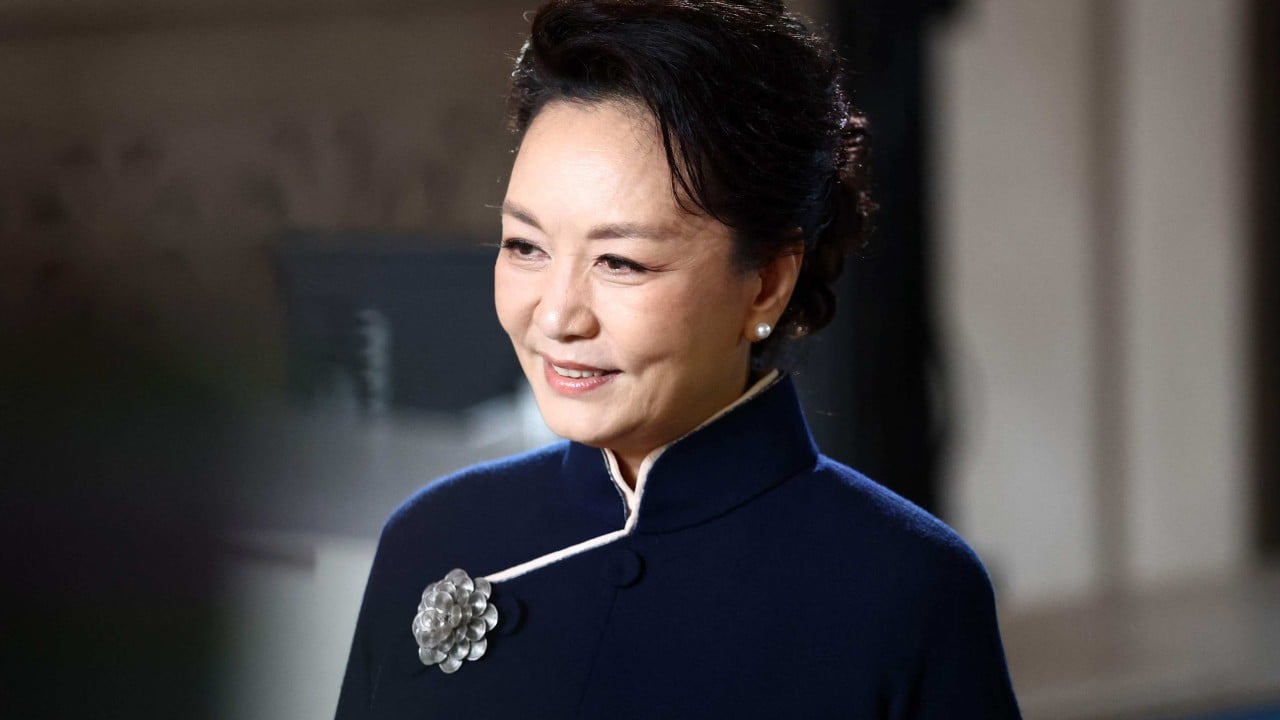
Western commentators obsess over hemlines. They write breathless columns about custom-tailored silk coats and traditional Mandarin collars. This persistent fixation misses the mechanical reality of state image-making. Fashion here acts as industrial policy. By championing domestic luxury brands rather than traditional Parisian or Milanese houses, Peng signals aggressive economic nationalism. She showcases the manufacturing capability and aesthetic maturity of Chinese design to rival Western luxury monoliths on the global stage.
During the Florida summit, her attire communicated quiet confidence. She did not attempt to mirror American fashion norms or adopt Western couture to appease local tastes. Instead, she asserted a distinct aesthetic sovereignty. This is deliberate branding. It tells domestic audiences that China sets its own cultural terms of engagement, even inside a private Florida resort owned by an American billionaire populist.
Weaponizing Cultural Familiarity
Soft power relies heavily on recognition and emotional empathy. Diplomacy between superpower rivals is inherently tense, transactional, and fraught with the constant risk of miscalculation. Personal chemistry can alter the immediate weather of a negotiation, even if underlying structural conflicts remain entirely intractable. Peng provides an accessible human face to a political system that foreign publics often view as opaque, rigid, and authoritarian.
Her background as an artist provides instant cultural capital. When she visits schools, museums, or local cultural sites during summits, she bypasses the rigid protocols of bureaucratic state visits. She creates viral media moments. These moments feed both foreign media appetites for human interest stories and domestic propaganda needs back in Beijing. The foreign audience sees a gracious guest; the domestic audience sees a global icon representing Chinese excellence.
The Domestic Imperative Behind International Optics
Foreign policy begins at home. Xi Jinping understood that projecting strength abroad requires an equally potent image of harmonious leadership on the domestic front. In a political culture where public displays of affection or private family lives of senior leaders are strictly guarded state secrets, the presidential couple represents a modern, stable nuclear family unit. Peng humanizes the supreme leader.
For millions of citizens raised on decades of austere revolutionary imagery, a charismatic first lady offers a softer point of identification with the state. When state television broadcasts her graceful interactions with foreign dignitaries, it reinforces a relentless narrative of national dignity and civilizational revival. The message broadcast across state networks is simple and unambiguous. China has arrived, and its leaders command global respect with poise and elegance.
Navigating the Trump Administration Disruption
The Xi-Trump encounter was uniquely volatile. Traditional diplomatic norms meant little to an American president who viewed international relations through the lens of zero-sum trade realignments and media spectacle. In that chaotic environment, conventional diplomatic channels frequently broke down or suffered from erratic executive Twitter announcements.
Peng’s role became even more critical as a stabilizing aesthetic counterweight. While the two delegations clashed over steel tariffs, currency manipulation, and intellectual property theft, the imagery of the first ladies sharing quiet moments shielded the summit from total public fracture. It provided an essential escape hatch for journalists looking for positive narratives amidst hostile trade negotiations. It demonstrated that charm can insulate high-level talks from immediate collapse.
The Cost of Managed Performance
Perfection is exhausting. It is also entirely restrictive. Every gesture is cataloged, analyzed, and weaponized by commentators on both sides of the Pacific. There is no room for human error or spontaneous deviation from the scripted routine. When an individual becomes a living symbol of national prestige, personal autonomy vanishes completely.
Peng Liyuan’s glittering public profile masks a total institutional capture of personal identity. Every smile is state property. Every public appearance is weighed against intense geopolitical risk. Beneath the polished exterior lies an unyielding state apparatus that leaves nothing to chance