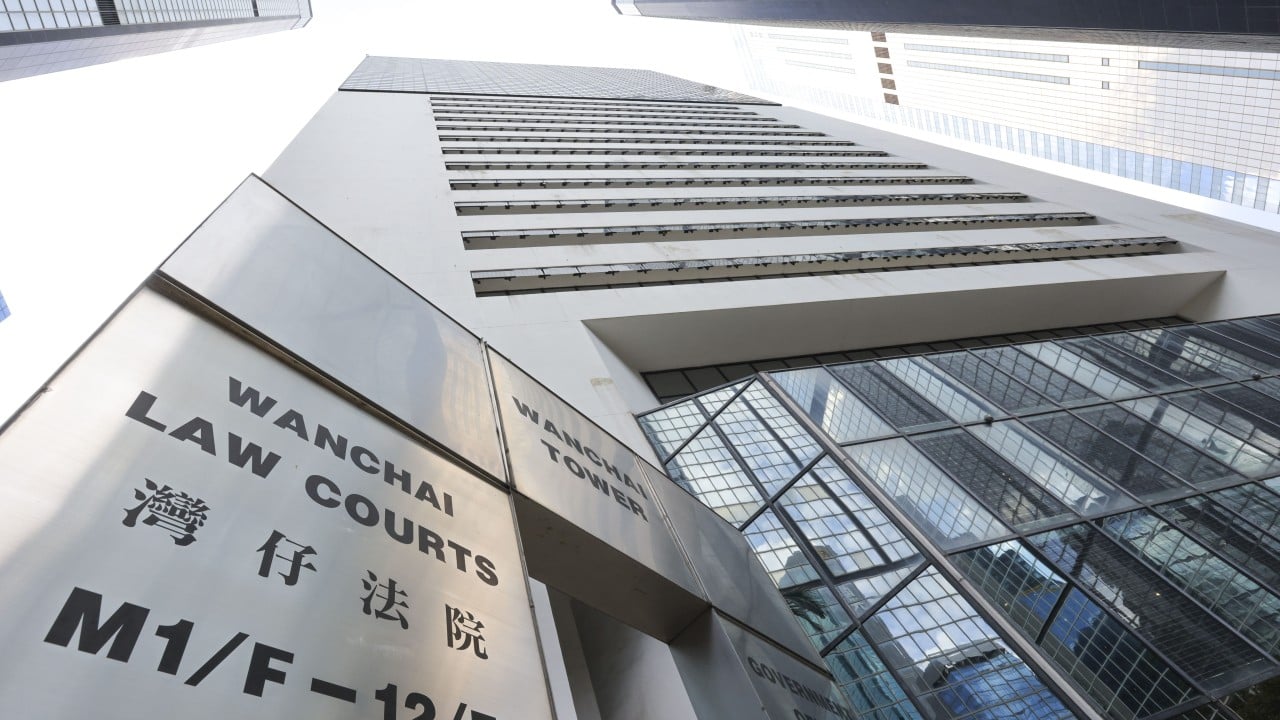
An injured Hong Kong delivery rider is fighting to take his compensation claim to a full trial, challenging the long-standing classification of gig workers as independent contractors. The legal dispute centers on whether major digital delivery platforms exercise enough operational control over couriers to be legally recognized as employers, a distinction that dictates access to statutory injury compensation, sick leave, and minimum wage protections under Hong Kong law.
For years, the on-demand economy in Hong Kong has operated on a tidy legal fiction. Platforms recruit thousands of couriers, outfit them in branded thermal bags, track their GPS coordinates down to the second, and penalize them for rejecting orders. Yet when a scooter slides out on wet asphalt in Kowloon or a cyclist is clipped by a minibus in Wan Chai, the corporate relationship evaporates. The rider is suddenly a self-employed business owner, entirely responsible for their own medical bills and lost wages.
This latest push for a full trial strikes at the heart of that contradiction. Unlike preliminary hearings or minor labor tribunal settlements that platforms routinely absorb as the cost of doing business, a full trial forces the underlying mechanics of algorithmic management onto the public record.
The Anatomy of Algorithmic Control
To understand why this case matters, you have to look at how Hong Kong's legal system determines employment status. Courts do not simply take a company's word for it because a worker clicked "agree" on an independent contractor terms-of-service screen. Instead, judges apply what is known as the overall impression test. They examine the totality of the relationship, weighing factors like control, ownership of equipment, financial risk, and integration into the business.
Platforms have historically argued that riders enjoy total flexibility. A courier can log on whenever they want, log off at will, and theoretically work for competing apps simultaneously. On paper, that looks like entrepreneurship.
In practice, the architecture of the app tells a different story. Consider a hypothetical scenario that mirrors daily reality on Hong Kong streets. A rider logs in during the lucrative Friday dinner rush in Central. The algorithm offers a batch of three orders with tight delivery windows. If the rider declines the batch because the route is hazardous or the pay is too low, their acceptance rate drops. Drop low enough, and the rider loses access to priority shift bookings the following week. They are effectively locked out of peak earning hours without anyone ever issuing a formal disciplinary notice.
This is algorithmic management, and it functions as a digital supervisor. Platforms dictate the price of the delivery, the route suggested by the GPS, the exact timeframe for pickup and drop-off, and the uniform standards expected at the restaurant door. When a company controls the when, where, and how of the work so tightly, the line between an independent contractor and an employee blurs beyond recognition.
Why a Full Trial Changes the Calculus
Most gig economy disputes never reach a full, contested evidentiary hearing. Platforms possess vast legal war chests and a strong incentive to settle individual injury claims quietly out of court. A confidential payout costs a fraction of what it would take to overhaul an entire regional business model. By settling, companies avoid setting a binding legal precedent that could be cited by thousands of other couriers.
An injured rider demanding a full trial refuses that quiet exit. A full trial means discovery. It means internal corporate documents, algorithmic weighting formulas, shift-allocation rules, and internal communications regarding rider discipline could be scrutinized by judges and opposing counsel.
Once a court examines how an app actually punishes or rewards behavior, the defense of "total flexibility" becomes much harder to sustain. In Hong Kong, the Employees' Compensation Ordinance places strict liability on employers when workers are injured in accidents arising out of and in the course of employment. If a rider is deemed an employee, the platform is legally mandated to carry insurance covering medical expenses, periodic payments during recovery, and lump-sum compensation for permanent incapacity.
Without that status, a rider with a shattered collarbone faces months of zero income while navigating public hospital queues, entirely reliant on personal savings or crowdfunded charity from fellow couriers.
The Structural Vulnerability of Hong Kong Couriers
Hong Kong's geography and urban density make food and parcel delivery uniquely treacherous. Steep gradients on Hong Kong Island, congested multi-lane thoroughfares in Mong Kok, and subtropical rainstorms create a high-risk working environment. Unlike cities with dedicated cycle lanes, Hong Kong riders share narrow roads with double-decker buses, taxis, and heavy goods vehicles.
Despite these hazards, the compensation structure incentivizes speed. Piece-rate pay models mean a courier earns money per completed drop, not per hour spent waiting at a restaurant or stuck in traffic. Every minute lost to safety precautions directly reduces hourly take-home pay.
Platforms often point to group personal accident insurance policies they provide to active riders as proof of corporate responsibility. While better than nothing, these private policies are fundamentally different from statutory employee compensation:
- Narrow coverage windows: Many platform policies only cover the exact minutes between accepting an order and marking it delivered, leaving riders uninsured while riding to a hotspot or waiting for a dispatch.
- Capped payouts: Private policies typically feature strict maximum limits on medical expenses and death or disability benefits, which fall far short of statutory calculations based on a worker's actual earnings and age.
- No wage replacement guarantees: Statutory compensation ensures a injured worker receives four-fifths of their normal earnings during temporary incapacity, a lifeline rarely matched by basic accident policies.
The Counter-Argument and Economic Reality
A serious analysis cannot ignore the legitimate economic tensions at play. Platforms are not simply hoarding massive profits out of malice; the unit economics of on-demand food delivery are notoriously brutal. Delivery fees charged to consumers rarely cover the true cost of moving a single meal across a dense city, forcing platforms to rely on restaurant commissions and venture capital subsidies to survive.
If Hong Kong courts reclassify delivery riders as full employees, the financial consequences would ripple across the entire ecosystem. Platforms would immediately face mandatory Mandatory Provident Fund (MPF) contributions, statutory holidays, paid annual leave, sick pay, and higher insurance premiums.
To absorb those costs, companies would likely slash the size of their active fleets, introduce strict shift scheduling, and strip away the very flexibility that many part-time riders genuinely value. Students, parents, and workers holding primary jobs who use delivery apps to supplement their income on weekends could find themselves shut out if platforms transition to smaller, full-time shift rosters. Consumer delivery fees would inevitably climb, dampening order volume and reducing the total pool of work available.
Global Precedents Closing In
Hong Kong is not operating in a vacuum. The legal battles playing out in its courts mirror a broader global reckoning over platform labor. In the United Kingdom, the Supreme Court famously ruled that Uber drivers are "workers" entitled to minimum wage and holiday pay, rejecting the company's framing of itself as a mere technology intermediary. Similar rulings in Spain, the Netherlands, and Australia have forced platforms to either hire couriers directly or submit to strict statutory minimum standards.
Hong Kong's Labour Tribunal has already shown signs of shifting ground. In previous disputes involving major delivery operators, tribunal presiding officers have pierced the corporate veil of independent contractor agreements, finding that certain couriers were indeed employees based on the degree of control exercised over their daily routines. However, Labour Tribunal rulings do not set binding precedent for higher courts, leaving the broader industry in a state of legal limbo.
The Stakes Beyond the Delivery Bag
The outcome of a full trial extends far beyond food couriers. A definitive ruling on algorithmic control will set the benchmark for Hong Kong's entire platform economy, affecting ride-hailing drivers, on-demand logistics workers, freelance warehouse pickers, and digital task workers.
For years, technology companies have argued that existing labor laws are outdated relics of the industrial era, ill-suited for modern app-based work. Yet the fundamental legal questions remain unchanged since the days of factory floors and dockyards. Who holds the power in the relationship? Who controls the work? And who bears the financial burden when a worker's body breaks down while generating revenue for a corporation?
If the courts grant a full trial and rule in favor of the injured rider, the era of consequence-free algorithmic management in Hong Kong ends overnight. Platforms will no longer be able to direct a workforce with precision while disowning them at the hospital door.