The assumption that regional conflicts can be neatly compartmentalized while Washington pursues a high-stakes diplomatic or economic grand bargain has always been a dangerous geopolitical delusion. When the Iran-backed Houthi movement unleashed a massive wave of ballistic missiles and explosive drones against Saudi Arabia's critical energy infrastructure, wounding over seventy civilians and temporarily halting operations at major processing facilities, they did not merely restart a dormant chapter of the Yemen war. They effectively blew a crater straight through the White House's core foreign policy calculations.
President Donald Trump’s entire posture toward Tehran has relied on a rigid premise: that maximum economic pressure, paired with targeted military operations, could force the Iranian leadership to capitulate without entangling the United States in a prolonged, multi-front quagmire. That theory is currently unraveling across the sands of the Arabian Peninsula and the churning waters of the Red Sea. By weaponizing their alliance with Tehran, the Houthis have exposed the severe limits of American deterrence. They have demonstrated that regional proxies can systematically sabotage global energy markets, spike crude prices toward triple digits, and shatter any viable pathway toward a sustainable diplomatic settlement.
Understanding how this theater of war torpedoed Washington's grand design requires looking past the superficial talking points coming out of the podiums in Washington and Riyadh. For months, the White House has insisted that its military campaign against Iran was succeeding in its objective of an economic choke-out. Yet, energy markets operate on tangible vulnerabilities, not political optimism. When maritime traffic through the Strait of Hormuz slowed to a trickle due to Iranian threats and counter-blockades, global energy flows shifted heavily toward the Red Sea and the Bab el-Mandeb chokepoint.
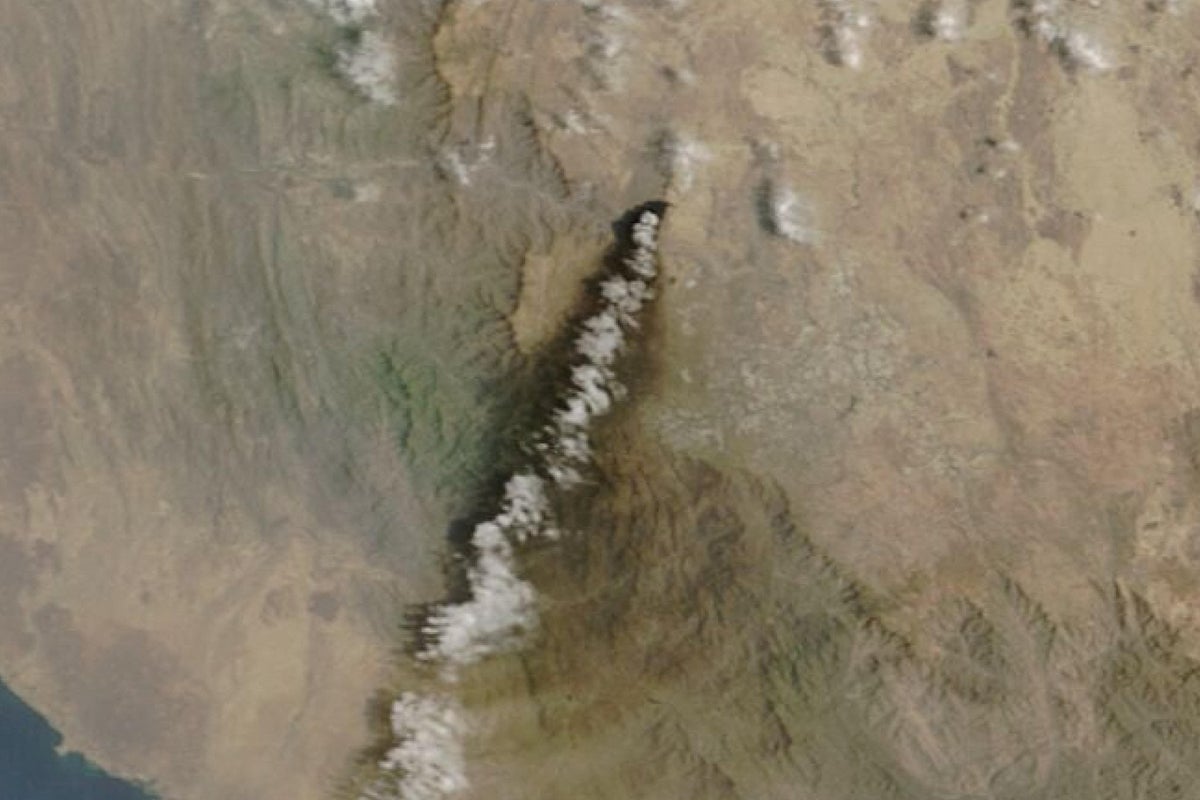
The Houthis understood this geographic pivot with brutal clarity. By targeting Saudi Aramco distribution centers and processing hubs in southern cities like Abha, Khamis Mushait, Jazan, and Najran, the rebel group struck the exact soft underbelly of the allied supply chain. Brent crude instantly reacted, climbing past ninety-eight dollars a barrel. For an American administration facing midterm elections with voters hyper-sensitive to inflationary pressures at the pump, every successful Houthi strike translates directly into domestic political pain. Trump’s public declarations that fuel costs will drop precipitously once military objectives are achieved ring hollow when satellite imagery shows smoke billowing from vital Saudi infrastructure.
The diplomatic fallout is equally severe. Washington and its partners have repeatedly maintained that direct talks or long-term structural deals with Tehran cannot proceed while regional aggression persists. Vice President JD Vance explicitly stated that the administration would refuse to negotiate with Iranian interlocutors while commercial shipping and allied territories remain under fire. Yet, this creates an intractable strategic loop. Tehran utilizes the Houthis as an asymmetric extension of its own military arm. When economic sanctions bite or U.S. strikes hit Iranian assets near the Persian Gulf, the proxy network escalates independently or by direct coordination, providing Tehran with convenient plausible deniability while completely destabilizing the Arabian Peninsula.
Consider a hypothetical diplomatic breakthrough where Washington and Tehran agree to preliminary de-escalation terms over nuclear compliance and maritime transit in the Gulf. Even if such an agreement were signed, the Houthi command structure in Sana'a answers to its own internal imperatives, ideological motivations, and localized ambitions. They are not mere puppets waiting for a phone call from Tehran to stand down; they are a hardened insurgent military force that has spent a decade fighting a coalition led by regional powerhouses and surviving. Expecting them to instantly halt a lucrative and politically potent campaign against Saudi Arabia and international shipping simply because their primary benefactor signed a paper in Islamabad or Geneva is a monumental miscalculation.
The structural flaw in the administration's approach lies in treating the Yemen conflict as a secondary theater. Decades of intervention have proven that the Arabian Peninsula cannot be pacified through airstrikes alone, nor can regional stability be achieved while millions of dollars in advanced drone and missile technology flow unimpeded from Iranian ports to the Red Sea coast. Every time the coalition attempts to push back against Houthi ground offensives near strategic ports like Mocha, the cycle of retaliation deepens. Civilian casualties mount, infrastructure burns, and the regional temperature rises another notch, drawing the United States deeper into a open-ended commitment that runs entirely counter to the president's promise of avoiding foreign entanglements.
The path forward offers no clean exits or elegant diplomatic solutions. As long as the underlying military capacity of the proxy network remains intact, the illusion of a swift diplomatic grand bargain with Iran will remain completely out of reach. Washington is discovering that you cannot secure a lasting regional architecture while ignoring the armed actors fully capable of burning down your economic strategy one drone at a time.
This video provides additional context regarding how Houthi maritime attacks force direct U.S. warnings and widen Washington's military involvement in the Middle East.