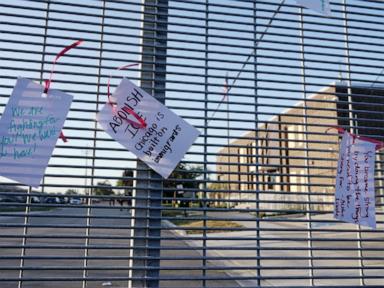
The federal justice system in Chicago is facing a credibility crisis following the explosive retirement under protest of veteran prosecutor Sheri Mecklenburg. At the center of the storm is the botched prosecution of the "Broadview Six"—a group of activists arrested after allegedly blocking an immigration enforcement vehicle outside a facility in Broadview, Illinois. What began as a high-profile demonstration quickly devolved into a systemic institutional failure, exposing deep internal fractures between career prosecutors and political appointees within the Department of Justice.
When a federal judge tossed out the case with prejudice due to gross procedural misconduct during grand jury proceedings, shockwaves rippled through the Dirksen Federal Courthouse. But the real story is not merely the dismissal of felony charges against a handful of protesters. It is the raw mechanics of an office at war with itself, where top leadership allegedly forced aggressive charging decisions behind closed doors, only to abandon career staff when the strategy collapsed.
Mecklenburg’s fiery resignation letter lays bare a toxic dynamic. According to her filing, U.S. Attorney Andrew Boutros personally directed the felony prosecution over explicit internal objections. Career attorneys initially viewed the matter as more suited for misdemeanor handling rather than a six-year felony conspiracy charge. Yet political pressure and the demand for maximum deterrence overrode standard prosecutorial discretion. When judicial scrutiny exposed grand jury irregularities—including direct interventions by leadership—the apparatus scrambled for a shield.
That shield was Mecklenburg herself.
Institutions under fire rarely admit systemic error; instead, they find a single focal point to sacrifice. Boutros’s office responded to the judicial reprimand by launching an internal review of Mecklenburg’s multi-decade career, effectively hanging a seasoned civil servant out to dry to insulate political leadership from accountability. By forcing a choice between silent professional destruction and retirement under duress, the U.S. Attorney’s Office revealed how administrative self-preservation routinely trumps institutional integrity.
This episode underscores a broader, corrosive reality plaguing federal law enforcement offices nationwide. When high-stakes politically sensitive cases intersect with career ambitions, the traditional firewall protecting prosecutors from political influence bends until it snaps. The public is left with a distorted judicial process where accountability flows downward, and the collateral damage is borne by those who built their lives inside the courthouse walls.
The fallout from the Broadview Six collapse extends far beyond Chicago. It serves as a stark reminder that when institutional power is weaponized to force predetermined outcomes, the machinery of justice inevitably breaks under the weight of its own contradictions. The resignation may be official, but the institutional wounds remain wide open.