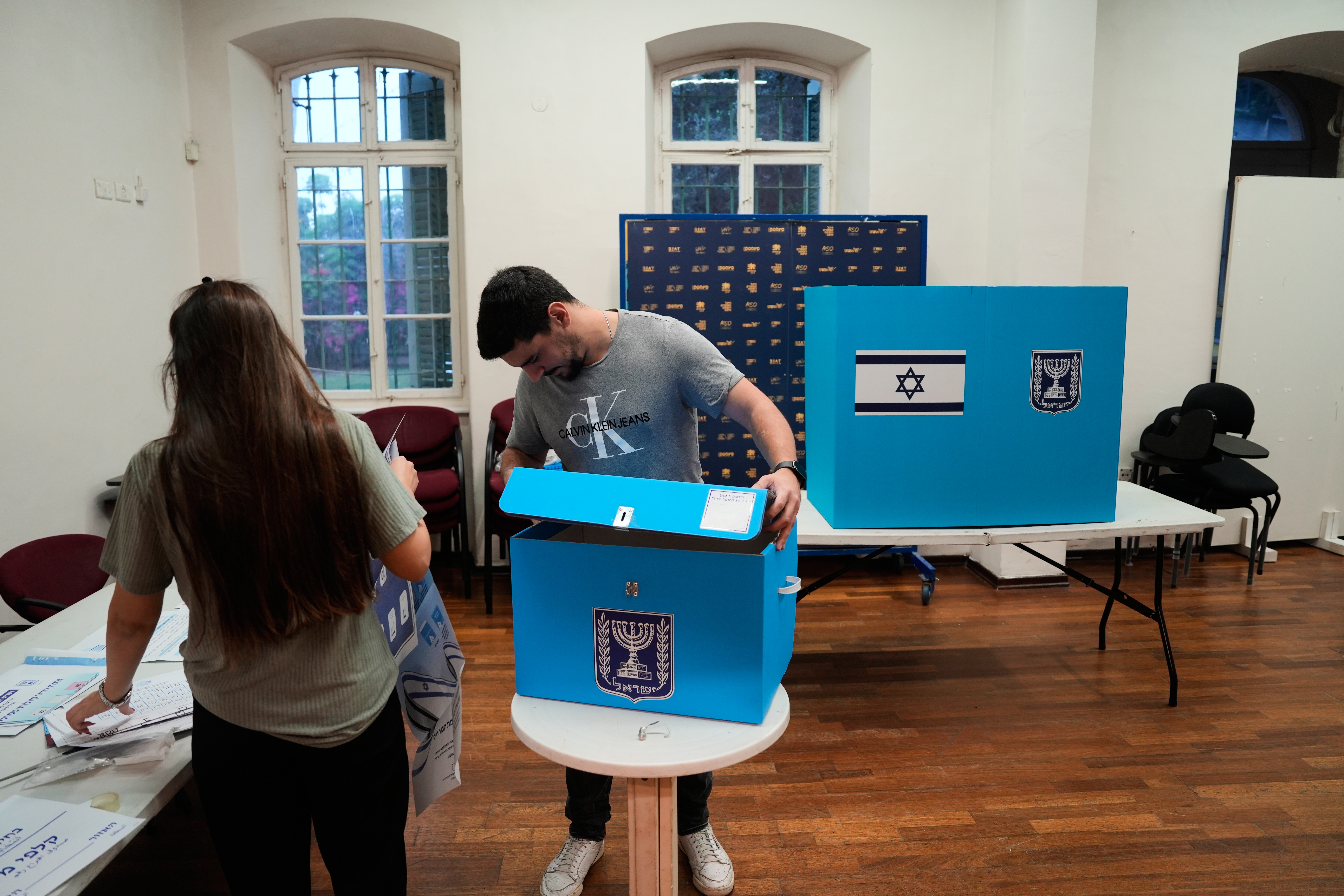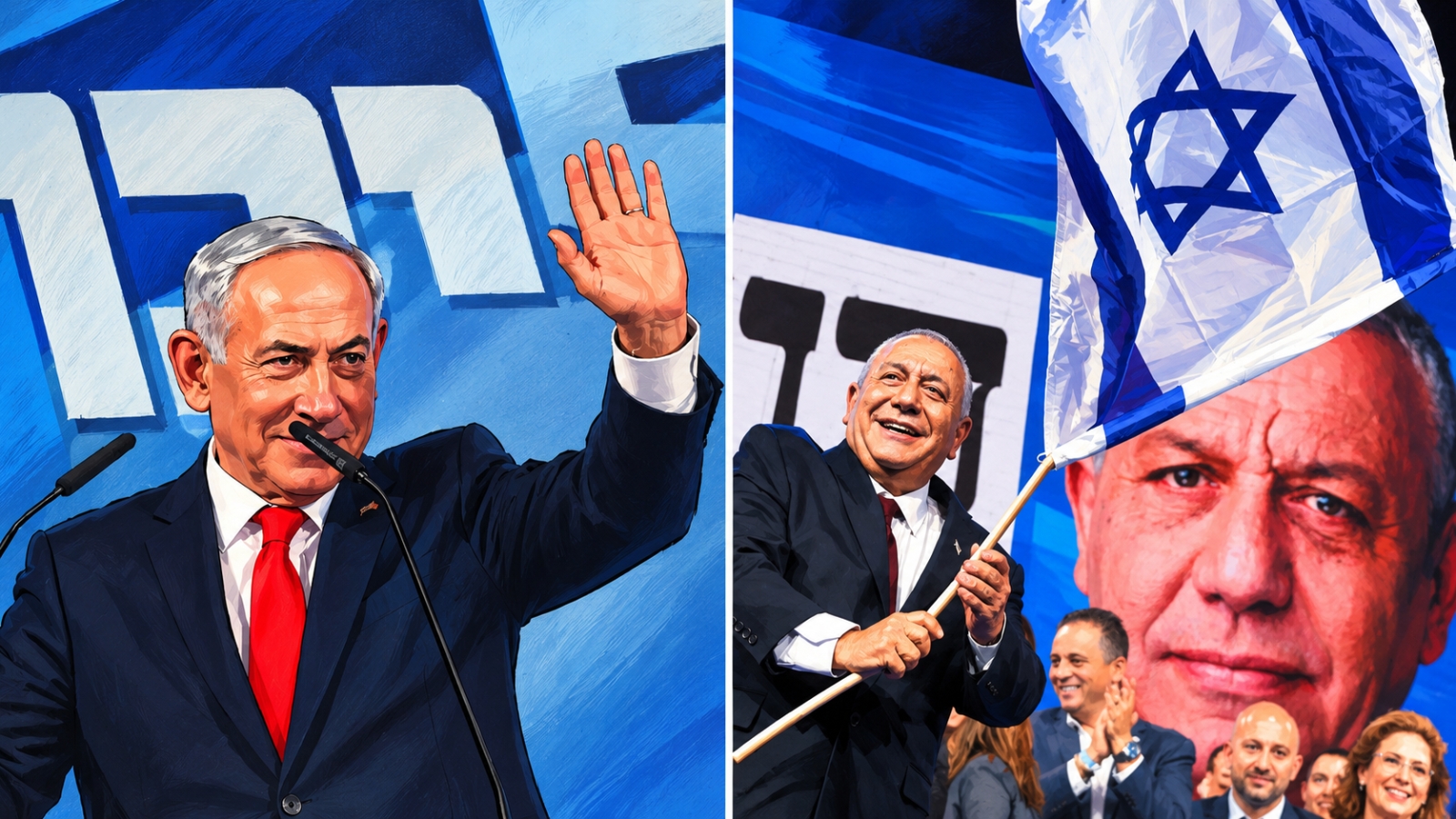
When neither Benjamin Netanyahu nor Gadi Eisenkot can clear the 61-seat threshold in Israel's 120-member Knesset, the country does not simply face a routine political delay. It enters a constitutional grind where a caretaker government holds unchecked executive inertia, coalition kingmakers demand exorbitant legislative ransoms, and the electorate stares down the barrel of yet another costly repeat election. The immediate outcomes narrow to four hard realities—a fragile national unity pact, a narrow minority government propped up by external abstentions, a defection-driven coalition built on political poaching, or the automatic dissolution of parliament.
That is the surface math. Anyone watching Tel Aviv news desks or scanning Jerusalem ticker tapes knows the numbers do not add up to a clean governing mandate. Yet reducing this stalemate to a simple counting problem misses the structural rot underneath Israeli parliamentary politics. Having covered coalition horse-trading in Jerusalem since the days when a two-party duopoly actually meant something, I can tell you the real story is not that Netanyahu and Eisenkot fell short. The story is why the Israeli electoral system is now mathematically engineered to produce permanent paralysis.
The Architecture of a Broken Majority
Israel operates under a pure proportional representation system with a single nationwide district and a 3.25 percent electoral threshold. In theory, this guarantees that every ideological sliver of Israeli society gets a voice in the Knesset. In practice, it turns every election into a zero-sum hostage negotiation where tiny sectarian and ideological factions hold veto power over national policy.
For decades, a dominant center-left or center-right anchor party could reliably pull in 35 to 45 seats, leaving only a modest gap to bridge with smaller satellite parties. Those days are dead. Fragmentation has hollowed out the major blocs, splitting the electorate along rigid tribal lines—secular versus ultra-Orthodox, judicial reformers versus institutionalists, hawks versus pragmatists, and Jewish versus Arab citizens.
When a bloc leader like Netanyahu or a prominent opposition figure like Eisenkot enters post-election negotiations without a clear 61-seat cushion, the leverage flips entirely. The major party ceases to be the driver of policy. Instead, it becomes a clearinghouse for the demands of six- or seven-seat micro-parties that threaten to blow up the talks before the ink dries on a coalition agreement.
Why the 61-Seat Threshold Has Become a Mirage
The magic number in Jerusalem is 61. Without it, a prospective prime minister cannot win a vote of confidence to swear in a new government.
Consider what happens when both rival camps stall in the mid-50s. You are left with an ideological no-man's-land occupied by parties that either refuse to sit with Netanyahu on personal and legal grounds, or refuse to sit with Eisenkot's bloc over fundamental disputes regarding military conscription, religious status quo, and security doctrine. This is not standard political posturing. These are hardened red lines reinforced by years of bitter campaign rhetoric and five chaotic election cycles between 2019 and 2022 that conditioned voters to view compromise as betrayal.
Scenario One and the Fragile National Unity Trap
The most conventional escape hatch from a Knesset deadlock is a broad emergency or national unity government uniting the largest factions from both camps. On paper, bringing Netanyahu's Likud together with Eisenkot's centrist camp instantly solves the math problem, creating a stable 70-plus-seat majority that neutralizes the extortion power of fringe partners.
History proves how badly this works in practice.
Look back at the 2020 rotation agreement between Netanyahu and Benny Gantz. Designed to steer the country through a national crisis, that coalition was dead on arrival because neither side trusted the other to honor the transfer of power. Instead of governing, both camps spent their energy sabotaging each other's legislative agendas, stalling state budgets, and preparing for the inevitable breakup.
If Netanyahu and Eisenkot attempt a similar power-sharing arrangement, the exact same fault lines will fracture the cabinet within months. A rotation mechanism—where each leader serves half the term as prime minister—creates a built-in ticking clock. The person sitting in the prime minister's chair during the first half has every incentive to engineer a crisis right before the handover date, forcing an early election while still holding the levers of state power. Without deep institutional trust, a unity government is just a temporary ceasefire before the next campaign.
Scenario Two and the Minority Government Gamble
If a grand coalition proves impossible, either camp may attempt to form a minority government. This requires a delicate parliamentary maneuver where smaller factions—most notably Arab parties sitting outside the Zionist consensus—agree to abstain during the Knesset's vote of confidence rather than vote against the incoming prime minister.
It is an inherently unstable arrangement. A minority government can take office because Israeli law requires a majority of those voting, not an absolute majority of all 120 members, to confirm a new cabinet—provided the opposition cannot muster 61 votes to block it. Once sworn in, however, that government lives on borrowed time.
Every single piece of routine legislation becomes a confidence vote. Passing a state budget, authorizing military deployments, or appointing senior civil servants requires assembling an ad-hoc majority from scratch every Monday and Wednesday when the Knesset plenum convenes. Worse still, the domestic political cost is brutal. Any prime minister relying on the passive support of non-Zionist parties faces relentless attacks from rival media and opposition lawmakers who frame every policy concession as a capitulation to anti-state actors. Under that kind of pressure, minority coalitions rarely survive their first budget deadline.
Scenario Three and the Art of Political Poaching
When formal party-to-party negotiations hit a brick wall, Israeli politics turns personal. If Netanyahu or Eisenkot sits at 58 or 59 seats, the fastest way to 61 is not signing a new party—it is convincing two or three individual Knesset members from the rival camp to cross the floor.
In Jerusalem, this is an established blood sport. Negotiators target backbenchers who feel sidelined by their party leadership, dangling prestigious cabinet ministries, deputy ministerial posts, or guaranteed spots on future electoral slates in exchange for breaking ranks.
The system tries to deter this through harsh statutory penalties. Under Israeli law, a lawmaker who splits from their faction without taking at least a third of the party's members with them is labeled a "defector." The consequences are severe—they are barred from running in the next election under any existing Knesset party list and cannot be appointed as a minister or deputy minister during the current term.
Yet ambitious politicians still find workarounds. Instead of formally defecting, a disgruntled lawmaker can simply vote with the rival bloc on key measures while technically remaining inside their original faction, daring their party leader to expel them. Alternatively, if a small faction has only four or five seats, peeling off just two members meets the one-third threshold required to form a legitimate breakaway faction, bypassing the defection penalties entirely and unlocking immediate cabinet rewards.
The Invisible Hand of the President and the Caretaker Vacuum
While party leaders trade barbs in the press, the real procedural clock ticks at Beit HaNasi, the official residence of the President of Israel. Following official election results and consultations with every incoming Knesset faction, the president assigns the mandate to form a government to the candidate with the highest realistic chance of assembling a coalition.
That candidate gets 28 days, with a possible 14-day extension at the president's discretion. If they fail, the president can hand the mandate to a second candidate for another 28-day window. If that second attempt also collapses, the Knesset enters a final 21-day period during which any group of 61 lawmakers can sign a petition recommending any Knesset member—even someone who does not lead a party—to form a government.
During this entire multi-month limbo, the outgoing administration remains in office as a caretaker government.
This is where the real damage occurs. Under Israeli legal precedent established by the Supreme Court, a caretaker government faces strict judicial restraint—it is legally barred from making sweeping long-term policy shifts, major diplomatic commitments, or senior civil service appointments unless an urgent public necessity demands it. At the exact moment Israel faces acute regional security threats and economic strain, its executive branch is legally handcuffed, operating on autopilot while civil servants freeze major infrastructure and regulatory decisions until a permanent minister takes over.
Why Voters Keep Getting the Same Result
It is easy to blame individual politicians for this stalemate, and plenty of blame is deserved. Personal animosities between senior figures in Likud, the centrist blocs, and the religious parties have repeatedly trumped ideological alignment.
Look closer, though, and you see that the politicians are simply reflecting an electorate that refuses to give anyone a decisive win. Polling data across consecutive Israeli election cycles reveals a remarkably static ideological map. Roughly half the voting public prioritizes conservative judicial reform, traditional religious structures, and maximalist security postures. The other half prioritizes liberal democratic institutions, secular civic equality, and diplomatic pragmatism. Very few voters cross the divide between these two camps from one election to the next.
Because the electoral threshold sits at 3.25 percent—roughly four Knesset seats—tiny parties routinely gamble on running independently rather than merging into larger, more governable blocs. Every time one of those micro-parties falls just below the threshold, tens of thousands of votes are burned and redistributed among the survivors, violently skewing the final seat count without changing the underlying public sentiment.
The Economic and Security Toll of Perpetual Campaigning
Another repeat election is not a harmless democratic exercise. Running a nationwide parliamentary campaign in Israel costs the public treasury billions of shekels in direct election commission expenses, party financing, and lost productivity from mandatory national election-day holidays.
The indirect costs hit even harder. International credit rating agencies closely monitor Israel's political stability when assessing sovereign debt risk. Prolonged legislative paralysis delays structural economic reforms, stalls housing approvals, and prevents the passage of updated multi-year state budgets, forcing ministries to operate on rigid monthly allocations based on one-twelfth of the previous year's spending.
On the security front, adversaries in Tehran, Beirut, and Gaza watch Jerusalem's internal divisions with keen interest. Deterrence relies on the perception of unified national resolve and decisive command. When an Israeli cabinet is visibly consumed by internal survival tactics—or crippled by caretaker restrictions—regional rivals calculate that Jerusalem's room for sustained military or diplomatic maneuvering is severely constrained.
What Actually Breaks the Stalemate
History suggests that Israeli political deadlocks rarely end through sudden bursts of statesmanship. They end through exhaustion, structural shock, or a shift in the rules of the game.
One genuine exit ramp is a constructive vote of no confidence, a mechanism introduced into Israel's Basic Law: The Government to curb chronic instability. Under this rule, the Knesset cannot topple an existing government simply by voting against it; the opposition must simultaneously present an alternative prime minister and an agreed-upon cabinet that commands at least 61 votes. While this makes it harder to bring down a sitting coalition, it does nothing to help build one from a hung parliament.
The only lasting fix requires altering the electoral incentives themselves—raising the electoral threshold to five or six percent to force micro-parties into broad coalitions before election day, or introducing partial regional representation so lawmakers answer to geographic constituencies rather than narrow ideological base voters. Yet no small party will ever vote for a reform that legislates it out of existence, and neither Netanyahu nor Eisenkot can afford to alienate the very micro-parties they need to reach 61 seats right now. Until one bloc breaks the demographic ceiling or a major faction fractures from within, Israel remains trapped in a constitutional loop where every election settles nothing and the real campaign begins the morning after the polls close.