Trash is piling up in Koreatown because a dense commercial-residential grid is colliding with fragmented municipal enforcement, under-resourced private waste hauling contracts, and an illegal dumping pipeline that treats neighborhood alleys like an unmonitored landfill. While local headlines focus on frustrated residents demanding cleaner streets, the real story lies in the structural breakdown between Los Angeles city departments, commercial property owners, and the private haulers operating under the recycLA franchise system. Fixing the overflow requires more than occasional street sweeps; it demands overhauling commercial bin access, enforcing illegal dumping penalties, and matching sanitation infrastructure to one of the highest population densities in the country.
Walk down a side street off Western Avenue or near the Wilshire/Vermont corridor on a Tuesday morning, and the visual evidence hits before the smell does. Overstuffed dumpsters spill cardboard and restaurant waste onto cracked sidewalks. Beside them sit torn black contractor bags, broken furniture, and soggy mattresses abandoned overnight. Discover more on a related subject: this related article.
For people who live and work in Koreatown, this is not an episodic nuisance. It is a daily reality.
Most local coverage stops at the surface. A reporter interviews a few angry tenants, snaps a photo of a pile of rubbish next to a bus stop, and gets a boilerplate statement from a council office promising that crews are "monitoring the situation." That kind of reporting misses the mechanics of how a neighborhood with roughly 40,000 people per square mile ends up buried in its own refuse. To understand why trash keeps accumulating in Koreatown, you have to follow the waste stream, the contracts, and the jurisdictional dead zones where accountability goes to die. Further journalism by The New York Times highlights similar views on the subject.
The Density Trap Nobody Planned For
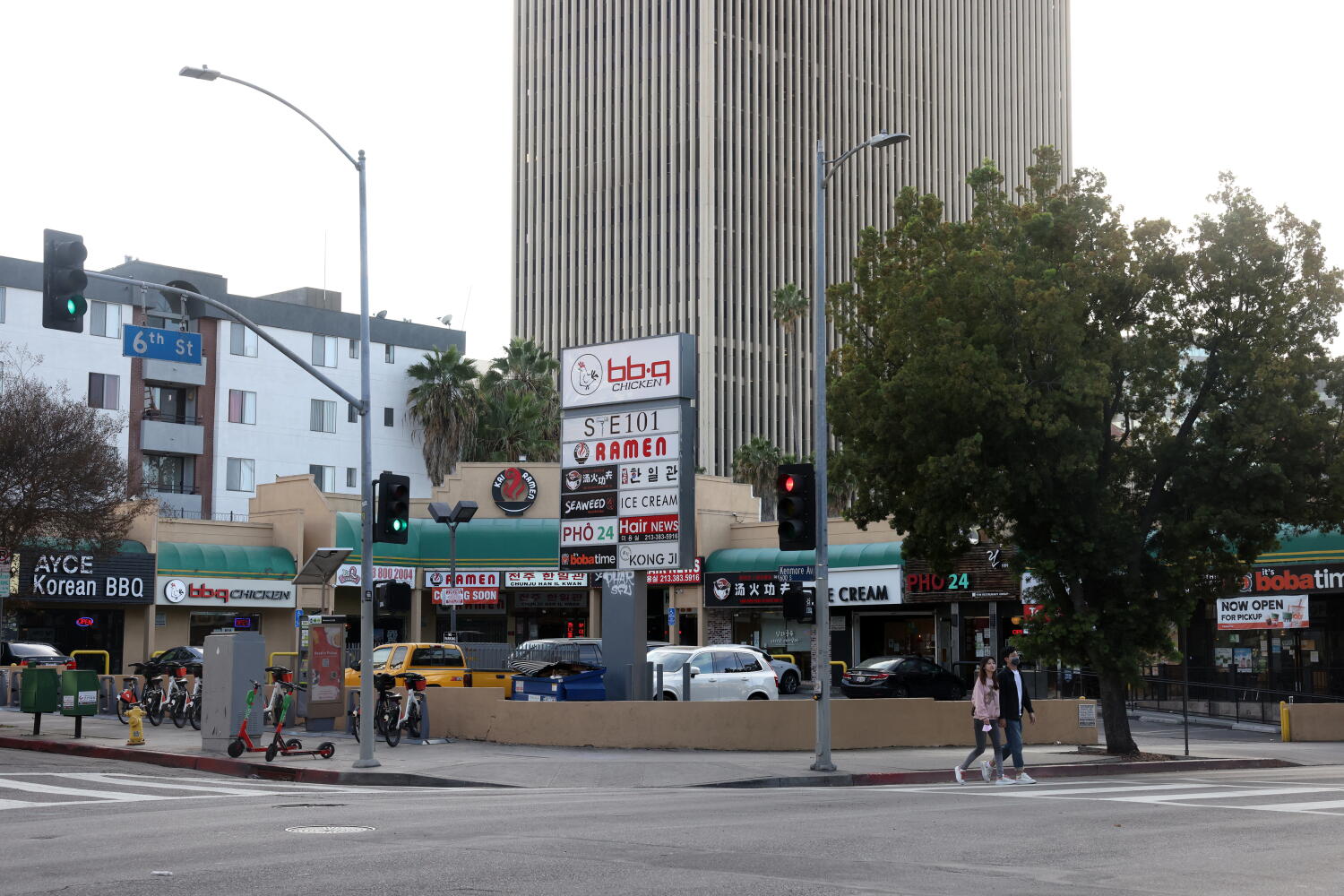
Koreatown is an anomaly in Southern California. Unlike the sprawling, single-family neighborhoods that define much of Los Angeles, Koreatown is a vertical, hyper-dense urban core packed into roughly three square miles. High-rise apartment buildings sit directly beside late-night barbecue restaurants, karaoke bars, strip malls, and century-old brick walk-ups.
Municipal sanitation models were never built for this kind of friction.
In a standard residential neighborhood, each house gets its own black, blue, and green bins, rolled out once a week on a predictable schedule. In Koreatown, thousands of residents rely on shared commercial dumpsters tucked into narrow alleys or subterranean parking garages. When a single 200-unit apartment building underestimates its weekly waste volume, or when a property manager locks a dumpster enclosure to deter outsiders, the overflow has nowhere to go except the curb.
Add the commercial footprint to the equation. Koreatown is one of the premier dining and nightlife destinations in the region. Restaurants generate massive volumes of wet organic waste, grease, and packaging every single night. Unlike dry office trash, food waste decomposes rapidly in the Southern California heat, attracting rodents and creating immediate public health hazards if a single pickup is missed. When commercial dumpsters reach capacity by Saturday night and scheduled collection does not happen until Monday morning, sidewalks become staging areas for rotting garbage.
How the Commercial Hauling Monopoly Strained the Streets
You cannot examine commercial trash in Los Angeles without looking at recycLA, the public-private franchise system launched by the city in 2017. Before the overhaul, commercial waste hauling was an open, unregulated free-for-all where dozens of private companies competed for contracts, often cutting corners on environmental standards and worker safety. The city replaced that chaos by dividing Los Angeles into exclusive geographic zones and awarding monopoly contracts to specific private haulers.
The intention was noble: increase recycling rates, transition to clean-fuel trucks, and enforce labor protections. The execution on the ground created a different set of problems.
Under an exclusive franchise model, building owners and restaurant operators lost the ability to fire a sluggish hauler and hire a competitor the next day. Service rates climbed sharply—in many cases doubling or tripling for small businesses and multi-family buildings. To keep monthly bills manageable, many property managers downsized their bin capacities or reduced their pickup frequencies.
That decision triggered a predictable chain reaction. Fewer pickups meant bins filled up faster. Overflowing bins led to "extra pickup" fees and "contamination" penalties charged by haulers when wind or passersby tossed non-recyclables into recycling dumpsters. Rather than paying steep surcharges, some commercial property owners simply left the excess bags stacked beside the enclosures, hoping city crews would eventually clear them as abandoned waste.
When a system penalizes property owners for overflow without giving them competitive alternatives, the sidewalk absorbs the cost.
The Illegal Dumping Pipeline
While residential overflow and commercial billing disputes account for a large share of the mess, they do not explain the couches, construction debris, and piles of drywall appearing overnight on residential blocks. That is the footprint of systematic illegal dumping.
Koreatown sits at a geographic crossroads. Bounded by major thoroughfares like Olympic Boulevard, Beverly Boulevard, Vermont Avenue, and Western Avenue, and minutes from the 10 and 101 freeways, the neighborhood is easily accessible from across the basin. Unlicensed haulers—often hired off classified ads by contractors or landlords looking to avoid transfer station tipping fees—use Koreatown’s quieter residential streets and poorly lit alleys as drop zones.
The economics of illegal dumping are brutally simple. Disposing of a pickup truck full of construction debris at a licensed landfill or transfer station costs time, fuel, and gate fees. Dumping that same load at 3:00 AM behind a strip mall on 8th Street costs nothing.
Enforcement against these operators is practically nonexistent. To issue a citation for illegal dumping, law enforcement or sanitation investigators generally have to catch the perpetrator in the act or uncover unmistakable identifying evidence—like addressed mail—buried inside the pile. By the time a resident reports the debris through the city's MyLA311 app, the truck is miles away, and the burden of cleanup shifts entirely to the public.
Jurisdictional Ping-Pong at City Hall
If you ask a Koreatown resident why a pile of trash has sat on their corner for ten days, you will likely hear a story about a closed 311 ticket that solved nothing. The frustration stems from how Los Angeles divides responsibility for what happens on its streets.
Responsibility for a single block can split across at least four different entities:
- LA Sanitation and Environment (LASAN) handles residential curbside bins and responds to bulky-item pickup requests and illegal dumping reports on public rights-of-way.
- The Bureau of Street Services (StreetsLA) manages street sweeping, sidewalk maintenance, and certain median cleanups.
- Private franchise haulers are responsible for the commercial and multi-family dumpsters they service, along with immediate spills caused during collection.
- Private property owners are legally responsible for keeping their own lots, private alleys, and adjacent parkways free of debris.
This patchwork creates massive blind spots. Consider a hypothetical scenario that plays out every week in the neighborhood: a commercial dumpster sits just inside a private driveway apron, overflowing onto the public sidewalk. A resident logs a 311 request. A city crew arrives, sees that the trash originates from a private commercial bin, and closes the ticket because it falls under the private hauler's or property owner's jurisdiction. Meanwhile, the private hauler refuses to touch anything outside the dumpster unless the property owner authorizes a surcharge. The property owner ignores the notice. The trash stays put.
Council districts representing Koreatown—the neighborhood has historically been sliced across multiple city council districts, diluting its political leverage—frequently deploy special cleanup crews for high-visibility corridors. These blitzes look great on social media. Workers in neon vests clear a block in an hour, take a photo, and move on. Forty-eight hours later, the trash returns because none of the underlying logistical bottlenecks were touched.
The Street Vending and Public Trash Can Paradox
Any honest assessment of Koreatown's street sanitation must also address the lack of basic public infrastructure—specifically, public trash receptacles—and how that collides with vibrant street life.
Koreatown has a thriving street food culture. Taco stands, fruit carts, and late-night pop-up grills draw heavy foot traffic along major intersections. Yet walk several blocks down Wilshire or 6th Street, and you will struggle to find a functioning municipal trash can. Over the past two decades, the city removed hundreds of public receptacles across Los Angeles because they were constantly overflowing with household garbage dumped by people trying to avoid private waste bills, and because the city lacked the staffing to empty them multiple times a day.
Removing public trash cans did not eliminate the trash; it just eliminated the containers.
When hundreds of pedestrians buy food and drinks on a Friday night in a corridor with almost zero public bins, wrappers, cups, and skewers inevitably end up in tree wells, bus shelters, and storm drains. Responsible street vendors often bring their own plastic bins and haul their waste away at the end of the night, but informal or transient setups frequently leave bags behind, which are quickly torn open by scavengers looking for aluminum cans and plastic bottles.
What Happens When Trash Meets the Storm Drain
The consequences extend far beyond aesthetics. Litter left on Koreatown sidewalks washes directly into the storm drain system during winter rains, flowing untreated through Ballona Creek and the Los Angeles River straight into Santa Monica Bay. During dry months, rotting food waste feeds an exploding rat and cockroach population that migrates from alleys into adjacent apartment buildings and restaurant kitchens, forcing small businesses to spend thousands on pest control while risking health department closures.
Why Standard Fixes Keep Failing
When public pressure boils over, City Hall usually reaches for one of two levers: a temporary funding boost for overtime cleanup crews, or a public awareness campaign urging residents to "keep their neighborhood clean." Both approaches treat a systemic logistics failure like a personal etiquette problem.
You cannot lecture a neighborhood out of an infrastructure deficit. Telling tenants to use 311 does not work when the average turnaround time for a bulky-item pickup stretches into weeks, leaving furniture sitting on the curb as a magnet for more dumping. Fining small business owners does not solve overflow when their alleys are too narrow for larger dumpsters and their franchise rates punish them for requesting extra pickups.
Even well-intentioned policies, such as California's SB 1383 mandate requiring the separation of organic food waste from regular landfill trash, have added operational friction on the ground. Restaurants and apartment buildings now have to manage a third waste stream—green organic bins—in physical spaces that barely had room for two. Without adequate spatial planning or subsidized bin servicing for high-density zones, compliance often breaks down into chaos behind the scenes.
What Actually Moves the Needle
Clearing Koreatown's streets permanently requires treating the neighborhood like the high-density urban center it is, rather than a suburban district that happens to have tall buildings. Cities like New York, Tokyo, and Seoul manage far higher population densities without burying their sidewalks in loose bags, and the mechanisms they use are neither mysterious nor theoretical.
First, containerization and alley access rules must be enforced alongside realistic sizing. Los Angeles has begun piloting containerized trash programs in select dense corridors, replacing loose street bags with locked, shared sidewalk vaults or subterranean compactors. Expanding high-capacity, shared commercial compactors in Koreatown's commercial zones would drastically reduce the surface footprint of restaurant and retail waste while locking out pests and illegal dumpers.
Second, enforcement has to shift from reactive cleanups to targeted deterrence. That means deploying mobile surveillance cameras in chronic illegal dumping alleys—a tactic several California cities have used successfully to impound vehicles and levy heavy fines against unlicensed haulers—and streamlining code enforcement so property owners who allow private alleys to become hazards face escalating, automatic liens rather than endless warning letters.
Third, franchise accountability needs teeth. When a commercial hauler misses a scheduled pickup in a dense neighborhood, the city should enforce automatic financial penalties that go directly toward funding rapid-response street sanitation crews, rather than letting missed collections fester into neighborhood-wide health hazards.
Until City Hall stops measuring success by how many bags a cleanup crew hauls away on a Tuesday morning and starts measuring it by why those bags were on the sidewalk in the first place, Koreatown residents will keep sweeping up a mess they did not create.