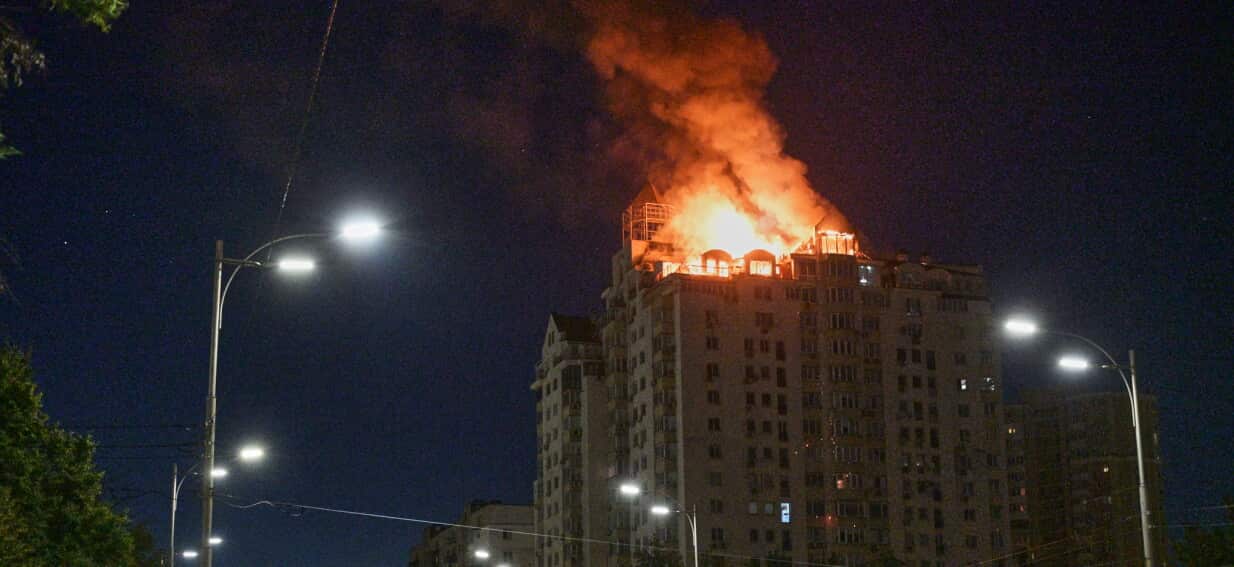
The Washington-backed ceasefire in Lebanon, brokered under the Trump administration as a foundational stepping stone toward a broader regional deal with Iran, is rapidly fracturing along historical fault lines. While diplomats celebrate the temporary silencing of cross-border rockets, the deal has inadvertently upset the delicate domestic balance of power inside Beirut. By fundamentally altering the leverage of the country’s armed factions, this international agreement risks triggering a domestic sectarian conflict. The truce focused heavily on regional geopolitical alignment but largely ignored the volatile internal dynamics of a state already on the brink of collapse.
Behind the diplomatic handshakes lies a stark reality. The enforcement mechanisms written into the peace agreement require the Lebanese Armed Forces to assert control over territories previously dominated exclusively by non-state actors. Forcing a weak national army to disarm deeply entrenched local militias does not create stability. It creates a vacuum.
The Flawed Mechanics of Enforcement
International peace treaties often treat fragile states as cohesive entities. They are not. In Lebanon, the central government lacks a monopoly on the legitimate use of force, a vulnerability that the current truce exposes rather than resolves.
The agreement dictates that state military forces deploy to the southern border while parallel armed factions withdraw. This sounds logical on a map in Washington or Geneva. On the ground in Tyre and Bint Jbeil, it plays out as a direct challenge to local power structures that have existed for four decades.
When a national army enters an area to strip a heavily armed local population of its weapons, it ceases to look like a neutral peacekeeping force. It looks like an occupying army representing rival sectarian interests.
The Financial Collapse Factor
A military cannot enforce a high-stakes international treaty when its soldiers cannot afford groceries. The Lebanese Armed Forces have spent the last several years surviving on foreign subsidies, primarily fuel and food donations from the United States and Gulf states.
- Soldiers routinely take second jobs to feed their families.
- Equipment maintenance relies on haphazard international aid packages.
- Desertion rates remain a constant threat to operational readiness.
Expecting an institution under this level of economic strain to successfully disarm battle-hardened militias is a dangerous calculation. If the military pushes too hard, it risks fracturing along its own sectarian lines, mirroring the collapse that occurred at the start of the 1975 civil war.
Christian and Sunni Re-armament
The truce has sent a clear signal to Lebanon’s other major sectarian blocs. With the dominant Shia military political apparatus facing structural weakness from foreign bombardment and forced withdrawal, rival factions see a fleeting window of opportunity. They also see a threat.
Fearing that a cornered political rival will turn its weapons inward to maintain dominance in Beirut, Christian factions in Mount Lebanon and Sunni groups in Tripoli are quietly preparing. Security sources in Beirut confirm a sharp uptick in the black-market price of small arms and ammunition.
This is not defensive posturing. It is structural preparation for a breakdown in central authority.
Sectarian Alignment and Risks under the Current Truce
┌──────────────────┬──────────────────────────┬────────────────────────────────┐
│ Faction          │ Perceived Threat         │ Reaction                       │
├──────────────────┼──────────────────────────┼────────────────────────────────┤
│ Southern Militia │ State Encroachment       │ Resistance to Disarmament      │
├──────────────────┼──────────────────────────┼────────────────────────────────┤
│ Christian Blocs  │ Domestic Retaliation     │ Local Security Segregation      │
├──────────────────┼──────────────────────────┼────────────────────────────────┤
│ Sunni Factions   │ Vacuum of Power          │ Re-arming Local Neighborhoods  │
└──────────────────┴──────────────────────────┴────────────────────────────────┘
The historical precedent is grim. Whenever an external power attempts to re-engineer the political hierarchy of the Levant from the outside, local actors respond by securing their own neighborhoods. Street-level checkpoints, private security committees, and neighborhood watches are reappearing in mixed districts. The state is receding, even as international donors claim it is returning.
The Regional Illusion
The architect of this truce viewed Lebanon as a secondary theater, a chess piece to be traded in pursuit of a grand bargain with Tehran. The logic assumed that squeezing Iran's primary regional proxy would force the Islamic Republic to negotiate a comprehensive nuclear and regional security pact from a position of weakness.
This top-down diplomacy ignores the independent agency of local actors. Micro-factions on the ground do not always follow orders from sponsors abroad when their immediate survival is at stake.
A breakdown in the Lebanese truce would immediately dismantle the broader regional strategy. If Beirut descends into street fighting, the conflict will inevitably draw in neighboring powers. Foreign actors cannot tolerate a completely lawless space on their northern border, while regional powers cannot watch their long-term investments systematically erased. The proxy war would simply evolve into a more chaotic, less predictable phase.
The Reconstruction Weapon
Money is the latest battleground in the struggle for domestic dominance. The cost of rebuilding Lebanon’s destroyed infrastructure runs into tens of billions of dollars. This funding will not be distributed neutrally.
Western and Gulf donors condition their reconstruction funds on strict political reforms and the total exclusion of specific political parties from the treasury. Conversely, alternative capital flows from regional networks bypass state institutions entirely, delivering cash directly to loyal constituencies.
This economic balkanization deepens the divide. Citizens living in destroyed southern towns find themselves dependent on non-state distribution networks for survival, while residents of institutional strongholds rely on Western aid. Two distinct economies are forming within a single state, each tied to a different geopolitical pole.
The middle ground has vanished. Without a functional, neutral state apparatus to manage reconstruction, the distribution of aid becomes an act of war by other means.
The Warning Signs of Internal Collapse
Watch the internal migration patterns. When families begin moving out of mixed sectarian neighborhoods and into homogenous enclaves, actual conflict is rarely far behind. This silent segregation is already underway in parts of Beirut and the Beqaa Valley.
The international community remains focused on border monitoring and drone surveillance flights. They are watching the wrong indicators. The true measure of the truce’s viability is not found in the absence of cross-border rocket fire, but in the stability of the local currency and the rhetoric used in neighborhood mosques and churches.
When local leaders stop talking about national unity and start emphasizing communal self-defense, the countdown has begun. The current agreement treated Lebanon as a border zone to be neutralized. It forgot that the zone is inhabited by heavily armed communities with long memories and deep grievances.
The diplomatic framework lacks any mechanism to address internal political gridlock. The presidency remains vacant, parliament is paralyzed, and the judiciary has been completely neutralized by political interference. Injecting a highly sensitive disarmament mandate into this institutional void is equivalent to dropping a match into a dry forest. Peace cannot be enforced by a government that exists only on paper.