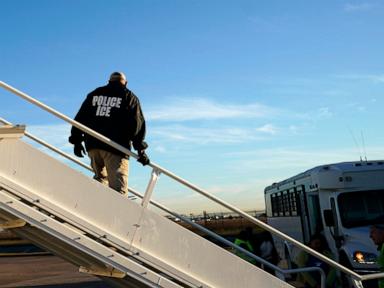
Federal judges are tearing into immigration enforcement officials over plans to deport Iranian nationals straight into active conflict zones. A growing judicial backlash centers on a fundamental collision between executive removal mandates and international non-refoulement protections, which strictly prohibit returning individuals to countries where they face immediate threats to life or freedom. When active military hostilities engulf a region, routine deportation logistics transform into potential human rights violations, forcing federal courts to step in with emergency stays and sharp rebukes from the bench.
Deportation machinery rarely stops easily once set in motion. For years, the Department of Homeland Security and Immigration and Customs Enforcement have operated under statutory mandates requiring the removal of non-citizens with final orders of deportation. Under normal geopolitical conditions, executing these orders involves diplomatic coordination, travel document procurement, and commercial or charter flight scheduling. Yet normal conditions vanish the moment missiles fly and airspace closes. Attempting to push removal flights forward while active warfare rages on the ground exposes a rigid bureaucratic apparatus struggling—or refusing—to adapt to lethal realities.
The Anatomy of a Wartime Deportation Standoff
When a federal judge blasts an administration over wartime removals, the friction usually stems from procedural stubbornness colliding with statutory humanitarian safeguards. Immigration enforcement agencies operate on metrics, dockets, and detention bed quotas. Once an immigration judge issues a final removal order and appeals are exhausted, enforcement officers treat execution as a ministerial duty rather than a discretionary policy choice.
That mindset breaks down completely during armed conflict. Under the Convention Against Torture and the Immigration and Nationality Act, the United States is legally bound not to expel individuals to territories where they face persecution, torture, or indiscriminate violence from armed hostilities. Judges reviewing emergency habeas corpus petitions or motions to reopen cases look closely at whether the government conducted updated country-condition assessments before booking a flight.
Often, they find the government did not. Bureaucratic inertia leads officials to rely on outdated risk assessments drafted months or years prior, long before bombs began falling. When defense attorneys file eleventh-hour emergency stays highlighting active warfare, government litigators frequently argue that federal district courts lack jurisdiction to halt removal execution under Section 1252(g) of the Immigration and Nationality Act. That jurisdictional shield works in routine cases. It fails spectacularly when a judge realizes the government is trying to put human beings onto planes headed toward an active war zone without evaluating immediate survival risks.
Why Diplomatic Breakdowns Complicate Removal Logistics
Executing a deportation requires a receiving country willing to accept the deportee. Washington and Tehran have lacked formal diplomatic relations since 1980, relying instead on the Swiss Embassy in Tehran as a protecting power for consular affairs. Even during periods of relative calm, securing travel documents from Iranian authorities for nationals who do not wish to return has been notoriously slow.
During active wartime, that fragile logistical pipeline collapses entirely. Commercial aviation routes suspend operations, airspace restrictions force sweeping diversions, and consular offices prioritize crisis management over routine travel document verification. To bypass these hurdles, immigration authorities sometimes attempt third-country transfers or specialized charter operations. Federal judges view these workarounds with intense skepticism, especially when officials cannot guarantee safe passage or verify that the receiving authorities will not immediately detain, conscript, or harm the returnees upon arrival.
The Collision Between Executive Authority and Judicial Oversight
At the heart of these courtroom confrontations lies a recurring constitutional tug-of-war over who controls immigration enforcement during international crises. The executive branch routinely claims broad, near-plenary authority over foreign affairs and border control. Government attorneys argue that decisions regarding when and how to execute final removal orders belong exclusively to the Department of Homeland Security, warning that judicial intervention disrupts foreign policy and undermines statutory enforcement schemes.
Federal judges rarely buy that argument when basic due process is stripped away. An emergency stay of removal is not a grant of permanent residency; it is a pause button designed to preserve the court's ability to review whether the executive branch is violating federal law and international treaty obligations. When officials rush to deport detainees before courts can adjudicate motions based on radically changed country conditions, judges interpret the haste as an intentional effort to evade judicial review.
Consider a hypothetical example of how this unfolds in practice. Suppose an Iranian national entered the country years ago, overstayed a visa, and received a final removal order after an asylum claim was denied during a period of relative stability. Years later, while the individual remains in detention or under supervision, full-scale military conflict erupts in Iran. The individual files a motion to reopen their case based on changed country conditions, arguing that returning now means facing indiscriminate bombardment or targeted retaliation by security forces operating under martial law. If enforcement officers attempt to place that person on a flight before the Board of Immigration Appeals even rules on the motion, a federal judge reviewing an emergency petition will almost certainly intervene—and issue a blistering opinion questioning the government's respect for the rule of law.
Temporary Protected Status and Deferred Enforced Departure
Whenever war, environmental catastrophe, or extraordinary unrest destabilizes a nation, the executive branch possesses established statutory tools to halt deportations systematically rather than fighting case-by-case battles in federal court. Temporary Protected Status (TPS) and Deferred Enforced Departure (DED) exist precisely for moments when returning nationals to their homeland becomes unconscionable.
| Mechanism | Statutory Authority | Primary Trigger | Legal Effect on Deportation |
|---|---|---|---|
| Temporary Protected Status (TPS) | Immigration Act of 1990 (INA § 244) | Ongoing armed conflict, environmental disaster, or extraordinary conditions | Grants temporary legal status, work authorization, and protection from removal |
| Deferred Enforced Departure (DED) | Presidential constitutional foreign policy power | Executive discretion during severe geopolitical crises | Administrative stay of removal for designated nationals without formal status grant |
| Withholding of Removal | INA § 241(b)(3) & Refugee Act of 1980 | Demonstrating a clear probability of persecution upon return | Prohibits deportation to the specific country of danger while allowing third-country removal |
| CAT Protection | Convention Against Torture implementing regulations | Showing it is more likely than not the person will be tortured | Absolute bar against return to a country where torture is probable, regardless of criminal record |
When an administration refuses to designate a war-torn country for TPS or DED—or continues pushing deportations while internal policy deliberations drag on—it forces the judiciary to act as an emergency safety valve. Judges end up doing piecemeal what the executive branch could accomplish cleanly with a single administrative directive.
The Hidden Human and Operational Costs of Wartime Removals
Beyond the dramatic courtroom exchanges, continuing deportation operations toward an active conflict zone creates severe operational chaos inside detention facilities and field offices. Immigration detention centers operate on tight turnover schedules. When removal flights are scheduled and subsequently halted by court injunctions, detainees remain in custody indefinitely while litigation grinds forward.
Under the Supreme Court's landmark ruling in Zadvydas v. Davis, the government cannot detain individuals indefinitely once a final removal order is issued if there is no significant likelihood of removal in the reasonably foreseeable future. Typically, the presumptively reasonable detention period is six months. Active warfare makes removal in the reasonably foreseeable future virtually impossible. Consequently, persisting with deportation plans that courts repeatedly block traps the government in a legal bind: officials cannot deport the individuals, yet holding them in prolonged detention invites waves of habeas petitions demanding their release under Zadvydas.
For the detainees themselves, the psychological toll is immense. Many Iranian nationals in immigration proceedings already fear scrutiny from Tehran simply for having lived in the United States or sought asylum abroad. Being told they are about to be deported into a country under active military bombardment—where telecommunications may be severed, infrastructure is damaged, and internal security crackdowns are escalating—triggers panic, hunger strikes, and desperate legal filings.
The Counter-Argument From Enforcement Hawks
To understand why these cases happen at all, one must look at the internal logic driving enforcement agencies. Career officials and policy hawks argue that suspending removals every time a region experiences instability creates a permanent backdoor to residency. From their perspective, once an individual has exhausted due process and received a final removal order, the integrity of the immigration system depends on follow-through.
They also point out that many individuals facing deportation have criminal convictions or national security flags that barred them from asylum in the first place. Enforcement advocates contend that federal judges overstep their constitutional boundaries by second-guessing executive assessments of diplomatic feasibility and transit safety. If a third-country transit route is technically open and international aviation authorities have not banned all flights, government lawyers argue that courts should defer to agency expertise rather than halting operations based on generalized fears of regional conflict.
That argument carries weight in peacetime administrative disputes. It collapses when the empirical reality on the ground involves active missile strikes, closed airspace, and non-functioning consular networks. Judges are trained to evaluate concrete evidence, and no amount of administrative deference can obscure the basic fact that sending civilians into a war zone violates foundational legal norms.
Historical Precedents That Shape Today's Rulings
Judicial pushback against wartime deportations is neither new nor partisan. Across multiple administrations, federal courts have stepped in when enforcement priorities outpaced humanitarian realities.
During the height of conflicts in Iraq, Afghanistan, and Syria, immigration authorities repeatedly attempted to resume removal flights during brief lulls in fighting, only to be met with fierce litigation from civil rights organizations and skeptical federal judges. In 2017, when federal agents arrested hundreds of Iraqi nationals—many of whom had lived in the United States for decades with old removal orders—and prepared to deport them to Iraq amid ongoing war against ISIS, a federal judge in Michigan issued a nationwide stay halting the removals. The court ruled that detainees had a right to have their claims heard before being sent into a region where religious and ethnic minorities faced severe danger.
Similarly, during the chaotic 2021 withdrawal from Afghanistan and the subsequent collapse of the Afghan government, removal operations ground to an immediate halt as courts and advocates forced the government to reckon with the lethal consequences of returning nationals to Taliban-controlled territory. Even when administrations later sought to deport individuals to nations experiencing severe civil conflict like Yemen or Sudan, the combination of logistical impossibility and judicial scrutiny forced repeated retreats.
The pattern is unmistakable. Every time an administration attempts to treat wartime deportation as business as usual, the judiciary steps in to enforce the boundary between lawful enforcement and reckless endangerment.
What Happens When Courts Draw the Line
When a federal judge rebukes the administration from the bench over wartime deportation plans, the immediate impact ripples far beyond the individual petitioner named in the lawsuit.
First, it creates an instant evidentiary record that immigration attorneys nationwide use to file parallel emergency motions. Once a single federal judge publicly documents that removal conditions are unsafe or that enforcement officials bypassed mandatory risk reviews, other courts rapidly follow suit. Government litigators suddenly find themselves defending the same indefensible policy across multiple jurisdictions simultaneously.
Second, judicial reprimands force internal policy reviews at the highest levels of the Department of Homeland Security and the Department of Justice. Career attorneys at the Office of Immigration Litigation hate defending policies in front of furious federal judges when the factual record is weak. Sharp criticism from the bench frequently prompts quiet administrative pauses, quiet settlements, or sudden policy reversals before an appellate court can issue a binding precedent that permanently restricts executive authority.
Finally, these clashes expose a deeper structural flaw in how immigration enforcement handles sudden geopolitical crises. Relying on federal district judges to issue midnight emergency stays is an unsustainable way to manage international humanitarian obligations. Until enforcement agencies build mandatory, automatic conflict-triggered freezes into their removal protocols, the collision between bureaucratic momentum and judicial conscience will continue playing out in courtrooms across the country—leaving human lives hanging on whether an emergency motion reaches a judge's desk before the cabin doors close.