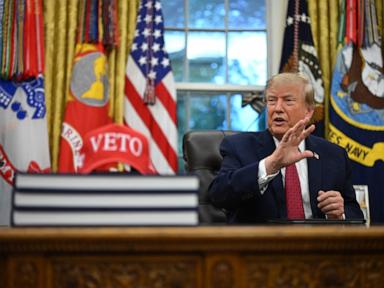
Attempting to designate the Oval Office as a national monument to prevent future presidents from altering its decor or architecture runs directly into a wall of statutory exemptions and constitutional limits. While the Antiquities Act of 1906 grants a sitting president unilateral authority to declare federal landmarks as protected monuments, the White House occupies a unique legal gray zone. Congress explicitly exempted the executive mansion from standard federal historic preservation mandates to ensure every incoming commander-in-chief retains the operational flexibility to adapt their immediate workspace, meaning an executive proclamation cannot legally bind a successor's interior design choices.
The push to freeze the Oval Office in amber reflects a broader, recurring tension in Washington between historical permanence and executive prerogative. On paper, the idea sounds straightforward. If a president likes the current configuration—the drapes, the Resolute Desk placement, the portraits, or specific structural updates—why not lock it in using the same executive tool Teddy Roosevelt used to protect the Grand Canyon?
The reality is far messier. When you peel back the layers of federal property law, administrative precedent, and separation-of-powers doctrine, the mechanics of such a move reveal a fascinating collision between symbolic politics and cold statutory text.
How the Antiquities Act Actually Works
To understand why turning a single room inside 1600 Pennsylvania Avenue into a national monument is so legally fraught, you have to look at the tool itself. Passed in 1906, the Antiquities Act is one of the shortest, broadest grants of executive power on the books. It allows the president, by public proclamation, to declare "historic landmarks, historic and prehistoric structures, and other objects of historic or scientific interest" situated on federal lands to be national monuments.
Historically, presidents have used this law to protect massive swathes of public land in the American West—places like Bears Ears, Grand Staircase-Escalante, and Devils Tower. Occasionally, it has been used for smaller urban sites, such as the Stonewall Inn in New York City or the Belmont-Paul Women's Equality National Monument right down the street on Capitol Hill.
There is no statutory minimum size for a national monument. A single building, or theoretically a single room, fits the literal definition of a "historic structure."
Yet the Antiquities Act includes a critical restraint that most political commentary overlooks. The law states that the reservation of land must be "confined to the smallest area compatible with the proper care and management of the objects to be protected." More importantly, designating a monument does not freeze it in time by magic; it simply transfers management authority or imposes a regulatory framework under the National Park Service (NPS) or another federal land agency.
And here is where the plan hits a massive legal speed bump. The White House is already part of the National Park System—specifically, it is administered as President's Park.
The White House Exemption Nobody Talks About
If you own a historic brownstone in Washington, D.C., and want to change the front door, you have to beg a preservation board for permission. If a federal agency wants to remodel a historic post office, it triggers a grueling review process under Section 106 of the National Historic Preservation Act (NHPA) of 1966.
The White House does not play by those rules.
When Congress drafted the NHPA in 1966, lawmakers realized that subjecting the president's working residence to bureaucratic review boards would create an administrative nightmare—and potentially a constitutional crisis. Imagine the Secret Service needing a six-month environmental and historical impact study just to upgrade ballistic glass in the West Wing, or a newly inaugurated president waiting on a committee before hanging a different painting behind their desk.
Consequently, Congress wrote Section 107 directly into the National Historic Preservation Act. That provision explicitly exempts the White House, the U.S. Capitol, and the Supreme Court building from the law's regulatory requirements.
Why Section 107 Changes Everything
Because of Section 107, the standard legal teeth that prevent alterations to historic federal properties simply do not exist inside the West Wing. Even if a president issued a proclamation declaring the Oval Office a national monument, that proclamation cannot repeal or override an act of Congress.
Furthermore, the Antiquities Act is an executive tool, not a constitutional amendment. Any proclamation issued by one president under the Antiquities Act can be modified, shrunk, or outright revoked by the next president—a legal reality demonstrated repeatedly when modern administrations have redrawn the boundaries of monuments in Utah and New Mexico.
Attempting to use a unilateral executive action to bind the hands of future executives violates a foundational principle of American governance. One president cannot permanently restrict the constitutional or statutory discretion of a successor through an administrative decree.
A History of Tear-Downs and Makeovers
The irony of trying to lock the Oval Office into a single, permanent aesthetic is that the room itself is a product of constant, aggressive renovation. Nothing about it is original to the founding of the republic.
George Washington never stepped foot in the White House. John Adams lived in a drafty, unfinished mansion. The Oval Office itself did not exist until 1909, when William Howard Taft decided he needed a formal workspace separate from the family living quarters, constructing the first oval-shaped room in the center of the newly expanded West Wing.
Since Taft's era, the room has been gutted, burned, relocated, and radically redesigned multiple times:
- The 1929 Fire: On Christmas Eve, a massive fire tore through the West Wing during Herbert Hoover's presidency, destroying the original Oval Office. Hoover rebuilt it in the same spot, modernizing the ventilation and electrical systems.
- FDR's Relocation: In 1934, Franklin D. Roosevelt decided Taft's location lacked natural light and privacy—visitors had to walk right past the windows to get to other offices. FDR tore down the interior layout and moved the Oval Office to its current location in the southeast corner of the West Wing, overlooking the Rose Garden.
- Truman's Total Gut: By 1948, the White House structure was literally sinking and in danger of collapse. Harry Truman moved across the street to Blair House for nearly four years while crews completely gutted the interior of the mansion, leaving only the outer sandstone walls standing, and rebuilt the structural frame with steel and concrete.
- Nixon's Modernizations: Richard Nixon ripped out the hardwood floors and installed a padded carpet over plywood, removed FDR's swimming pool to build the modern press briefing room, and overhauled the communications infrastructure.
Every single president since Taft has redecorated the Oval Office to project their own political brand. Dwight Eisenhower brought in modern office equipment and muted tones. John F. Kennedy ordered bright red carpeting and nautical paintings—though he was assassinated before the installation was finished, leaving Lyndon Johnson to inherit the look. Barack Obama swapped out the traditional sunburst rug for one featuring quotes from Martin Luther King Jr. and Abraham Lincoln, and replaced traditional wallpaper with striped fabric. Donald Trump brought in gold-toned drapes, portraits of Andrew Jackson, and military flags. Joe Biden swapped the Jackson portrait for Benjamin Franklin, added a bust of Cesar Chavez, and brought back a deep blue rug.
Decorating the Oval Office is not trivial interior design; it is visual statecraft. Every visiting head of state sits in front of those fireplaces, and every televised address from behind the Resolute Desk broadcasts a carefully curated backdrop to the world.
The Role of the Committee for the Preservation of the White House
If the White House is exempt from federal preservation laws, what stops a president from painting the walls neon green or knocking down a load-bearing wall?
The answer is institutional tradition, public backlash, and a quiet advisory body created by Jacqueline Kennedy in 1961. Initially formed as the Fine Arts Committee for the White House, it was formalized by Lyndon Johnson via Executive Order 11145 in 1964 as the Committee for the Preservation of the White House.
This committee—working alongside the White House Curator—maintains the permanent collection of fine art, antique furniture, and historic artifacts. When a president wants to change the Oval Office, they usually work with the curator to select items from the White House's massive off-site storage facilities or arrange loans from the Smithsonian and private collectors.
Yet the committee's power is purely advisory. Because it was created by an executive order, a president can ignore its recommendations, alter its membership, or abolish it altogether.
There is one major exception to this absolute freedom—money. While a president has wide latitude over the look of the West Wing, Congress controls the purse strings. Any major structural renovation requires appropriated funds, and Congress routinely allocates a standard transition allowance—historically around $100,000—for an incoming president to redecorate the private quarters and executive offices. Anything beyond that requires private donations, typically funneled through the non-profit White House Historical Association, which enforces its own strict standards on what gifts and modifications it will fund.
What Happens When Security Meets Aesthetics
Beyond politics and decor, there is a hard operational reason why making the Oval Office a rigid national monument would fail in practice. The West Wing is not a museum; it is the nerve center of the global superpower.
Modern national security demands constant, invasive upgrades to the physical space. Over the decades, the Secret Service and the White House Military Office have quietly transformed the structure of the Oval Office. The windows are thick, multi-layered ballistic glass designed to withstand high-caliber rounds and blast waves. Beneath the floorboards and behind the neoclassical paneling lies a dense web of encrypted fiber-optic cables, counter-surveillance shielding, and air-filtration systems built to protect against biological or chemical attacks.
In a hypothetical scenario where the Oval Office were bound by strict national monument preservation rules, routine security maintenance would become a legal minefield. If intelligence agencies determine that a new type of acoustic shielding needs to be installed behind the plaster molding, technicians cannot wait for a historic preservation impact assessment. Operational security overrides aesthetic permanence every single time.
The Political Strategy Behind Symbolic Designations
If legal scholars and administrative historians agree that a national monument designation cannot permanently lock in the Oval Office's appearance, why pursue the move at all?
In modern Washington, policy actions frequently serve a dual purpose: administrative governance and political messaging. Framing a specific iteration of the Oval Office as a "national monument" elevates a sitting administration's aesthetic and political choices to the status of sacred national heritage.
It creates a powerful optical trap for the next occupant.
Even if a successor holds the absolute legal authority to rescind the monument status on day one, doing so forces them to pay a political price. Headlines about a new president "revoking national monument status" at the White House generate immediate friction, allowing critics to frame routine redecorating as an act of historical vandalism. It shifts the burden of justification onto the incoming administration, forcing them to defend why they are changing the curtains or moving a bust.
This tactic mirrors how executive orders are increasingly used across the federal government—not as permanent laws, which only Congress can pass, but as political speed bumps designed to slow down a successor and dominate the news cycle.
Where the Law Draws the Line
Ultimately, the structure of the American presidency resists permanent physical curation. The U.S. Constitution vests executive power in a single individual for a four-year term, and the physical workspace of that office has always reflected the shifting nature of the republic itself.
While the White House Curator, the National Park Service, and the White House Historical Association work tirelessly to preserve the irreplaceable artifacts of the presidency—ensuring that the Resolute Desk, Gilbert Stuart's portrait of George Washington, and priceless 19th-century furnishings survive intact—they do so by balancing preservation with active governance.
A presidential proclamation under the Antiquities Act can draw lines on a map, protect fragile ecosystems, and honor historic battlefields. What it cannot do is strip a future commander-in-chief of the authority to rearrange the furniture in their own office. The moment a new president takes the oath of office on the West Front of the Capitol, the moving trucks are already idling in the White House driveway, ready to haul out the old rugs and bring in the new.


