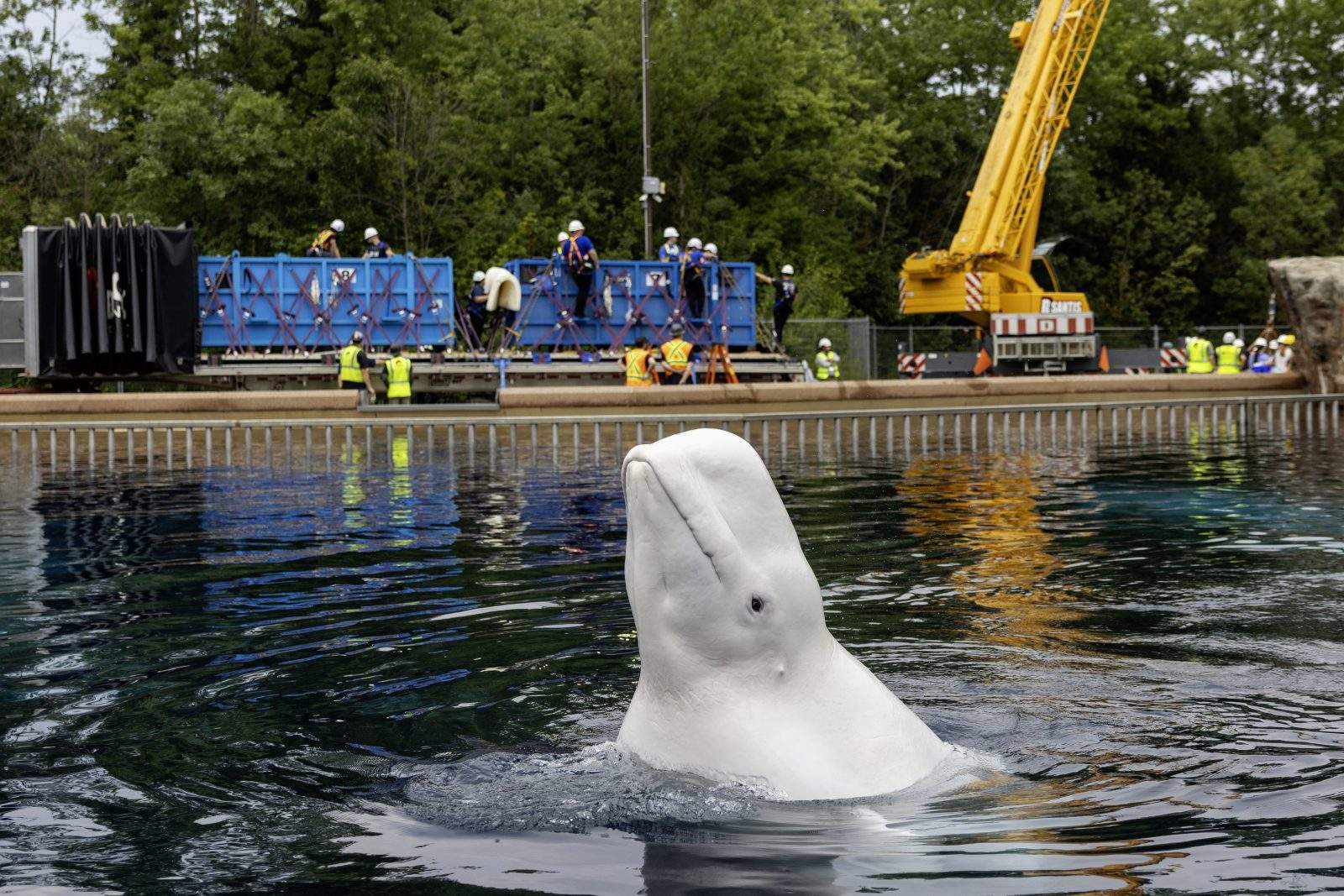
Another six cetaceans are packing their bags. Marineland is quietly shipping a half-dozen beluga whales to facilities in the United States, continuing a slow-motion evacuation from the aging Niagara Falls tourist attraction. For decades, the sprawling park stood as a monument to mid-century roadside entertainment. Today, it operates as a logistics puzzle for corporate handlers, animal welfare regulators, and legal teams trying to unwind a legacy built on concrete pools and captive spectacle.
The public sees a simple animal rescue narrative. The reality involves corporate restructuring, shifting public sentiment, changing provincial legislation, and the immense financial liability of maintaining massive marine mammals in an era of collapsing attendance.
Behind every animal transfer lies a complex web of permits, transport crates, specialized veterinary cargo planes, and receiving institutions that must balance their own public relations with their collection plans. This is not just about moving whales across an international border. This is the financial liquidation of a dying business model.
The Anatomy of a Captive Exit Strategy
Closing down an enterprise housing large marine mammals is entirely different from shutting down a standard amusement park. You cannot simply lock the gates, sell the rides for scrap, and walk away. Under Canadian animal welfare laws and municipal regulations, the owners carry a legal duty of care that extends until the last animal draws its breath or finds a certified home.
Marineland has faced intense regulatory scrutiny, declining ticket sales, and mounting public pressure for years. When the revenue dries up, the cost of dead fish, filtration electricity, and specialized veterinary staff remains stubbornly high. Transferring the remaining belugas to accredited aquariums in the United States represents an accounting solution to a structural problem.
Shipping a beluga whale requires a massive mobilization of resources. These animals weigh thousands of pounds. They must be hoisted into custom-built slings, placed inside specialized transport containers lined with temperature-controlled water-saturated foam, loaded onto flatbed trucks, driven to a cargo airfield, and loaded onto chartered aircraft. Every hour of transport introduces profound physiological stress. Cortisol levels spike. Immune systems react. Transporting six animals at once indicates a coordinated, high-stakes logistical push by ownership to reduce operational footprint.
Each receiving facility assumes a massive public relations gamble. Modern aquariums operate under a microscope. Displaying wild-caught or legacy captive cetaceans draws immediate protests from animal rights groups who argue that no concrete tank can ever replicate an ocean. Yet, these institutions also know that belugas remain primary drawcards for ticket-buying families. The math is brutal. Whales bring foot traffic, but they also bring intense activist scrutiny.
The Regulatory Maze of Cross-Border Transfers
Moving marine mammals across the Canada-United States border is not a casual paperwork exercise. It involves two distinct federal bureaucracies, international treaties, and stringent environmental protections.
Under the Convention on International Trade in Endangered Species of Wild Fauna and Flora, beluga whales require specific permits to cross international boundaries. Regulators must verify that the transfer is not detrimental to the survival of the species and that the receiving facility meets rigorous standards of care.
In Canada, federal oversight comes through Fisheries and Oceans Canada, alongside provincial animal welfare enforcement. In the United States, the National Marine Fisheries Service and the United States Department of Agriculture hold jurisdiction under the Marine Mammal Protection Act and the Animal Welfare Act.
Every single transfer must pass a threshold test demonstrating that the move improves the welfare of the individual animal or serves a valid conservation, research, or educational purpose. Critics often point out that corporate survival and cost-cutting measures rarely align cleanly with strict definitions of animal welfare. When a park like Marineland decides to divest its animal collection, the regulatory process frequently becomes a diplomatic dance between agencies eager to see the animals relocated and activists determined to block any transaction that legitimizes captivity.
The legal teams representing these institutions spend months drafting compliance documents. They must account for veterinary records, genetic lineage, health clearances, and quarantine protocols at the destination facilities. One minor discrepancy in a health certificate can ground a multi-million-dollar transport operation for weeks, forcing expensive holds in temporary staging areas.
The Economics of Marine Parks in Decline
The business model of keeping large marine mammals in inland theme parks is broken. For decades, places like Marineland profited from a cultural blind spot regarding the psychological and physical needs of intelligent, highly social marine species. Families drove in by the minivan load, bought overpriced cotton candy, and watched killer whales and belugas perform synchronized jumps.
Cultural attitudes shifted rapidly over the last fifteen years. Documentaries, viral footage of distressed animals, and a growing body of cetacean neuroscience shattered the illusion that concrete tanks were acceptable habitats. Attendance figures slumped. Corporate sponsors pulled back. Insurance premiums for marine mammal exhibitors skyrocketed as underwriters recognized the mounting liability and reputational risk.
Legislative bodies responded to the cultural shift. Canada passed sweeping federal legislation banning the captivity of whales, dolphins, and porpoises, with grandfather clauses for existing animals but strict prohibitions on breeding and acquisition. Suddenly, the future value of a marine park collection dropped to zero. You cannot breed them, you cannot buy new ones, and you cannot easily get rid of the ones you have without incurring astronomical transport and care costs.
Marineland is effectively managing a managed retreat. The park is winding down its operations piece by piece. Selling land, divesting animals, and settling legal disputes form the actual day-to-day business of the property now. The whales are the final legacy assets on a balance sheet that the owners desperately want to clear.
The Future of the Displaced Belugas
What awaits these six belugas in American aquariums? The receiving facilities are typically large, accredited members of the Association of Zoos and Aquariums. These institutions boast advanced filtration systems, dedicated veterinary research staffs, and massive financial endowments compared to private roadside parks.
Proponents argue that these facilities offer a vastly superior quality of life compared to the deteriorating infrastructure of an abandoned or struggling Canadian park. The pools are deeper, the water quality is monitored with hyper-sensitive analytical equipment, and the behavioral enrichment programs are designed to keep intelligent mammals mentally stimulated.
Opponents counter that a tank is still a tank, whether it is located in Niagara Falls or a major American coastal city. They argue that international transfers are merely shuffling prisoners from a failing institution to a more polished public relations machine. The fundamental ethical dilemma remains unresolved. Can an animal evolved to navigate vast, cold northern oceans ever thrive behind acrylic glass, dependent on human handlers for every meal?
The debate extends far beyond these six specific whales. As older marine parks across North America reach the end of their operational lifespans, the industry faces an unprecedented bottleneck. There are simply not enough accredited sanctuaries or high-end facilities to absorb the hundreds of legacy marine mammals still living in captivity. Building coastal sea-pen sanctuaries requires tens of millions of dollars in capital, complex environmental approvals, and decades of ongoing operational funding.
Until society commits the immense resources required to build true retirement sanctuaries in natural marine environments, these corporate liquidations will continue. Whales will be crated, loaded onto cargo planes, and flown to new concrete enclosures, while the fundamental conflict between human entertainment and animal freedom quietly endures.