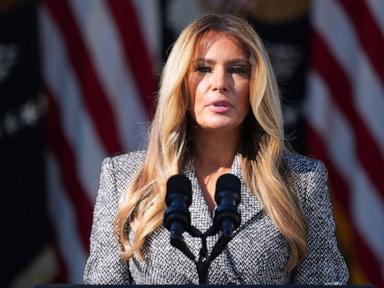
The announcement of a localized ceasefire in Russian-occupied Oleshky, reportedly brokered through backchannels involving Melania Trump, caught traditional diplomatic circles completely off guard. At its core, the agreement establishes a temporary, tightly monitored humanitarian pause along a devastated stretch of the left bank of the Dnipro River in Ukraine's Kherson region, aimed at facilitating civilian evacuations and emergency infrastructure repairs.
While mainstream outlets have largely treated the development as a political curiosity or a bizarre footnote in modern wartime diplomacy, veteran observers of Eastern European conflict resolution see something far more calculated. To understand how an unconventional intermediary gained traction where seasoned envoys stalled, you have to look past the spectacle of American domestic politics and examine the brutal mechanics of localized warfare, soft-power backchannels, and the desperate reality on the ground in southern Ukraine.
The Strategic Reality of Oleshky
Oleshky is not just another dot on a military map. Situated directly across the Dnipro River from the Ukrainian-held city of Kherson, this town has endured a slow-motion catastrophe since the full-scale invasion began and particularly following the destruction of the Kakhovka Dam in June 2023.
The geography dictates everything here. Because the river forms a natural, heavily fortified front line, neither Russian occupying forces nor Ukrainian defenders have been able to achieve a decisive breakthrough without absorbing catastrophic losses. What remains is a grinding war of attrition characterized by constant artillery duels, drone surveillance, and a trapped civilian population living without reliable water, electricity, or medical care.
In military terms, Oleshky became a frozen bottleneck. For Moscow, holding the town is essential to maintaining a buffer zone protecting the land bridge to Crimea. For Kyiv, the area represents a critical foothold and a symbol of sovereign territory awaiting liberation. Yet for both sides, the daily logistical cost of maintaining active combat operations in a flooded, ruined urban environment had reached a point of diminishing returns.
This operational stalemate created the exact conditions required for a localized pause. In modern asymmetric conflicts, grand peace treaties rarely materialize out of thin air. Instead, belligerents test the waters through hyper-specific, geographically limited truces—often framed around humanitarian necessity—to gauge whether the opposing command can actually enforce discipline among its frontline units.
Why Traditional Diplomacy Stalled
Before examining how an unexpected figure entered the picture, it helps to understand why conventional channels failed to produce even a temporary halt in the shelling around Oleshky.
Official diplomatic tracks between Washington, Kyiv, and Moscow have been paralyzed by maximalist preconditions. Formal state department envoys and United Nations intermediaries operate under strict institutional mandates. Every proposal put forward through official channels carries the weight of broader geopolitical recognition, sovereignty disputes, and domestic political accountability. If the Kremlin agrees to a UN-brokered truce in Kherson, it risks signaling weakness to hardline domestic factions or implicitly validating international oversight mechanisms it has spent years rejecting.
Similarly, Ukrainian leadership faces immense pressure never to legitimize Russian occupation through formal negotiations that resemble territorial concessions. Even a localized ceasefire can be weaponized by political rivals as the first step toward a frozen conflict that leaves millions under Moscow's control.
When official channels are locked in this kind of zero-sum posturing, leaders historically turn to deniable backchannels. A private citizen, particularly one with global name recognition, cultural ties to Eastern Europe, and proximity to American political power, operates outside the rigid protocols of the State Department. If the effort fails, governments can distance themselves instantly. If it succeeds, both sides can claim they acted purely out of humanitarian goodwill rather than strategic capitulation.
The Mechanics of Informal Backchannel Diplomacy
The involvement of Melania Trump in facilitating communications around Oleshky relies on a distinct set of diplomatic mechanics that career bureaucrats often underestimate.
First, consider the cultural and linguistic proximity. Born in Slovenia, raised during the final decades of socialist Yugoslavia, and fluent in multiple European languages, she possesses an intuitive understanding of Central and Eastern European political psychology that many Washington-trained diplomats lack. In diplomatic history, personal familiarity with regional history and cultural nuance frequently opens doors that formal credentials cannot.
Second, informal intermediaries bypass the bureaucratic filter. In traditional statecraft, a message from Washington to Moscow passes through dozens of analysts, legal advisors, and agency heads, each stripping away ambiguity and hardening the language to protect their own institutional interests. By the time a proposal reaches the desk of a decision-maker in the Kremlin, it reads like an ultimatum.
An informal envoy delivers a direct, stripped-down proposition. The focus shifts from international law and territorial sovereignty to immediate, transactional outcomes. In the case of Oleshky, the core pitch centered on non-combatant relief—specifically the extraction of vulnerable civilians, elderly residents, and wounded non-combatants, alongside the stabilization of critical water pumping stations before winter conditions rendered the area entirely uninhabitable.
The Role of Humanitarian Framing
Humanitarian corridors have long served as the acceptable currency of wartime negotiation. Neither Moscow nor Kyiv can afford the international reputational damage of openly rejecting a proposal designed to save non-combatants, provided the terms do not compromise immediate tactical security.
To make the Oleshky pause viable, the framework had to solve three specific operational problems:
- Verification without Western boots on the ground: Russia flatly refuses NATO or Western military monitors in occupied territories. The agreement bypassed this by relying on neutral third-party humanitarian observers and commercial satellite telemetry to verify that heavy artillery remained silent during designated windows.
- Strict geographic containment: The ceasefire applies strictly to a defined perimeter around Oleshky and specific transit routes, ensuring that neither side could use the pause to regroup armored divisions or rotate fresh infantry into adjacent sectors.
- Asymmetric reciprocity: Rather than demanding identical concessions from both armies, the arrangement traded localized Russian restraint on artillery fire for specific logistical allowances regarding civilian transit and medical supply deliveries.
What the Critics Are Getting Wrong
Skepticism surrounding the Melania Trump Oleshky ceasefire is both intense and entirely predictable. Critics across the political spectrum have raised valid concerns, though many miss the true nature of the risk.
The loudest objection is that any localized agreement inherently legitimizes Russian occupation. By negotiating terms that implicitly acknowledge Russian administrative control over Oleshky's transit corridors, external actors risk normalizing the redrawing of borders by force. Critics argue that Moscow has a well-documented history of exploiting humanitarian pauses—from Chechnya to Syria—to resupply troops, fortify defensive lines, and gather intelligence on opposing positions.
That historical precedent is undeniable. In 2014 and 2015, the Minsk agreements demonstrated how ceasefires in Ukraine could be manipulated into prolonged periods of low-intensity warfare that favored Russian strategic patience.
However, dismissing the Oleshky truce solely as a Kremlin trap overlooks the immediate calculus of military commanders on the ground. Modern battlefield surveillance has changed the equation. Unlike during the Chechen wars or even the early stages of the Donbas conflict, continuous drone coverage and high-resolution commercial satellite imagery mean that neither side can covertly mass troops under the cover of a humanitarian pause without immediate detection. The tactical advantage of cheating on a localized truce has shrunk dramatically.
Furthermore, critics operating from comfortable analytical perches in Western capitals often treat civilian survival as an abstract variable in a grand strategic game. For the remaining population in Oleshky, survival is measured in days, not geopolitical cycles. A temporary suspension of shelling that allows vulnerable residents to exit a active war zone delivers a concrete, measurable human benefit that abstract diplomatic purity cannot match.
The Precedent of Unconventional Envoys
History offers plenty of examples where unconventional, high-profile intermediaries broke deadlocks that paralyzed professional diplomats.
During the Cold War, industrialists like Armand Hammer maintained direct lines to Soviet leadership, facilitating cultural exchanges, trade agreements, and quiet humanitarian releases when official US-Soviet relations were at their lowest ebb. In the 1980s and 1990s, figures ranging from Jesse Jackson to former presidents operating as private citizens secured the release of hostages and brokered localized truces in Lebanon, Syria, and the Balkans.
These interventions share a common trait. They succeed not because the intermediary possesses superior diplomatic training, but because their symbolic weight alters the political theater. When a figure with massive media visibility steps into a regional conflict, the global spotlight follows. Suddenly, local commanders and national leaders are forced to weigh the propaganda value of cooperation against the immediate public relations disaster of sabotaging a high-profile humanitarian effort.
In the context of current American politics, the involvement of a figure closely tied to the Trump orbit also carries an unmistakable implicit signal. For both Moscow and Kyiv, engaging with an intermediary connected to major centers of American political influence is a way of hedging bets and maintaining open lines of communication regardless of shifting domestic winds in Washington.
The Fragility of Localized Pauses
Understanding how this ceasefire came together is only half the story. The harder truth lies in how easily it can unravel.
A localized truce in an active war zone is held together by sheer friction and mutual convenience, not trust. In Oleshky, several immediate threats could collapse the agreement within hours:
- Rogue frontline units: Command and control along the Dnipro river is notoriously strained. A single nervous artillery crew or an unauthorized drone operator firing on a suspected target can trigger a chain reaction of retaliatory strikes that immediately voids the pause.
- Information warfare: Both Russian state media and Western partisan outlets have strong incentives to spin the ceasefire to fit their preferred narratives. If Moscow portrays the agreement as a unilateral surrender by Kyiv, or if political commentators frame it as a personal triumph at the expense of Ukrainian sovereignty, political pressure may force military leaders to abandon the truce to save face.
- Logistical sabotage: Humanitarian corridors require precise coordination regarding inspection protocols for aid trucks and evacuees. Disputes over what constitutes dual-use equipment—such as generators, communication gear, or fuel—frequently stall deliveries at checkpoints until the agreed window expires.
Looking Beyond the Headlines
The real story of the Oleshky ceasefire is not about personality-driven politics or unexpected headlines. It is a stark indicator of how modern warfare evolves when traditional diplomatic institutions lose their monopoly on conflict resolution.
When state-level diplomacy becomes too rigid, too ideological, and too vulnerable to domestic political backlash, power naturally migrates toward informal networks. Private individuals, backchannel fixers, and unconventional envoys fill the vacuum because they can offer something governments cannot—plausible deniability paired with direct access to decision-makers.
Whether the guns stay silent in Oleshky for days, weeks, or merely hours, the mechanism behind the pause has already altered the playbook. Both Moscow and Kyiv have demonstrated a willingness to bypass formal institutional channels when the tactical cost of continued fighting outweighs the political risk of talking. In a conflict defined by entrenched positions and exhausted populations, those quiet, transactional side doors may ultimately prove far more consequential than the speeches delivered at international summits.



