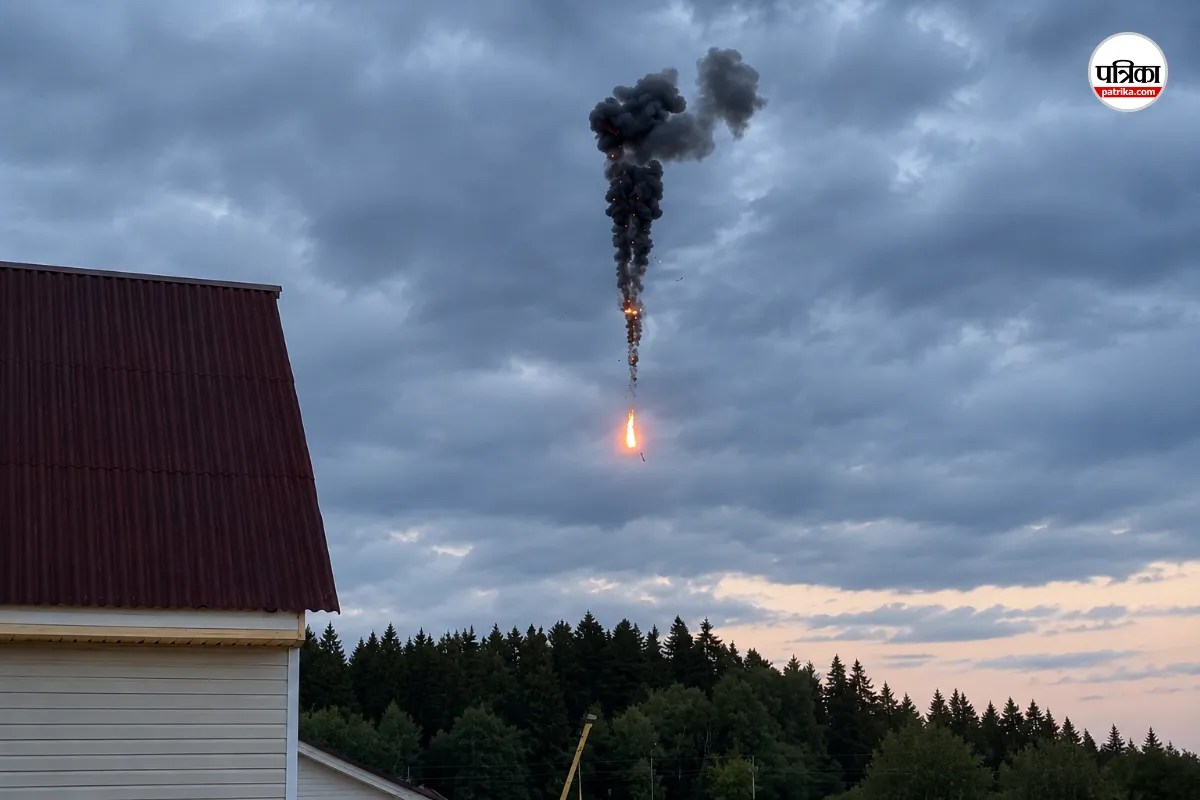
The repeated penetration of Moscow’s heavily fortified airspace by Ukrainian long-range strike drones is no longer a series of isolated, symbolic provocations. It is a sustained, calculated campaign exposing structural vulnerabilities within the Russian Federation’s domestic air defense network. When the Kremlin ordered the temporary closure of Moscow’s major commercial airports twice within a single week, it signaled more than an immediate tactical threat. It demonstrated that Ukraine has successfully industrialized the production of low-radar-cross-section kamikaze drones capable of bypassing layered electronic warfare screens and automated interception systems.
This operational shift directly challenges the narrative of an impenetrable domestic front. For decades, Moscow boasted about its integrated air defenses, anchored by systems like the S-400 and Pantsir-S1. Yet, cheap, propeller-driven composite aircraft are routinely slipping through the cracks. The implications stretch far beyond broken glass in the Federation tower or delayed flights at Vnukovo and Domodedovo. They point to a fundamental mismatch between Cold War-era air defense philosophy and the realities of modern attrition warfare.
The Technical Blind Spots Exploded by Low-Altitude Aviation
To understand how these drones reach the Russian capital from launch points hundreds of kilometers away, one must dismantle the myth of total radar coverage. Traditional early-warning radar arrays are designed to detect high-altitude, fast-moving targets like ballistic missiles, cruise missiles, or fighter jets. They look upward and outward toward the horizon.
Ukrainian engineers have systematically exploited the gaps left by this architecture. By utilizing low-altitude flight paths, often hugging river valleys, dense forests, and highway corridors, these drones utilize terrain masking to remain invisible to long-range radar networks.
The Physics of Detection Failure
Radar waves travel in straight lines, while the Earth curves. This creates a natural blind spot known as the radar horizon. A drone flying at an altitude of less than 100 meters can approach within dozens of kilometers of a radar site before the system can physically achieve a line-of-sight tracking lock.
Furthermore, many of these modern strike platforms are constructed using carbon fiber, fiberglass, and specialized plastics rather than metal. This choice of materials drastically reduces their radar cross-section. To an automated radar system, a slow-moving, composite drone can register as nothing more than a large bird or a localized weather anomaly. Filter settings designed to prevent radar screens from becoming cluttered with environmental noise frequently end up filtering out the exact threats they need to destroy.
The Overburdened Pantsir Problem
When a drone actually reaches the outer rings of Moscow’s defenses, the task of physical interception falls primarily on short-range air defense systems. The Pantsir-S1, a combined missile and anti-aircraft gun system, was built precisely for this role. However, it is facing a severe math problem.
- Ammunition Depletion: A Pantsir vehicle carries a limited complement of interceptor missiles and 30mm rounds. Ukraine frequently launches mixed swarms, utilizing cheap, unguided decoys alongside weaponized variants to force Russian batteries to expend their expensive, finite ammunition.
- Sensor Saturation: Dealing with multiple low-speed targets approaching from different vectors simultaneously overwhelms the target acquisition radar of a single battery, creating brief windows of vulnerability that the main strike drones exploit.
- Collateral Risks: Firing heavy 30mm explosive shells or surface-to-air missiles over a densely populated metropolis like Moscow poses an immense danger to civilian infrastructure on the ground, creating a secondary crisis every time an interception is attempted.
Economic Attrition via Airspace Disruption
While the structural damage caused by a 20-kilogram warhead hitting a building is relatively minor compared to a cruise missile strike, the economic ripples of these attacks are profound. The forced closure of major international and domestic transport hubs paralyzes logistics and drains state resources.
Every time Vnukovo, Domodedovo, or Sheremetyevo airports halt operations, the financial toll accumulates exponentially. Commercial airliners are forced into holding patterns, burning thousands of gallons of expensive fuel before being diverted to alternate fields hundreds of miles away, such as Nizhny Novgorod or St. Petersburg.
The operational disruption cascades through the entire civilian aviation sector. Crew schedules are shattered, ground handling operations face chaotic bottlenecks, and insurance premiums for airlines operating within western Russia skyrocket. This is economic warfare by proxy. By forcing Russia to continuously shut down its capital's airspace, Ukraine achieves a high-value economic blockade using assets that cost a fraction of a single commercial flight's fuel budget.
The Geographical Reality of a Defenseless Interior
Russia is simply too large to protect. This is the hard truth confronting military planners in the Kremlin. Western analysts often treat air defense as a blanket that can cover an entire nation, but in reality, it is a collection of localized umbrellas.
To protect every critical pipeline, oil refinery, military depot, and major city within a 1,000-kilometer radius of the Ukrainian border would require thousands of additional air defense batteries that Russia simply does not possess and cannot rapidly manufacture under the weight of international sanctions.
Strategic Reallocation Dilemmas
The Kremlin faces an agonizing choice every time a drone successfully strikes a target in the interior.
If they choose to reinforce Moscow by pulling advanced radar units and Pantsir batteries away from the front lines in Ukraine, they leave active combat formations, supply hubs, and command nodes highly vulnerable to tactical airstrikes. If they leave those assets on the front lines to support ongoing offensive operations, Moscow remains a sieve. Ukraine's strategy relies heavily on exploiting this friction, forcing their adversary into a defensive posture that thins out their frontline capabilities.
The Limits of Electronic Warfare
Russia possesses some of the most sophisticated electronic warfare capabilities on earth, such as the Krasukha and Pole-21 systems. These platforms can jam GPS signals and disrupt the radio control links used to pilot unmanned vehicles.
Yet, even this formidable capability is losing its efficacy against the latest iterations of Ukrainian long-range drones. Recognizing that electronic jamming can sever the link between a drone and its operator, Ukrainian developers have increasingly pivoted toward autonomous guidance systems. Many of these drones now utilize terrain-contour matching or internal inertial navigation units that do not rely on external satellite signals at all. Once launched, they fly completely silent, emitting no radio signals that electronic intelligence units can track, rendering traditional jamming arrays useless.
The Manufacturing Race Beneath the Radar
The escalating frequency of these strikes proves that Ukraine has moved past the experimental phase of long-range drone development. They have established highly decentralized, deeply buried production lines capable of turning out hundreds of long-range airframes every month.
By relying on commercial-off-the-shelf components, small internal combustion engines sourced from international markets, and localized 3D-printing networks for specialized components, they have bypassed the traditional bottlenecks of military procurement. This decentralized production model makes it practically impossible for Russian intelligence to neutralize the threat at its source through missile strikes, as there is no single factory floor to target.
The reality facing Russian air security is a permanent state of high alert that offers no guarantee of total protection. The strategic initiative has shifted toward low-cost, high-frequency asymmetric incursions that exploit the physical boundaries of radar, the economic vulnerabilities of civilian aviation, and the geographic immensity of the Russian state.