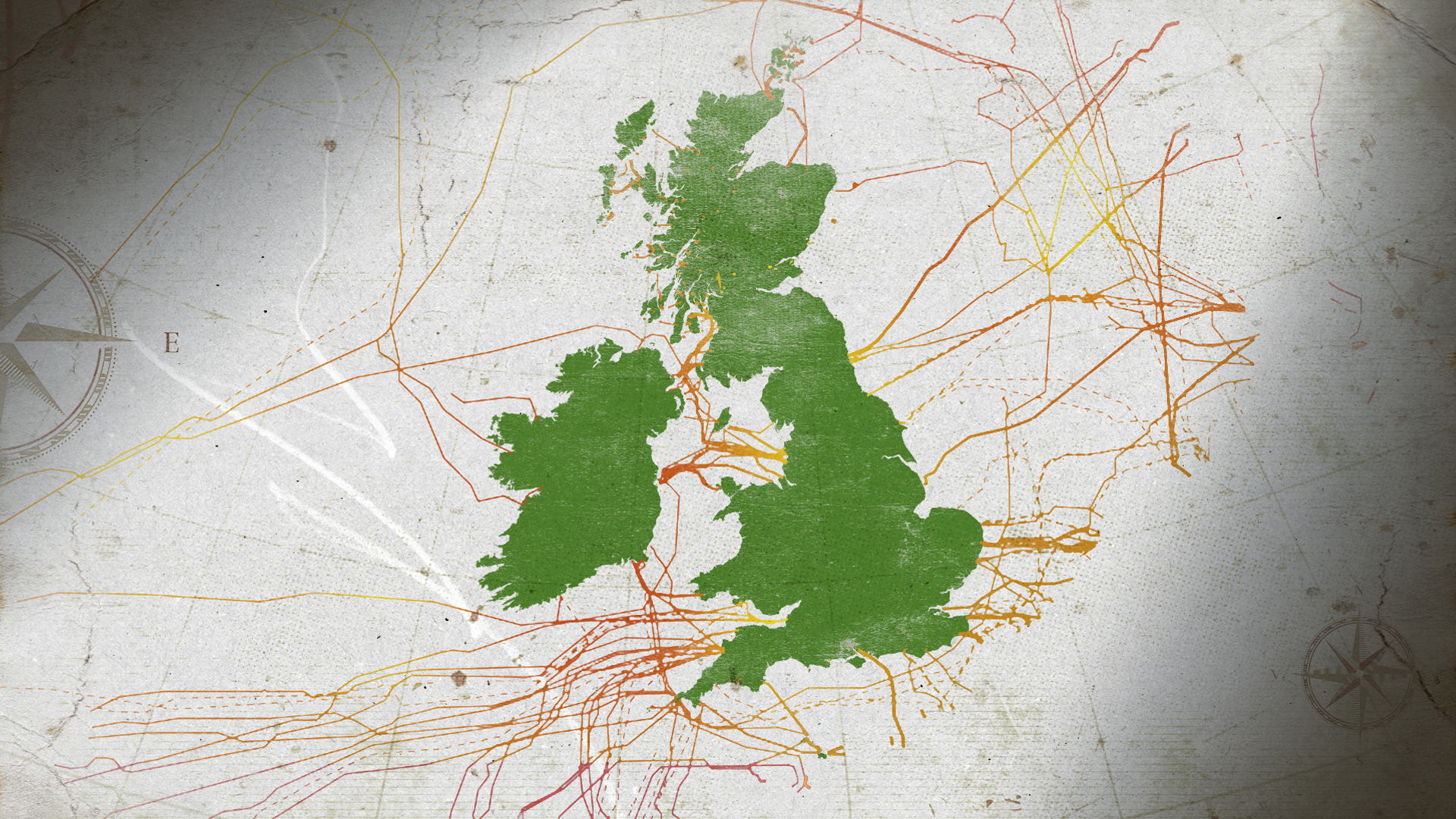
Britain is moving to overhaul its seabed security laws with tougher penalties, new offenses, and broader state powers aimed at deterring sabotage and reckless maritime activity against undersea pipelines, interconnectors, and cables. Yet passing tougher statutes in Westminster solves only half the problem. Out on the cold, gray waters of the North Sea, enforcing criminal liability across jurisdictional boundaries, proving intent beneath hundreds of feet of water, and keeping pace with covert vessels remain deeply contested operational challenges.
Anyone who has spent decades tracking offshore energy knows the uncomfortable truth about seabed infrastructure. Steel pipes carrying Norwegian gas, British North Sea production, and high-voltage power links were built for engineering durability and commercial throughput, not for wartime hardening against state-backed hybrid tactics or careless commercial shipping. When politicians announce stiffer prison terms and unlimited fines, markets and operators immediately ask a practical question: does a courtroom threat actually stop a ship dragging an anchor in the dark or an uncrewed underwater vehicle mapping a valve station? Discover more on a similar subject: this related article.
Why Old Seabed Laws Hit a Wall
For generations, maritime lawyers and offshore operators operated inside a patchwork of legacy statutes that looked cleaner on paper than they proved in practice. Provisions rooted in Victorian-era cable legislation—most notably the Submarine Telegraph Act of 1885—were drafted for a world of telegraphy and simpler commercial shipping, not modern fiber-optic arrays, bidirectional gas interconnectors, or multi-gigawatt electricity links. Trying to stretch nineteenth-century definitions over twenty-first-century subsea hardware leaves prosecutors fighting uphill battles over scope, proof, and jurisdiction.
Other statutes exist, of course, but each carries sharp friction points when applied to complex offshore incidents. General criminal damage rules were written primarily for terrestrial property. National security offenses aimed at foreign-power sabotage demand high evidentiary thresholds tying conduct back to a state actor. Meanwhile, routine maritime safety laws focus heavily on navigation rules and master-mariner obligations rather than systemic economic harm caused when a major gas artery or power interconnector goes offline. Further analysis by USA Today explores related views on this issue.
Lawmakers can raise maximum sentences overnight. Proving beyond reasonable doubt who dropped a heavy object or manipulated a vessel track miles offshore takes years of forensic work.
The White Paper published in late October 2026 attempts to close those legal gaps by proposing a modernized framework for critical undersea infrastructure, including pipelines, electricity interconnectors, and subsea cables, with a public consultation running into January 2027. Under the proposals, maximum custodial penalties scale up to 14 years for intentional harm, 10 years for reckless conduct, and up to two years for gross negligence, paired with unlimited fines and corporate liability alongside supplementary offenses targeting data tampering or obstructing repair operations.
The Hybrid Threat Beneath the Waves
Even the sharpest criminal statute runs straight into the gray zone of modern maritime security. Since the September 2022 explosions on the Nord Stream pipelines in the Baltic Sea, energy executives and defense planners have treated seabed vulnerability as an active operational risk rather than a theoretical cold-war scenario. In UK waters and neighboring seas, officials have repeatedly pointed to suspicious vessel loitering and covert underwater activity—including a British Armed Forces disclosure in April 2026 regarding a covert Russian submarine operation around critical undersea infrastructure—as proof that adversaries test defenses below the surface.
What makes subsea attacks uniquely insidious is plausible deniability. A vessel can switch off its Automatic Identification System transponder, drift across a pipeline corridor, claim an anchor slipped during rough weather, or blame mechanical failure. On the seabed, distinguishing deliberate sabotage from severe accidental dragging requires time, specialized survey gear, and intact telemetry.
There is also a counter-argument worth taking seriously before assuming aggressive interdiction is a silver bullet. Pushing naval patrols or boarding suspicious ships in contested waters carries escalation risks, especially when attribution is murky. Over-reacting to an ambiguous incident can trigger diplomatic standoffs or retaliatory pressure elsewhere, while under-reacting emboldens actors testing how much friction they can create below the radar.
Consider a hypothetical example to see how murky enforcement gets in real life. Suppose a cargo ship flying a flag of convenience passes over a subsea gas pipeline in the Exclusive Economic Zone, its tracking signal drops out for two hours, and a pressure drop is detected hours later at an onshore terminal. Even if investigators suspect foul play, the ship may already be entering another jurisdiction or changing ownership structures on paper before a boarding party or arrest warrant can catch up.
Accidents, Anchors, and Operator Friction
Sabotage grabs the headlines. Routine maritime hazards cause far more everyday headaches.
Commercial vessels drag anchors in bad weather. Bottom trawlers operate near shallower corridors. Aging subsea joints, corrosion, or seabed sediment shifts can trigger leaks that look alarming at first glance without involving any hostile actor at all. Criminalizing reckless and grossly negligent behavior helps deter careless operators, yet it also creates friction between regulators, shipping companies, and offshore energy firms.
| Threat Vector | Primary Legal Hurdle | Operational Impact on Energy Flow |
|---|---|---|
| State-backed sabotage | Proving attribution and foreign-power links beyond reasonable doubt | Severe, potentially prolonged outage of high-capacity gas or power links |
| Reckless vessel navigation | Establishing conscious disregard of risk and jurisdiction over foreign crews | Localized rupture, emergency shutdowns, and costly subsea repair windows |
| Gross negligence or crew error | Separating honest navigational misjudgment from prosecutable fault | Unplanned maintenance, routing delays, and elevated compliance costs |
| Equipment or seabed failure | Non-criminal engineering event; no malicious actor to deter | Pressure drops, safety trips, and supply reallocation across interconnectors |
Energy operators already live under tight safety regimes, insurance requirements, and commercial contracts. When new duties, reporting timelines, or ministerial direction powers enter the picture, companies worry about conflicting mandates during a live emergency. A pipeline operator trying to isolate a valve, protect personnel, and manage grid balance needs unambiguous authority—not competing instructions or fear of retroactive second-guessing over every split-second call.
Insurance adds another layer of complexity that boardrooms cannot ignore. Following the Nord Stream blasts, high-profile litigation—including a July 2026 ruling by London's High Court upholding a war exclusion clause on a major insurance claim—underscored how quickly commercial coverage can tighten when state involvement or geopolitical conflict enters the picture. Tougher domestic criminal law does not automatically fix marine war-risk insurance pricing or guarantee rapid availability of specialized repair vessels when multiple assets need attention at once.
What Real Deterrence Actually Requires
Deterring undersea pipeline attacks takes more than harsher sentencing guidelines in a statute book. Deterrence only works when a potential offender believes detection is likely, escape is difficult, and the cost outweighs the payoff.
First, persistent underwater awareness has to match the scale of the network. You cannot police thousands of miles of seabed with occasional surface flyovers alone. Combining acoustic monitoring, seabed sensors, satellite tracking, and rapid data sharing between navies, coast guards, and commercial operators narrows the hiding space for suspicious vessels.
Second, allied coordination is non-negotiable in northern European waters. Pipelines and power interconnectors cross maritime boundaries and link interdependent grids. If one country tightens rules and evidence rules while neighboring jurisdictions move slowly or apply different standards, bad actors will simply exploit the seams between legal systems.
Third, resilience and repair readiness remain the ultimate backstop. Laws deter; redundancy and rapid recovery keep the lights on and homes warm if deterrence fails. Having clear emergency playbooks, accessible repair assets, and tested rerouting options turns a potential strategic shock into a manageable disruption.
For energy executives, maritime insurers, and policy teams watching the consultation unfold, the practical next step is straightforward: audit every critical subsea asset's telemetry logs, incident-reporting chain, and emergency response contacts against the proposed standards now—before statutory duties and enforcement penalties become binding law.