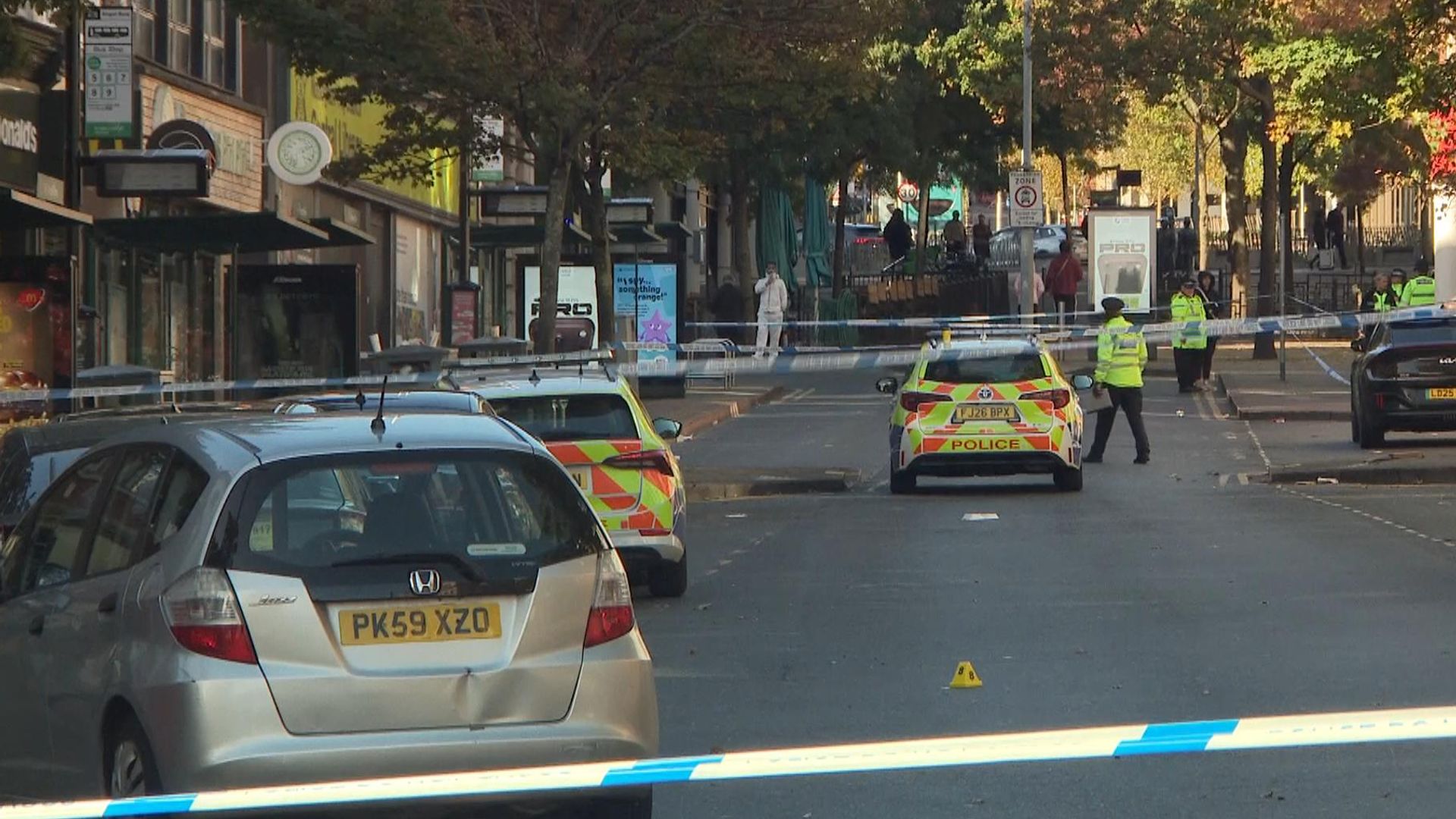
A 27-year-old woman faces criminal charges following the shooting of a police officer in Nottingham city centre, an incident that immediately shifted local policing priorities and forced difficult questions about street-level firearm threats in dense urban hubs. Routine town-centre patrols rarely account for sudden gunfire in crowded commercial streets. Yet when a weapon is discharged in a place built for foot traffic, retail, and nightlife, the tactical reality changes in seconds.
Breaking news headlines tend to flatten complex events into a single arrest or charge sheet. That shorthand leaves out the operational friction that happens between a call coming in, officers converging on a busy street, and prosecutors deciding what charges stick. Covering crime beats for decades teaches you to look past the initial press release and examine the mechanics underneath. You might also find this similar coverage useful: Celebrity Midterm Appeals and the Reality of Voter Persuasion.
What an Arrest Sheet Leaves Out
Charging a 27-year-old woman is a formal legal milestone, not the end of an inquiry. Charging decisions reflect the evidence available at a specific point in time, weighed against legal thresholds for intent, possession, endangerment, or involvement. A charge does not answer every operational question about how a firearm entered a crowded urban area or how the sequence unfolded before sirens arrived.
In fast-moving city centre incidents, public information arrives in stages. Police forces balance transparency against active investigations, witness safety, and court rules that restrict prejudicing future proceedings. That gap between public curiosity and evidentiary caution often breeds speculation. Rumors move faster than forensic lab work, ballistics analysis, and digital CCTV review. As discussed in detailed coverage by NBC News, the implications are significant.
Look closely at what happens inside a dense city core when shots are fired. Dozens of cameras may capture fragments of the same minute from wildly different angles. Shopfronts, buses, delivery vans, and pedestrians create blind spots and competing timelines that investigators have to reconcile piece by piece.
- Timeline reconstruction requires syncing dispatch logs, body-worn video, phone timestamps, and third-party footage before establishing a reliable sequence.
- Forensic verification takes time because physical recovery, firearm examination, and medical assessments follow strict chain-of-custody rules.
- Legal thresholds dictate which charges are brought initially and whether additional counts or adjustments follow once files reach court.
None of this is glamorous detective work. Most of it is patient cross-checking under intense public scrutiny.
The Tactical Math of City Centre Policing
Urban centres are designed for movement, not containment. Narrow lanes, late-night venues, transit stops, and mixed-use buildings pack thousands of people into a compact footprint. For front-line officers, that density compresses reaction time and widens the margin for error.
Standard patrol work relies heavily on visibility, de-escalation, and rapid backup. When an officer is shot in a city centre, the threat shifts instantly from routine public order to high-risk containment. Every bystander becomes a potential complication. Every doorway becomes an unknown variable.
Consider a hypothetical example of how response dynamics shift in a busy commercial street. Suppose two officers respond to a disturbance near a late-night takeaway and transit stop while crowds are thinning out. If gunfire erupts without warning, initial priorities split immediately between rendering medical aid to an injured colleague, securing the immediate perimeter, and guiding uninvolved members of the public away from danger. That split in attention is one of the hardest realities of urban policing.
Armed response units bring specialized training and equipment, yet response times still depend on traffic, distance, and call volume across the wider force area. Even well-drilled protocols face friction when an incident occurs in a high-footfall zone where people scatter in multiple directions at once.
Critics and supporters of policing often argue past each other on this point. Some point to visible patrol numbers and demand tougher enforcement. Others warn against heavy-handed tactics that can strain trust in minority or working-class neighborhoods. Both sides can be right about parts of the picture while missing how stretched resources behave under sudden shock.
Firearms in Britain and the Illicit Supply Problem
Strict gun laws shape the baseline reality in the UK. Legally held firearms are subject to licensing and oversight, making routine street encounters with guns far less common than in countries with widespread civilian ownership. When a shooting does happen in a place like Nottingham city centre, it draws sharp attention precisely because firearm violence is not an everyday street norm.
When a gun appears in an urban altercation or criminal episode, investigators rarely treat the weapon in isolation. A firearm has a trail, even if that trail is obscured. It may have been stolen, converted, trafficked across regions, or passed between multiple hands before reaching the street.
Tracing that path is notoriously difficult. Illicit weapons move through informal networks where buyers and holders treat secrecy as survival. Ballistics and forensic links can connect a weapon to prior scenes or individuals, yet uncovering the full supply chain often requires months of coordinated intelligence work across police forces and national agencies.
There is also a gray area around how firearms are used or perceived in street incidents. Sometimes a weapon is fired directly at someone; in other cases, discharges happen during chaotic confrontations, struggles, or attempts to flee. The legal and investigative consequences are severe either way, especially when an officer is injured, though the exact circumstances matter deeply to prosecutors and juries.
How Local Economies Feel the Shockwave
A shooting in the heart of a city does not stay confined to crime statistics. City centres depend on confidence. Shoppers, diners, students, commuters, and night-time hospitality workers all make quiet calculations about whether a place feels safe and welcoming.
When a police officer is shot in a central district, the immediate ripple hits local businesses and civic life. Late-night venues worry about footfall dropping off. Daytime retailers worry about headlines painting the entire city as lawless. Even people who rarely visit the exact spot feel a subtle jolt of unease.
Mayors, council leaders, business improvement districts, and police chiefs face immediate pressure to project calm without minimizing what happened. Overpromising quick fixes rarely holds up. Claims that a single arrest or a short-term surge of patrols has permanently solved deep-rooted issues tend to ring hollow once the cameras move on.
Real resilience in a city centre takes more than uniformed presence after dark. It involves street lighting, transport safety, support for hospitality staff, youth outreach, and steady coordination between local authorities and police. None of those measures alone stops a determined offender with a gun, yet together they shape how resilient a community is when trouble strikes.
Media Coverage and the Trap of Instant Narratives
High-drama crime stories test newsrooms as much as they test institutions. When a police officer is shot, the human stakes are obvious, and the urge to publish fast updates is strong. Speed sells clicks and feeds rolling alerts, but speed also increases the risk of getting nuance wrong.
A headline noting that a 27-year-old woman has been charged gives readers a clear anchor. Yet readers sometimes mistake a charge for proof of every detail circulating online, or treat a single arrest as a neat conclusion to a messy story. Court processes move slowly, adjournments happen, and facts tested in open court can look sharper—or more complicated—than early summaries suggest.
Good reporting resists turning tragedy into a simplistic morality play. It separates confirmed facts from unverified claims. It explains how the justice system works without lecturing the audience. Most of all, it stays with the story past the first 24 hours, when the noise dies down and accountability actually begins.
What Accountability Looks Like After the Sirens Fade
Once the initial shock passes, the real test for Nottingham and similar urban centres is follow-through. That means supporting the injured officer and their family, giving investigators the time and resources to build a thorough case, and examining any broader lessons around urban safety and illicit weapons without knee-jerk reactions.
Citizens watching from outside the cordon have their own practical role too. Paying attention to verified court reporting rather than social media rumor keeps public debate grounded in reality, while pressing local leaders for sustained investment in community safety keeps attention on solutions that last longer than a news cycle.