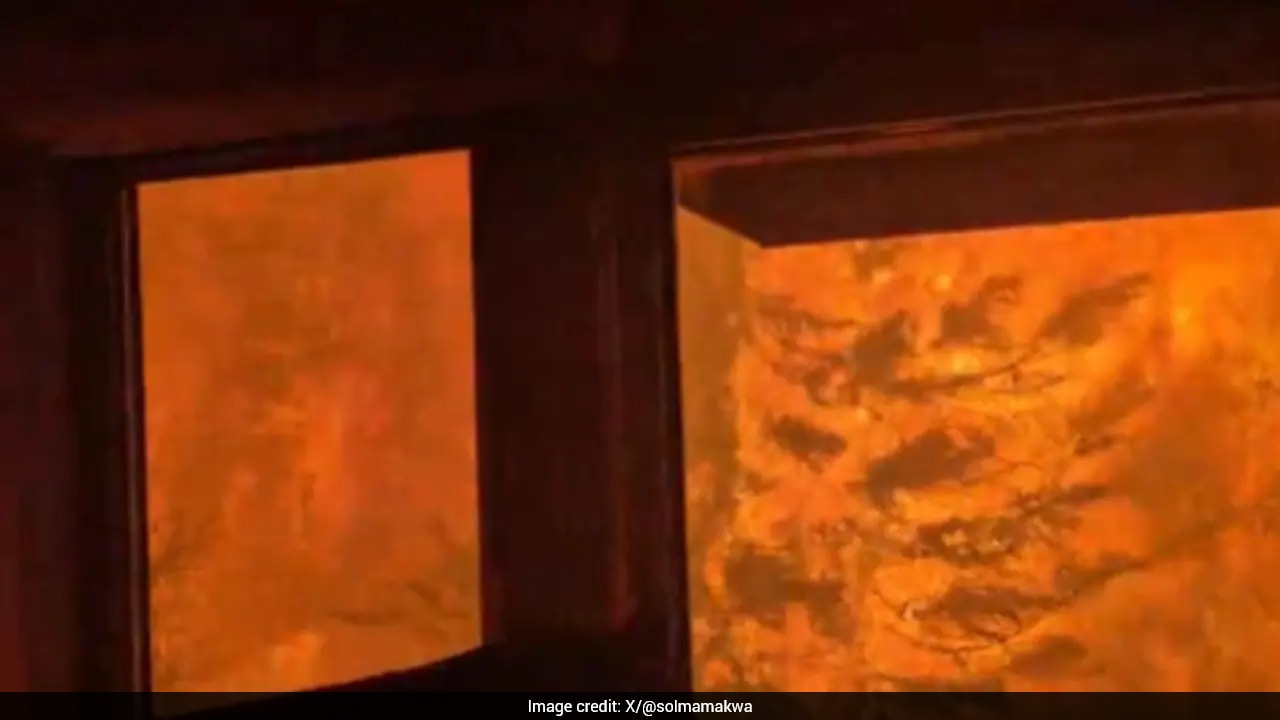
A sickly yellow haze blanketed Toronto on Wednesday morning, forcing the financial capital of Canada to claim the ignominious title of the most polluted major city on Earth. Wildfires ripping through the boreal forests of northwestern Ontario have driven Air Quality Index (AQI) values well past the hazardous 180 threshold, choking local lungs and transforming a routine morning commute into an exercise in survival.
Public health officials are urging citizens to stay indoors and keep windows tightly shut. Yet, the immediate emergency in the high-rises of Bay Street masks a far more insidious structural failure. The true catastrophe is not the toxic sky drifting south; it is an obsolete wilderness management strategy that treats a shifting, hyper-volatile climate ecosystem as a series of isolated brush fires.
The Mirage of Northern Containment
For generations, Canadian wildland firefighting relied on a predictable seasonal cycle. Winters offered a heavy snowpack that kept the forest floor damp well into June, limiting intense fire behavior to a narrow window in July and August.
That timeline has disintegrated. Extended multi-year droughts and a rapidly diminishing spring snowpack mean the wildland fuel load is primed for combustion months ahead of schedule.
Historical vs Current Wildfire Dynamics
┌───────────────────────────┬──────────────────────────────────────────┐
│ Old Forest Paradigm       │ Modern Volatility Paradigm               │
├───────────────────────────┼──────────────────────────────────────────┤
│ Predictable winter damp   │ Multi-year drought, early snowmelt       │
│ Fires calm down at night  │ Weakened day-night thermal cycle         │
│ Isolated infrastructure   │ Systemic grid and logistics disruption   │
└───────────────────────────┴──────────────────────────────────────────┘
The fires currently raging across northwestern Ontario are defying traditional suppression tactics because they are no longer behaving like normal forest fires. Recent meteorological research shows that rising baseline temperatures are weakening the traditional day-night cooling cycle. Historically, lower overnight temperatures and rising humidity allowed exhausted ground crews to establish containment lines. Now, fires maintain high-intensity burning hours straight through the night, jumping rivers and bulldozer lines while crews are forced to withdraw for basic safety.
Compounding the crisis is the rise of overwintering fires, colloquially known as zombie fires. These blazes smolder deep within the peat and organic soil layers under meters of snow, completely undetected throughout the winter months. When the spring melt occurs, they simply breach the surface, skipping the ignition phase entirely and immediately threatening northern infrastructure. Treating these fires as isolated emergencies is a fundamental error. They are a continuous, subterranean threat.
The Unequal Toll of the Boreal Shield
While Toronto residents check air filter ratings and weigh the risks of an outdoor jog, remote First Nations communities are facing existential displacement. The geographic reality of northwestern Ontario means that when a fire breaks out, evacuation routes are dangerously limited.
Consider a typical isolated community built on the Canadian Shield. There is often only a single gravel access road in and out, flanked on both sides by dense stands of black spruce. If the fire cuts off that road, the only options left are airlifts or water evacuations across volatile lake systems.
        [ Wildfire Front ]
               │
               ▼  (Cuts off ground route)
  [==== Single Access Road ====] ──X── [ Urban Hubs ]
               ▲
               │  (Forces high-risk alternatives)
     [ Remote Communities ] ──► [ Air/Water Evacuation Only ]
Air evacuations are heavily dependent on visibility. When smoke plumes grow dense enough to trigger global air quality alerts in southern cities, they simultaneously ground the very turboprop planes and helicopters needed to rescue families in the north. The logistics chain collapses precisely when it is needed most.
The economic fallout is equally devastating. Infrastructure in the north is built for endurance, not extreme thermal resistance. High-voltage transmission lines are vulnerable to the intense heat and ionzed air generated by major smoke plumes, which can cause massive grid trips. Rail lines, critical for moving food, fuel, and timber across the country, warp under extreme heat and fire exposure. The cost of repairing these severed lifelines regularly exceeds $1 billion annually, yet the funding mechanisms remain reactive, triggering only after a community is already burning.
The Air Filtration Myth
The advice distributed by urban municipalities during severe smoke events reveals a deep misunderstanding of fine particulate matter. Citizens are told to rely on standard building HVAC systems and basic masks, assuming that indoor air provides an absolute sanctuary.
It does not. Wildfire smoke is dominated by PM2.5—particles smaller than 2.5 micrometres that easily bypass the human respiratory system’s natural defenses and enter the bloodstream.
Standard residential and commercial building codes in Ontario do not mandate the level of filtration required to scrub PM2.5 effectively during a sustained atmospheric inversion. Most standard furnace filters are designed to capture dust bunnies, not microscopic combustion byproducts. Unless an indoor space is equipped with HEPA filtration and a dedicated energy recovery ventilator capable of managing positive building pressure, outdoor smoke slowly infiltrates the indoor envelope through micro-gaps in windows, doors, and masonry.
The health system is poorly prepared for the resulting surge. Emergency rooms in southern Ontario see immediate spikes in admissions for cardiovascular and respiratory distress within hours of a major smoke plume arrival. The financial impact of these health waves, measured in lost productivity and acute medical care, is rarely tallied alongside the direct costs of water bombers and fire suppression crews.
Rethinking the Boreal Defense
The current strategy of aggressive suppression—waiting for a lightning strike and then flying in crews to fight it—is financially and operationally unsustainable. Canada’s forest management agencies are fighting an asymmetric war against fuel loads that have accumulated for over a century due to the strict suppression of natural, low-intensity fires.
A fundamental pivot is required. Instead of viewing fire exclusively as an adversary to be eradicated, management frameworks must integrate controlled, prescriptive burning during low-risk windows to deliberately break up fuel continuity around critical infrastructure.
This requires a massive reallocation of capital. Funds must be shifted away from seasonal emergency response and directed toward permanent, year-round forest management workforces drawn from local and Indigenous communities. These teams understand the specific topography and local fuel conditions far better than seasonal crews flown in from other provinces.
Industrial design must also adapt. Urban building codes must change to require high-efficiency PM2.5 filtration systems in all multi-unit residential developments. We can no longer treat clean air as a structural guarantee. It must be actively engineered into the spaces where we live and work.
The toxic yellow sky over Toronto is not a rare meteorological anomaly to be endured until the wind changes. It is a direct warning that the old ways of managing the wilderness have failed, and the costs of pretending otherwise are rising with every breath we take.