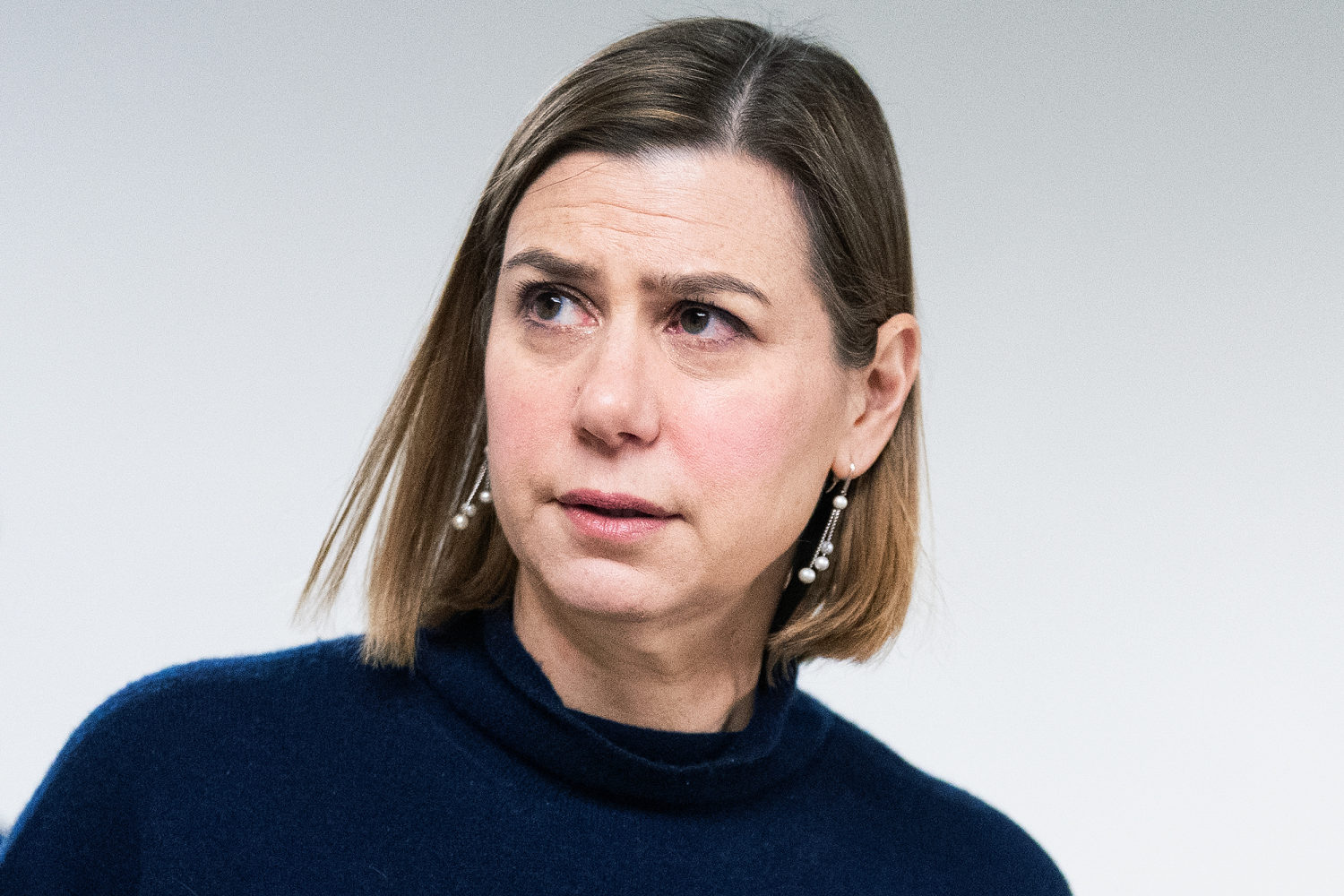
Home Secretary Shabana Mahmood backs a ban on uniformed police officers marching in pride events to protect public trust and enforce strict institutional impartiality. Her position follows legal rulings and political pressure over perceived political alignment at marches where contested social debates often converge.
Anyone who has covered British policing for twenty years knows that a minister’s speech rarely arrives out of thin air. When Shabana Mahmood told police chiefs and crime commissioners in November 2026 that officers should not march in uniform at pride events, she was stepping into a collision between courtroom law, street-level politics, and bruised public confidence. Most surface reports treat the announcement as a neat culture-war headline. It is not. It is a calculated effort to draw a bright line around what a police uniform signals in an era when every symbol is contested.
The Impartiality Trap Behind the Badge
For more than a decade, marching in uniform at pride events looked like a triumph of community outreach. Chief constables wanted to show gay and lesbian recruits that the service had changed since the days of overt hostility and institutional suspicion.
Times shifted. Modern pride marches frequently bring together broad coalitions, campaign groups, and slogans touching on gender identity and legal rights that are fiercely disputed in courts, parliament, and the press. In Mahmood’s view, when officers walk alongside those banners in full kit, observers see an endorsement of contested political positions rather than an affirmation of equality under the law.
The legal turning point came before Mahmood’s speech. In July 2025, the High Court ruled in R (Lindsey Smith) v Chief Constable of Northumbria Police that authorising uniformed officers—led by the chief constable—to march in Newcastle Pride 2024, alongside a force display and a van in transgender flag colours, breached the duty of impartiality. Equality duties under section 149 of the Equality Act 2010 require public bodies to weigh equality aims, not override neutral policing. Once a judge puts that on paper, force lawyers start sweating over judicial reviews and costs.
A police uniform belongs to the office, not the individual wearing it. The moment it reads as a statement on a live political dispute, the officer’s neutrality on the street is called into question.
There is an awkward irony here that rarely gets a fair hearing. Some LGBTQ+ campaigners and activist groups have long argued against uniformed police presence at pride parades for reasons rooted in history and protest culture. Now a Labour Home Secretary is arriving at a similar operational boundary from the opposite direction: preserving state neutrality. Strange bedfellows do not make the policy simple; they make it combustible.
Why Two-Tier Policing Shadows Every Move
You cannot read Mahmood’s stance on pride uniforms in isolation from the broader argument over two-tier policing. Opponents, including Reform UK, have hammered the claim that officers apply different standards depending on who is protesting or what cause is on display.
Mahmood explicitly rejected the accusation that routine or systemic two-tier policing exists across England and Wales. Yet she acknowledged that the perception of bias is corrosive enough to damage consent. When citizens feel law enforcement is taking sides on cultural flashpoints, faith in routine street encounters erodes.
The real strategic calculation is defensive containment. By backing a clear restriction on marching in uniform—alongside a wider push for an impartiality standard and structural reform across local commands—Mahmood is trying to strip critics of visual ammunition. A photograph of a uniformed officer marching past polarizing placards is an instant attack line. Remove the uniform from the march, and the Home Office hopes the argument loses its sharpest prop.
What Gets Lost When Uniforms Step Back
Every institutional correction carries a price tag, and pretending otherwise is bad analysis. Many serving gay, lesbian, bisexual, and transgender officers viewed uniformed participation as visible proof that they did not have to hide who they were to wear the badge.
An earlier inspection by His Majesty’s Inspectorate of Constabulary and Fire and Rescue Services (HMICFRS) highlighted how tangled force rules on visible symbols had become. Some forces used rainbow branding or badges to encourage underrepresented applicants, while other officers and members of the public felt overt emblems blurred neutral authority. When policies vary wildly from one county to the next, inconsistency itself breeds grievance.
Consider a hypothetical example to see how the tension plays out on the ground. Suppose a junior officer who is openly gay wants to walk in a local pride parade to show solidarity with neighbours. Under a ban on marching in uniform, that officer can still attend off duty in plain clothes as a private citizen. Yet to that officer, walking in street clothes can feel like a quiet step backward from hard-won institutional visibility. Meanwhile, a resident skeptical of police neutrality may view the same officer in plain clothes as properly separating personal life from public duty. Both reactions are real, and no memo will reconcile them overnight.
Policing the Event Versus Joining the March
A crucial distinction gets muddled in heated debate. Banning uniformed officers from marching in pride events does not mean withdrawing police protection from them.
Public safety at large street gatherings remains a core operational duty. Crowd management, counter-terrorism planning, medical coordination, and protecting attendees from harassment or violence require uniformed officers on duty and in charge. Being present to keep people safe is the job; joining a procession as a participant is something else entirely.
| Dimension | Marching in Uniform as Participant | Policing Event in Uniform on Duty | Attending Off Duty in Plain Clothes |
|---|---|---|---|
| Role | Symbolic participant in procession | Operational guardian of public safety | Private citizen expressing personal views |
| Impartiality Risk | High where contested slogans appear | Low when tied to neutral law enforcement | Minimal because state badge is absent |
| Recruitment Signal | Visible institutional solidarity | Professional competence and protection | Personal belonging rather than force backing |
| Legal Exposure | Vulnerable to impartiality challenges | Grounded in statutory policing duties | Governed by general conduct rules |
The Grey Zones Forces Cannot Dodge
Even with a clear rule against marching in uniform, chief constables still face thorny edge cases. What about progression lanyards, epaulette patches, charity badges, or recruitment stalls at community festivals? In Wiltshire, a legal challenge over a police stall at a pride event underscored that disputes over neutrality extend well beyond parade routes.
A uniform policy only works if it is consistent. If forces ban marching in uniform at pride marches while allowing politically charged slogans or partisan badges elsewhere, accusations of selective enforcement will return within weeks. Clear, enforceable national standards matter far more than ad-hoc local improvisations.
Mahmood’s backing for the ban signals a harder-edged, more cautious phase for British policing—one where ministers prioritize visible neutrality over symbolic alignment. Watch how individual chief constables rewrite their local uniform codes and recruitment playbooks over the coming months; that quiet paperwork will reveal whether the ban brings calm or simply shifts the argument to the next badge.