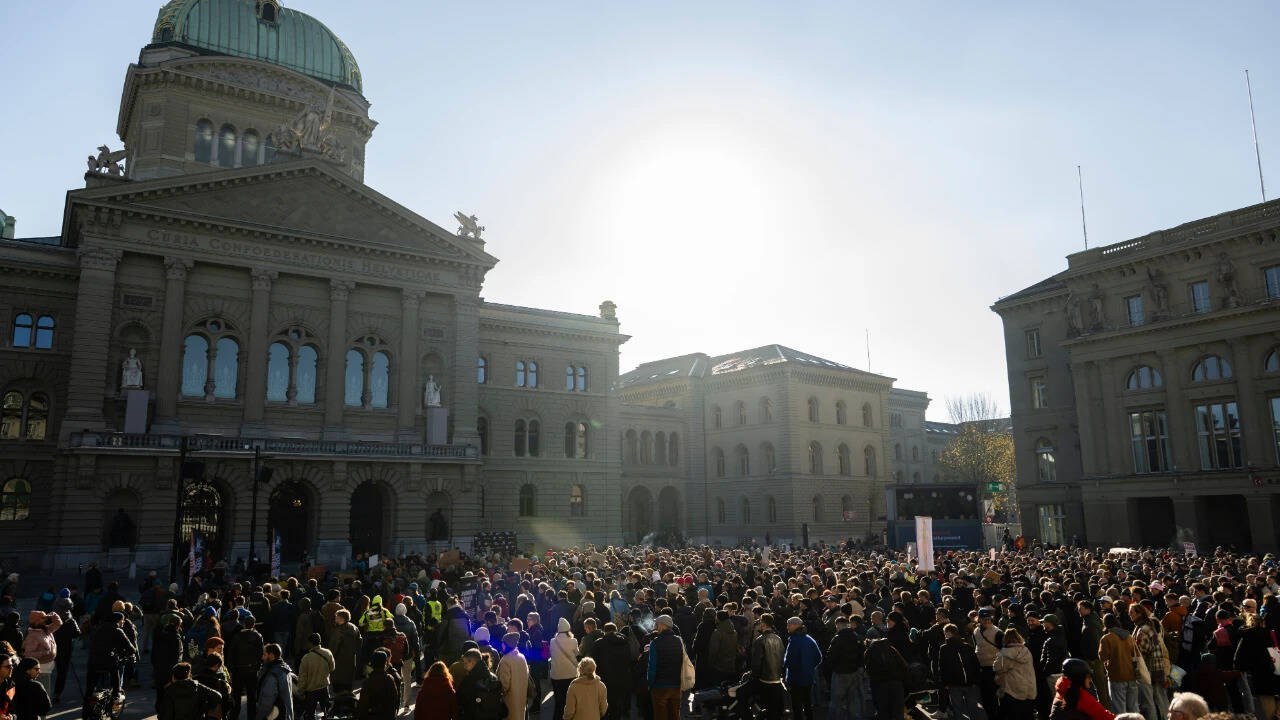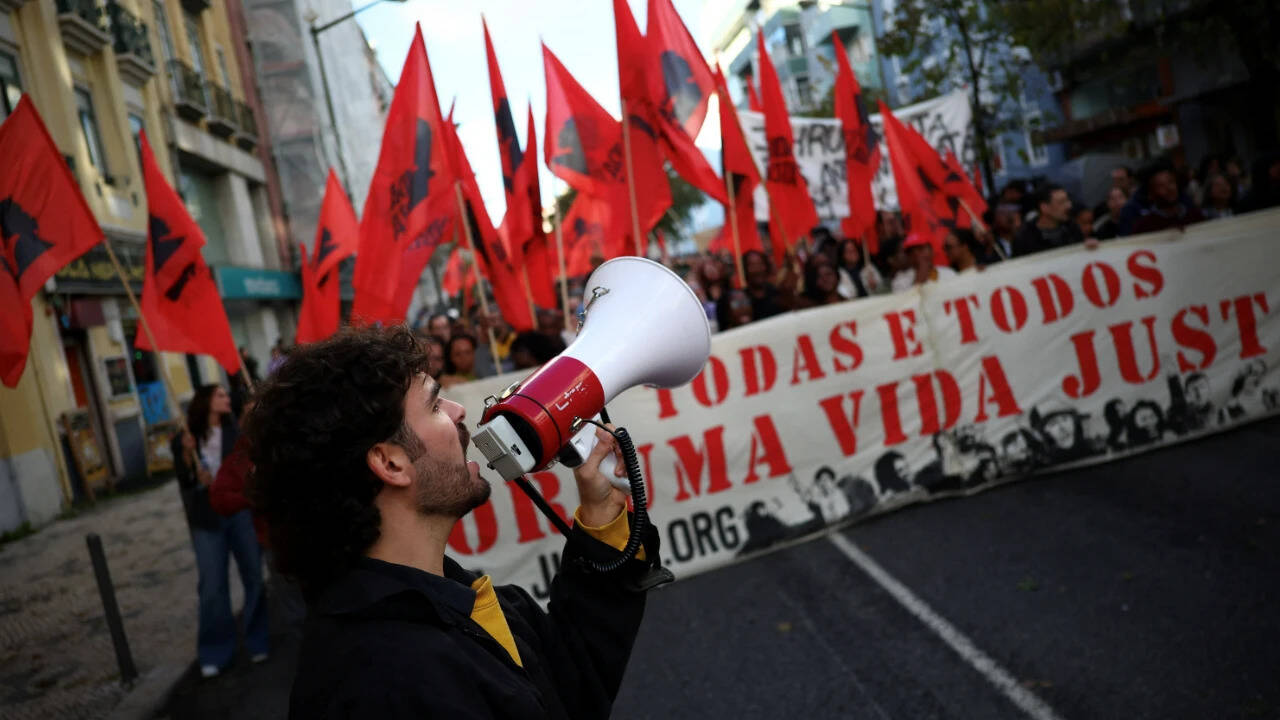
Tens of thousands of people marching through Lisbon, Porto, and smaller Portuguese cities over soaring housing costs are not merely reacting to a bad real estate cycle. They are colliding with a structural mismatch between local wages and international capital that has been building for more than a decade. For years, policymakers treated Portugal as a quiet success story of tourism recovery and foreign investment attraction. Now streets fill with workers, students, and families who can no longer afford a lease in the cities where they keep the economy running.
Street anger looks sudden on television. In reality, it is a lagging indicator of policy choices made long before the banners appeared.
When a country markets its sun, safety, and lower cost of living to remote workers, retirees, and global property buyers without fixing its domestic wage floor or building enough homes, tension is guaranteed. Local residents see empty or short-term-oriented properties alongside rising asking rents, while their paychecks barely budge. Protest marches give voice to that frustration, yet chanting in the streets does not automatically add a single square meter of habitable floor space.
How Foreign Demand Met Stagnant Local Pay
Ask anyone walking past a renovated apartment block in central Lisbon what went wrong, and you will hear ten versions of the same story. Foreign buyers arrived with cash or higher-currency incomes. Short-term rentals proliferated. Rents climbed while domestic salaries stayed anchored to modest service and retail rates.
Those grievances have real roots, even if they are sometimes oversimplified. Over the past decade, Portugal leaned heavily on policies designed to draw outside capital and high-earning residents into the economy. Tax regimes aimed at non-habitual residents and residency-by-investment programs brought money, visibility, and demand into urban centers. For property owners, banks, and hospitality operators, that inflow looked like prosperity after years of austerity and sluggish growth.
For salaried workers in Lisbon or Porto, the arithmetic turned brutal. When housing prices detach from local median income, a studio or one-bedroom flat stops functioning as ordinary shelter and starts behaving like an asset priced for a wealthier, more mobile buyer pool. Young adults stay with parents longer. Teachers, nurses, and hospitality staff commute longer distances or leave neighborhoods they grew up in.
Still, blaming outsiders alone misses half the equation. Foreign demand is a spark, not the entire fire. A market only spikes that violently when supply is rigid and local purchasing power lacks cushion. Even if every foreign-owned second home vanished tomorrow, a city with chronic underbuilding and low domestic wages would still face severe affordability strain.
Consider a hypothetical example to see how the squeeze works on the ground. Imagine a municipal worker earning a modest local salary who tries to rent a basic one-bedroom apartment near a transit line. If the asking rent consumes more than half of net monthly pay before utilities, groceries, or transport, the household budget breaks immediately. Moving farther out trades rent for daily commuting costs and lost hours, which eats away at the supposed savings. Multiply that single household calculation across tens of thousands of people, and political pressure becomes inevitable.
The Short Term Rental Tug of War
Short-term holiday rentals sit right at the center of Portugal's housing debate because they make the conflict visible on every street corner. A single apartment can host tourists week after week at nightly rates that dwarf what a long-term local tenant can pay over a month. From a property owner's standpoint, choosing higher yield and lower long-term tenant friction is rational business behavior within the rules set by the state.
From a neighborhood standpoint, the spillover costs accumulate fast. Corner bakeries give way to souvenir shops or brunch spots priced for visitors. Long-term neighbors disappear, weakening local schools and community life. When residents march against soaring housing costs, they are often protesting that loss of everyday neighborhood fabric just as much as the monthly rent bill.
Yet heavy-handed crackdowns on short-term rentals carry trade-offs that activists rarely highlight. Tightening licensing rules or banning rentals in certain zones can push some units back toward long-term leasing, which helps a subset of renters. At the same time, abrupt restrictions can unsettle small family owners who used rental income to supplement low pensions or pay off mortgages, and they can clip tourism receipts in municipalities that depend on visitor spending.
Why Construction Has Not Caught Up
If demand rose, why didn't builders simply put up more housing and bring prices back down? That question sounds basic, yet the answer explains why relief takes years rather than months.
Building housing at scale in Portugal faces friction at almost every stage. Permitting and municipal approvals can move slowly, creating uncertainty that raises financing costs before a shovel even hits dirt. Labor shortages in construction trades push up timelines and wages on job sites. Rising costs for building materials, energy, and credit squeeze project margins, making some developments unviable unless final sale prices or rents stay high.
Urban land constraints add another layer of difficulty. In historic cores and established city districts, available plots are scarce, rehabilitation of older structures requires specialized work, and heritage or zoning rules restrict density or height. Building on the urban fringe is often easier in physical terms, but without reliable public transit, schools, and health clinics, peripheral expansion risks creating car-dependent sprawl rather than livable communities.
Public housing stock has historically been thin compared with several Northern and Western European peers. When public supply is small, low- and middle-income households have fewer buffers when private market rents jump. Private developers rarely build deep below-market housing on their own because the math does not work without subsidies, land contributions, or predictable long-term incentives.
Empty Homes Are Not Always Ready to Live In
Whenever housing protests swell, headlines and social media threads quickly point to vacant properties. The presence of empty buildings alongside unhoused or rent-burdened residents feels like a moral contradiction, and it prompts calls for taxes or seizures to force units onto the market.
In practice, many vacant properties are not turnkey apartments waiting for a key turn. Some sit tied up in complex inheritance disputes among multiple relatives who cannot agree on selling or renovating. Others suffer from structural decay, dampness, outdated wiring, or missing habitability certificates, meaning bringing them up to standard requires tens of thousands of euros in renovation capital.
Taxing empty homes or streamlining probate and renovation rules can nudge some owners to act, especially when holding costs rise. Even so, treating vacant statistics as an instant supply pool creates false expectations. A ruined building or a contested estate does not become affordable housing overnight simply because a government passes a decree.
What Politicians Promise Versus What Moves Rents
Housing is politically explosive because everyone understands the pain, yet almost every policy lever comes with downsides that politicians prefer to gloss over. Promises to cap rents, expand public housing, curb speculative buying, and speed up permits sound decisive during a campaign or after a massive protest. Delivering them without creating new distortions is far harder.
Rent controls offer a clear example of that policy tension. Freezing or sharply capping rents can protect sitting tenants in the short run and give families breathing room. Over time, however, strict controls can discourage landlords from maintaining properties, push some owners to sell rather than rent out vacant units, or lead new landlords to set initial asking rents higher to protect against future freezes.
Public construction programs face a different trap: time. Even when governments pledge billions of euros and set ambitious targets for new public units or rehabilitated buildings, design, permitting, tendering, and construction span electoral cycles. Voters angry about this month's rent bill rarely feel the benefit of a housing estate that finishes four years later.
Reforming taxation and land rules is less dramatic than announcing rent caps or grand construction pledges, yet it often matters more over a decade. Simplifying licensing, freeing up suitable public land, supporting cooperative housing models, and pairing housing policy with broader productivity and wage growth address root causes rather than just symptoms. None of those steps delivers an instant drop in Lisbon or Porto asking rents next quarter.
The Real Divide Behind the Protests
Beneath the slogans and street marches lies a deeper disagreement over what kind of economy Portugal wants to be. One camp sees international integration, tourism, and foreign capital as essential engines that lifted the country out of past crises and brought investment that domestic savings alone could not supply. Another camp argues that growth means very little if working people cannot afford a roof over their heads in their own cities.
Both sides hold pieces of the truth, which is why the debate remains so bitter. Closing the economy off to outside capital and visitors would risk slowing investment and jobs in sectors that employ hundreds of thousands of people. Leaving the housing market entirely to unconstrained market forces while wages lag would keep pricing out the very workers—from baristas and cleaners to teachers and engineers—who make cities functional.
Housing is not a niche real estate issue or a temporary flare-up that fades once the cameras leave the squares. When tens of thousands of people take to the streets across a country over the cost of a home, they are testing whether economic growth can be shared broadly enough for ordinary citizens to stay put. Until wages, construction capacity, and rules governing both local and foreign demand are brought into better alignment, the pressure on Portugal's cities will keep building.