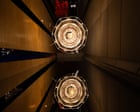
Powerhouse Parramatta has officially opened its doors on the banks of the Parramatta River, delivering an architectural statement that cost New South Wales taxpayers more than $915 million to build. While early reviews celebrate the shimmering steel exoskeleton and cavernous exhibition halls, the real story of this flagship museum lies in the decade of political warfare, heritage demolition, and urban economic engineering that made it possible.
For years, cultural infrastructure in Sydney followed a predictable, east-facing gravity. Major institutions clustered around Circular Quay and Ultimo, leaving Western Sydney—home to nearly half of the metropolitan population—with a fraction of the state's arts funding. Powerhouse Parramatta was conceived to shatter that geographic imbalance. Designed by Moreau Kusunoki and Genton, the building abandons the traditional closed-box museum model in favor of an open-lattice structure that allows public life to flow directly through its ground plane and onto the riverfront.
The Architecture of Open Access
Walk up to the southern edge of the river, and the first thing that strikes you is the absence of a conventional front door. The structural steel lattice wraps around seven distinct exhibition spaces—known internally as "Presentation Spaces"—suspending them like industrial lanterns above a porous public domain.
This design solves a specific engineering headache. The site sits squarely within the Parramatta River floodplain. Rather than fighting the water with subterranean vaults, the architects elevated the critical collection zones and treated the ground level as a flood-resilient civic square. Water can theoretically rise and recede beneath the primary structural deck without threatening the irreplaceable artifacts housed above.
Inside, the scale is deliberately confrontational. Presentation Space 1 boasts an 18-meter ceiling clearance and a floor area exceeding 2,000 square meters, engineered specifically to swallow massive industrial objects that the old Ultimo site could never accommodate. Think full-scale aerospace prototypes, historic locomotives, and sprawling contemporary installations. By stripping away internal load-bearing walls and relying on the external structural frame, the curators gained a blank mechanical canvas.
The Engineering Behind the Lattice
That iconic exoskeleton is not merely decorative. Every diagonal steel beam carries actual structural load, transferring the immense weight of heavy-duty exhibition floors down to deep concrete piles driven into the riverbank bedrock.
- Thermal buffering: The outer steel frame supports a double-skin facade system that reduces solar heat gain during brutal Western Sydney summers, when temperatures routinely spike past 40 degrees Celsius.
- Acoustic isolation: Because the museum sits adjacent to a major urban transport corridor and active riverfront, the suspended boxes are acoustically decoupled from the outer frame to prevent traffic vibration from disturbing delicate displays.
- Modular rigging: Integrated catwalks and heavy-lift gantry systems are baked directly into the roof trusses, cutting exhibition turnaround times from months to weeks.
The Political Battlefield That Almost Killed It
To understand why this opening carries so much institutional weight, you have to look at the scorched-earth politics that preceded it. When the New South Wales government first announced in 2015 that it would relocate the Powerhouse Museum from Ultimo to Parramatta, it triggered one of the fiercest cultural heritage battles in Australian history.
Critics argued that selling off the Ultimo site to fund a Western Sydney build was cultural vandalism. Preservationists, union leaders, and former museum trustees mounted a relentless campaign, warning that moving fragile collections—such as the 1785 Boulton and Watt steam engine and the Catalina flying boat—risked catastrophic damage.
The controversy intensified around the chosen Parramatta site itself. Clearing the riverbank footprint required the demolition of Willow Grove, a late-19th-century Italianate villa, and the partial dismantling of St George's Terrace. Heritage advocates occupied the site, unions slapped Green Bans on construction, and the project became a toxic liability ahead of state elections.
Eventually, the government blinked—partially. Instead of closing Ultimo, policymakers pivoted to a multi-site model. Ultimo was saved and slated for its own major revitalization, while Parramatta proceeded as a standalone flagship institution rather than a replacement. That compromise calmed the political storm, though it sent total capital expenditure soaring past initial projections.
A New Playbook for Museum Curation
With the doors finally open, Powerhouse Parramatta faces a brutal operational test. Building a landmark is easy when backed by state treasury debt; keeping it relevant and financially viable over thirty years is another matter entirely.
Traditional museums operate on a slow, static rhythm. They mount permanent galleries that remain largely unchanged for a decade, punctuated by occasional blockbuster ticketed exhibitions. Powerhouse Parramatta is abandoning that model. The institution has positioned itself as a living production house rather than a passive repository.
Instead of locking away researchers behind closed doors, the museum integrates working conservation labs, digitization studios, and residency apartments directly into the visitor experience. Students and researchers from Western Sydney University and industry partners are embedded on-site, turning the building into a hybrid between a public gallery and an applied science incubator.
Free General Admission and the Revenue Question
Entry to the core exhibition spaces is free, a deliberate policy choice aimed at removing financial barriers for families across Greater Western Sydney. While this drives high foot traffic, it creates an immediate structural challenge for the balance sheet.
Without general admission ticket revenue, the museum relies heavily on three alternative income streams:
- Commercial venue hire: The expansive rooftop terraces and riverfront pavilions are wired for high-end corporate conferences, state banquets, and cultural festivals.
- Touring intellectual property: By producing original, large-scale exhibitions in-house, Powerhouse aims to license those shows to international museums across Asia and Europe.
- Philanthropic endowments: Securing long-term corporate sponsorships tied to STEM education and First Nations storytelling programs.
If commercial bookings falter or touring shows fail to attract international buyers, the ongoing operational subsidy required from the state budget will quickly become a target for future treasury cuts.
The Urban Regeneration Gamble
Beyond art and engineering, Powerhouse Parramatta is the anchor tenant in a massive real estate and infrastructure overhaul. For decades, Parramatta functioned as Sydney's secondary administrative hub—busy between nine and five on weekdays, largely deserted after dark.
State planners are betting that a world-class cultural institution will force a permanent shift in the city's nighttime economy. Paired with the Parramatta Light Rail and the upcoming Sydney Metro West station, the museum is designed to pull domestic tourists and international visitors 24 kilometers west of the harbor.
Early economic modeling suggests the precinct will generate thousands of hospitality and creative sector jobs, yet local business owners remain cautiously skeptical. History offers plenty of cautionary tales where flagship museums—from Bilbao to regional British industrial towns—failed to lift surrounding retail streets because visitors arrived by transit, toured the building, and left without spending money at local restaurants.
Whether Parramatta avoids that trap depends entirely on how well the museum's ground plane integrates with the surrounding streets. Right now, the riverfront promenade buzzes with opening-weekend crowds exploring the inaugural exhibitions, testing the acoustics of the massive halls, and looking out across the water toward a skyline still bristling with construction cranes.
What Comes After the Ribbon Cutting
The real verdict on Powerhouse Parramatta will not be written by architecture critics touring a pristine, freshly painted building this weekend. It will be written three winters from now on a rainy Tuesday afternoon, measured by whether local teenagers treat the public plazas as their own, whether international curators respect its scientific output, and whether the state government resists the urge to starve its operational budget once the political photo opportunities fade.