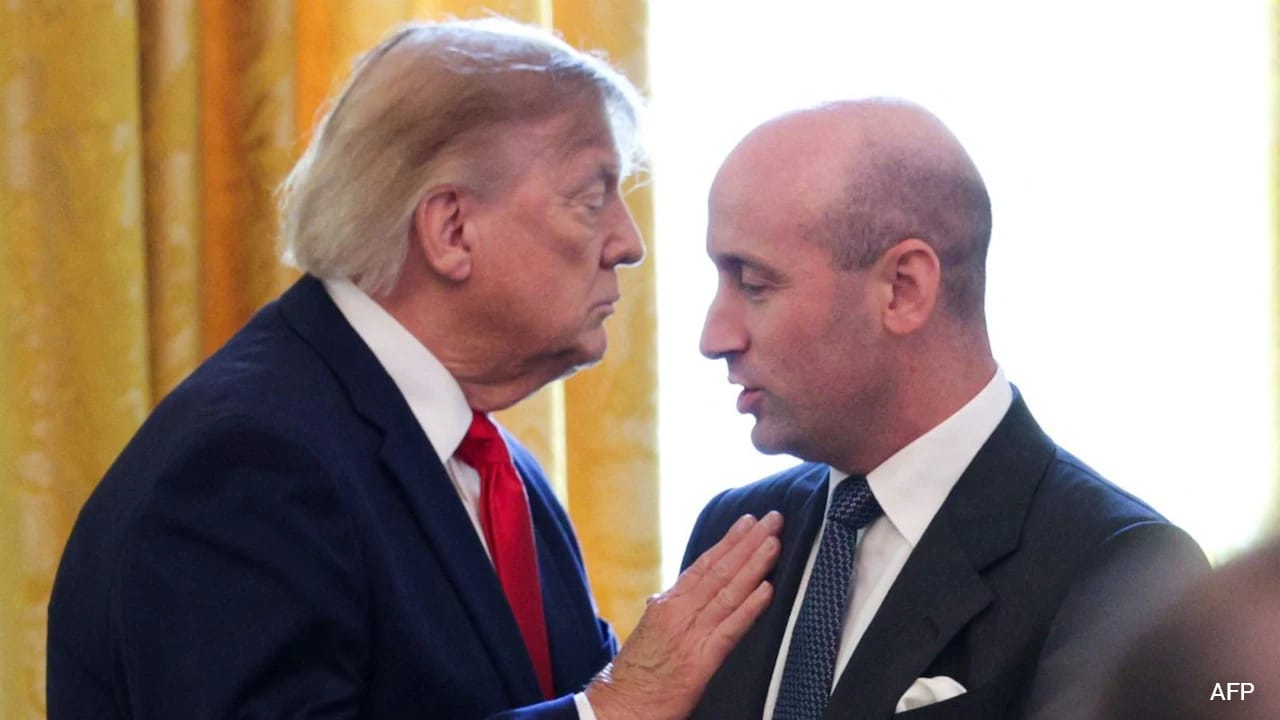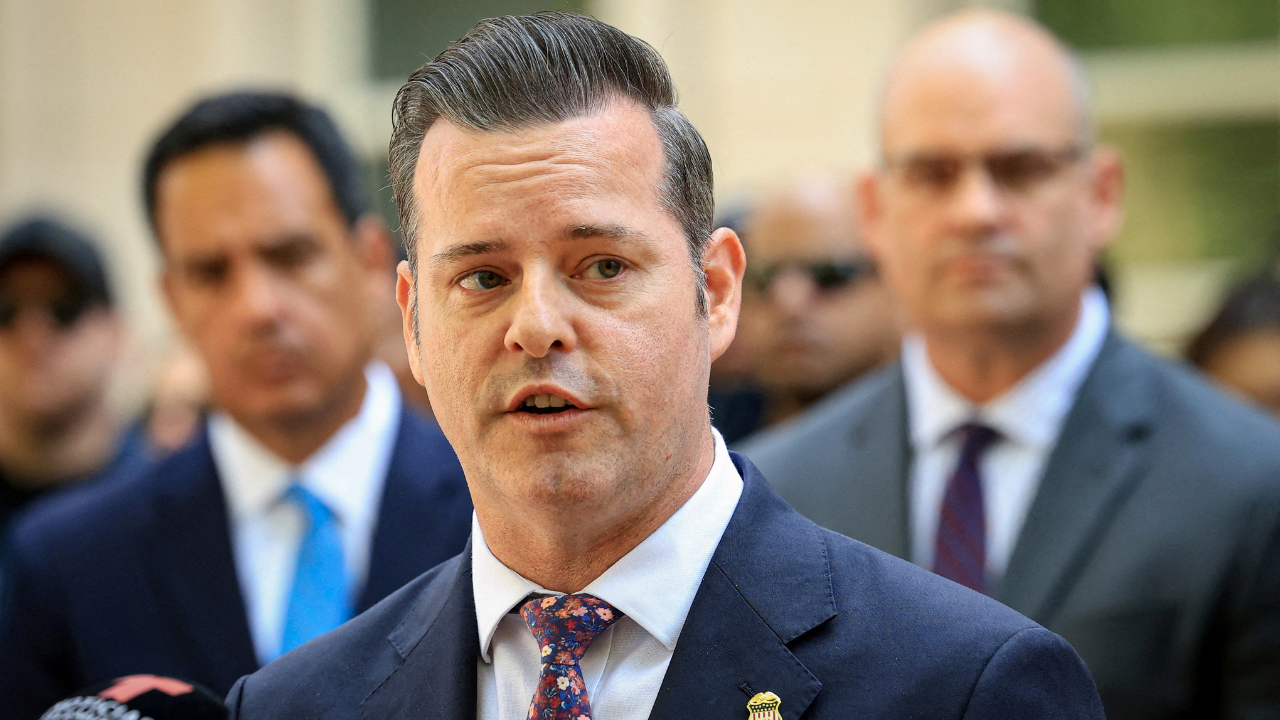
Jason Reding Quinones has stepped down from his post as a federal prosecutor in Miami, becoming the third high-profile Department of Justice official to resign in the wake of the Republican congressional losses. While surface-level political commentary frames his departure as standard partisan turnover, the reality inside the Southern District of Florida is far more complicated. Quinones oversaw sensitive investigations tied to Donald Trump, placing him directly at the intersection of career prosecutorial duty and intense political scrutiny. His exit signals a deeper structural vulnerability within federal law enforcement when the legislative branch changes hands and oversight committees prepare to flip.
Washington has a short memory. Every two years, the capital treats routine bureaucratic departures like shockwaves, yet the timing of these three consecutive resignations demands a closer look at how the Department of Justice operates under pressure. When a sitting party loses control of Congress, the immediate consequence is not just a stall in legislative agendas. The real shift happens in the committee rooms, where newly empowered chairs gain subpoena power over active and closed federal investigations. For prosecutors working on politically charged files in districts like Miami, the prospect of spending the next twenty-four months defending internal charging decisions before hostile congressional panels is often enough to trigger an early exit to the private sector. If you liked this piece, you might want to check out: this related article.
The Anatomy of a Post-Election Departure
Federal prosecutors rarely leave simply because of a single election night result. Instead, the decision builds over months of institutional friction, culminating in the moment when the political insulation around their office disappears. To understand why Jason Reding Quinones walked away now, you have to look at the unique pressures of the Southern District of Florida.
This district is not a sleepy backwater. It handles some of the most complex public corruption, national security, and financial fraud cases in the country. When cases involving former or current political figures land on a Miami docket, the prosecutors assigned to them operate under a microscope that never turns off. Every motion filed, every grand jury subpoena issued, and every declination memo written becomes potential ammunition for partisan warfare. For another angle on this story, check out the latest coverage from NBC News.
During a period of unified government or favorable congressional oversight, senior leadership at Main Justice can shield line prosecutors and supervisors from external interference. They can invoke long-standing Department of Justice policies against commenting on ongoing investigations or turning over deliberative work product to lawmakers. That shield cracks the moment the opposition party takes the gavel.
Suddenly, the protections that allowed a prosecutor to focus strictly on the rules of evidence begin to erode. Congressional oversight letters start arriving before the new session even formally begins. Lawmakers demand unredacted case files, internal emails, and transcribed interviews with career attorneys. For someone like Quinones, who held supervisory authority over politically sensitive probes, staying on means trading courtroom litigation for endless depositions and internal ethics reviews.
The Private Sector Pull
Money plays a quiet but undeniable role in these calculations. A senior federal prosecutor in Miami earns a fraction of what top-tier white-collar defense firms pay down the street on Brickell Avenue. Most career attorneys accept that financial trade-off because the work carries prestige, autonomy, and a sense of public mission.
Once the political climate turns hostile, that equation breaks down. If a prosecutor realizes they will spend the next two years fighting off document requests from Capitol Hill rather than trying cases in federal court, the personal cost of public service skyrockets. Top law firms actively recruit outgoing prosecutors precisely because they understand how the Department of Justice thinks, especially during periods of political transition. Leaving immediately after an election allows a departing official to capitalize on their experience before their reputation becomes entangled in partisan committee hearings.
Why the Southern District of Florida Matters So Much
To grasp the weight of this resignation, consider the geography. Miami has become the epicenter of modern political-legal battles, largely because of the sheer volume of high-stakes investigations tied to South Florida residents, donors, and political operatives.
The Southern District of Florida operates with a distinct culture of independence, even by Department of Justice standards. Historically, its attorneys have prided themselves on aggressive, high-volume prosecutions that rely heavily on cooperating witnesses and complex financial tracing. Yet that very aggressiveness creates friction when targets have deep political connections and unlimited legal budgets.
When Quinones oversaw probes connected to Trump, he stepped into an environment where normal prosecutorial discretion is constantly second-guessed. In a standard racketeering or wire fraud case, a prosecutor weighs the strength of the evidence against the likelihood of conviction at trial. In a politically adjacent investigation, every tactical choice carries secondary consequences.
- Charging decisions are dissected on cable news within minutes of an indictment being unsealed.
- Grand jury secrecy faces constant testing through parallel civil litigation and aggressive defense motions.
- Jury selection in South Florida presents unique demographic and ideological challenges that can upend even the strongest paper case.
Handling that workload requires total backing from the front office and Main Justice. When three different officials resign in rapid succession following a shift in congressional power, it suggests that senior attorneys see the writing on the wall regarding how much institutional support will remain once the new Congress is sworn in.
The Pattern Behind the Three Resignations
The competitor coverage rightly noted that Quinones is the third official to step down since Republicans lost their congressional majority, though it failed to connect the operational dots between these exits. A single departure is a career move. Two is a coincidence. Three is a structural retreat.
Look at how transition periods historically affect the Department of Justice. Under normal circumstances, presidential elections drive major leadership changes, while midterm elections produce minimal turnover among career prosecutors. U.S. Attorneys are political appointees who serve at the pleasure of the president, whereas Assistant U.S. Attorneys and section chiefs are career civil servants protected by merit system rules.
When career supervisors begin leaving right after a midterm shift, it points to a breakdown in the firewall between politics and prosecution. Even without changing the occupant of the White House, a flipped Congress alters the incentives at the top of the Justice Department. Leadership in Washington becomes more risk-averse. Sensitive investigations that were moving steadily toward charging decisions suddenly face extra layers of review from Main Justice committees.
For the prosecutors on the ground in Miami, nothing is more frustrating than building a rock-solid case only to watch it stall in Washington because leadership wants to avoid provoking a newly empowered congressional committee. If an attorney senses that their hard work is going to be shelved or endlessly delayed for political self-preservation, they leave.
The Oversight Trap
Congressional oversight is a vital constitutional check, yet in practice, it often functions as a blunt instrument against active law enforcement. When lawmakers demand files on Trump-related probes, they rarely care about the nuances of federal criminal procedure.
Consider a hypothetical example of how this plays out behind closed doors. Suppose a team of prosecutors spends eighteen months investigating potential campaign finance violations or obstruction tied to a political entity. They gather bank records, interview mid-level staffers, and prepare a comprehensive prosecution memo. Right as they prepare to present the case to a grand jury, the midterm elections flip control of the House Judiciary Committee. Within weeks, the incoming chair sends a preservation notice demanding all communications between the Miami office and Washington regarding the investigation.
At that moment, the investigation effectively freezes. Any move the prosecutors make—whether they indict or decline to prosecute—will be framed as a reaction to congressional pressure. If they indict, they are accused of rushing charges before lawmakers can expose alleged bias. If they decline, they are accused of covering up misconduct. Caught in an unwinnable trap, the lead prosecutor chooses the only exit that preserves their professional integrity.
What Happens to Ongoing Investigations Now
A common misconception among the public is that when a lead prosecutor resigns, the cases they oversaw simply vanish. The federal justice system is designed to prevent single points of failure. Files are reassigned, co-counsel step up, and institutional memory is preserved through written case summaries and grand jury transcripts.
However, transitions always carry a tax. Even in the most routine white-collar fraud case, bringing a new supervisor up to speed takes months. In sprawling, politically sensitive investigations involving thousands of pages of discovery and delicate witness cooperation agreements, losing the person who oversaw the strategy creates immediate drag.
Defense attorneys know this. Whenever a key prosecutor leaves the Southern District of Florida, defense teams immediately test the new leadership. They file motions to reconsider previous rulings, push for more favorable plea terms, or challenge the scope of existing subpoenas, betting that the incoming prosecutor will want to clear old files off their desk rather than inherit someone else's fight.
| Operational Impact | Short-Term Effect | Long-Term Consequence |
|---|---|---|
| Case Reassignment | Delays in grand jury schedules and motion responses | Loss of nuanced institutional memory regarding witness credibility |
| Defense Strategy | Aggressive new motions testing incoming supervisors | Increased pressure on DOJ to settle or narrow indictment scopes |
| Main Justice Review | Heightened scrutiny over politically sensitive filings | Slower approval timelines for subpoenas and charging decisions |
Beyond the mechanics of individual cases, there is a broader chilling effect inside the building. Young prosecutors watching senior supervisors walk out the door take note of what kind of work gets rewarded and what kind of work turns you into a political target. Over time, that dynamic encourages career attorneys to stick to safe, apolitical dockets—narcotics, healthcare fraud, bank robbery—while avoiding complex public corruption cases altogether.
The Myth of the Apolitical Prosecutor
We like to pretend that federal prosecutors operate in a vacuum, guided solely by the facts and the law. That ideal is worth defending, yet pretending it exists untouched in the modern political climate is naive.
Every high-profile investigation in the United States now unfolds across two parallel tracks. The first is the legal track, governed by the Federal Rules of Criminal Procedure and decided in front of a judge. The second is the political track, governed by congressional hearings, media leaks, and partisan fundraising emails.
Jason Reding Quinones spent his tenure navigating both tracks in one of the most scrutinised federal districts in the nation. Overseeing probes connected to Donald Trump meant accepting that every routine administrative step could be twisted into a partisan talking point. You cannot insulate a courtroom in downtown Miami from the political realities of Washington when the subjects of the investigation command national media ecosystems.
What makes this wave of resignations particularly telling is that it exposes the limits of civil service protections. Rules can protect a prosecutor from being fired for political reasons, and they can prevent a politician from directly ordering an indictment. What those rules cannot do is protect a prosecutor's time, reputation, or sanity once Congress decides to turn an active criminal docket into a partisan spectacle.
A System Running Out of Shock Absorbers
The departure of three seasoned officials right after a congressional power shift is a warning sign for anyone who cares about the stability of federal law enforcement. The Department of Justice relies on continuity. Complex investigations take years to mature, spanning multiple election cycles and shifting political winds.
When the political cycle accelerates to the point where every midterm election triggers an exodus of senior talent, the institution loses its ability to see long-term cases through to a verdict. Complex financial and political crimes require patience, deep institutional knowledge, and prosecutors willing to weather years of litigation. If those attorneys are constantly forced out by the prospect of congressional crossfire, the only cases left will be the easy ones.
Quinones will land on his feet, likely stepping into a lucrative private practice where his knowledge of federal investigations will command top dollar. The Southern District of Florida will assign his files to other capable attorneys, and the docket will keep moving. Yet the underlying vulnerability remains completely unaddressed, waiting for the next election night to trigger the next quiet retreat from public service.