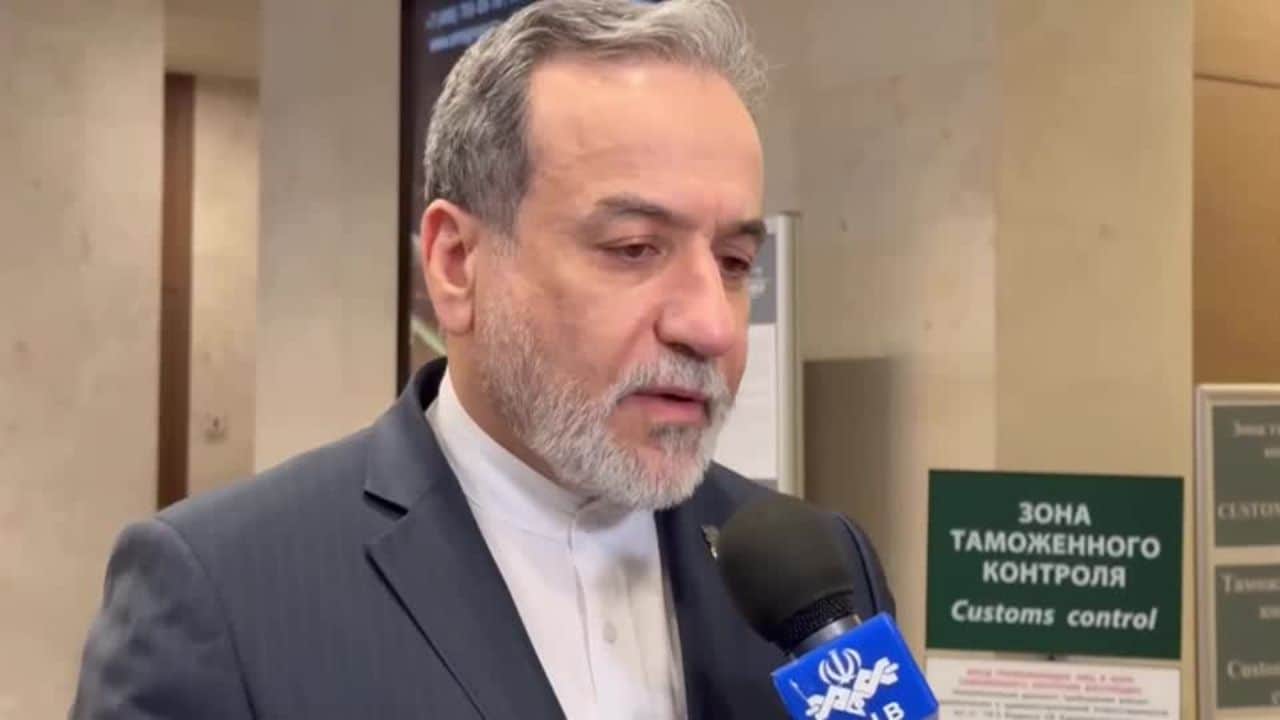
The narrative of "self-defense" has become a lethal rhetorical loop in the Persian Gulf, masking an aggressive escalation that brings the region to the brink of full-scale war. While Iranian Foreign Minister Abbas Araghchi claims Tehran is merely hitting U.S.-linked sites to protect civilian shipping, the reality on the water tells a far more volatile story. Beneath the official press releases lies a calculated breakdown of the fragile ceasefire, a shadow war over regional infrastructure, and a high-stakes diplomatic gamble being played out in real-time between Washington and Tehran.
This is not a series of isolated, defensive skirmishes. It is a synchronized military confrontation happening precisely as backchannel peace negotiations enter a critical phase. While politicians talk about deals, the Islamic Revolutionary Guard Corps (IRGC) and U.S. Central Command (CENTCOM) are actively trading heavy blows across the world's most critical energy chokepoint.
The Illusion of Restraint
The public is being fed a sanitized version of a "measured" conflict. Tehran frames its recent missile and drone salvos into Bahrain and Kuwait as direct retaliation for American operations against an Iranian oil tanker near the Strait of Hormuz and a communication hub on Sirik Island. Iranian state media portrays these actions as a righteous defense of its sovereign interests.
The physical evidence reveals a much darker strategy. The IRGC Aerospace Force did not just target isolated military outposts; their assets struck deep into civilian spaces.
- Kuwait International Airport: A heavy drone and missile strike tore into the T1 passenger terminal, leaving at least one civilian dead and over 60 people injured.
- The Fifth Fleet Headquarters: Multiple ballistic missiles were launched toward Bahrain, aimed directly at the nerve center of American naval operations in the region.
- Commercial Shipping: Iranian forces targeted vessels like the Panaya and the MSC Sariska, claiming these commercial hulls were secretly operating on behalf of Western intelligence.
CENTCOM maintains that its own kinetic actions—including pinpoint strikes on an IRGC ground control station and radar installations on Qeshm Island—are strictly defensive measures designed to protect international shipping lanes. This creates a dangerous paradox. When both sides define every offensive action as an act of self-defense, the traditional off-ramps of diplomacy cease to function.
The Strategic Failure of the Shadow Escort
For weeks, the U.S. Navy has quietly conducted a massive convoy operation, escorting dozens of commercial merchant ships through the Strait of Hormuz. To avoid detection by Iranian coastal batteries, these civilian vessels have been turning off their transponders, slipping through the dark waters like ghosts.
This tactic has proved to be a temporary fix for a structural problem. By forcing merchant ships to go dark, the international community has inadvertently conceded control of the surface narrative to Iran. The IRGC uses this lack of transparency to justify its aggressive interdictions, claiming that any vessel running without a transponder is a legitimate military target masquerading as a civilian freighter.
       [ Strait of Hormuz Chokepoint ]
                    │
   ┌────────────────┴────────────────┐
   ▼                                 ▼
U.S. Strategy:                    Iranian Strategy:
• Dark convoys (no transponders)  • Frame dark ships as hostile
• Targeted radar destruction       • Infrastructure leverage
• Containment via deterrence      • Asymmetric escalations
The destruction of Iranian radar sites at Goruk and Qeshm Island was meant to blind the IRGC’s anti-ship missile networks. Instead, it provoked an immediate, asymmetric response. Deprived of some of their coastal tracking capabilities, the IRGC shifted its targeting criteria away from the water and toward fixed, land-based assets in neighboring Gulf states.
The High-Stakes Nuclear Gamble
The timing of this escalation is not accidental. It coincides with intense, closed-door negotiations in Washington regarding a potential comprehensive treaty. U.S. President Donald Trump has publicly stated that negotiations are moving at a rapid pace, even claiming that Tehran has agreed to massive concessions regarding its enriched uranium stockpile.
This public optimism is completely detached from the tactical reality in the Gulf. Iran is utilizing a classic strategy of escalation dominance. By demonstrating its ability to close the Strait of Hormuz and strike vital civilian infrastructure in Kuwait and Bahrain, Tehran is attempting to strengthen its hand at the negotiating table. They want the White House to know that the price of a failed deal will be paid in global oil spikes and regional chaos.
Furthermore, internal Iranian political dynamics are driving this aggressiveness. Following the tectonic shifts in Tehran's leadership earlier this year—where Mojtaba Khamenei assumed the mantle of Supreme Leader after the deaths of his father and senior officials in February—the new regime feels an intense pressure to project absolute strength. The young Supreme Leader cannot afford to look weak in front of the IRGC hardliners while negotiating with Washington.
The Collateral Damage of Deterrence
The immediate victims of this strategic chess game are the smaller Gulf nations that host American military infrastructure. Countries like Kuwait and Bahrain are finding that their partnership with the United States makes them prime targets for Iranian proxies and direct state-sponsored strikes.
The political fallout inside these nations is growing. While local air defenses and American Patriot batteries managed to intercept the bulk of the recent missile volleys over Bahrain, the failure to stop the strike on Kuwait's civilian airport has sent shockwaves through the region. Local governments are facing intense internal pressure to reassess the terms of their defense pacts with Washington if those pacts guarantee they will be dragged into the crosshairs of an Iranian missile brigade.
The international community remains transfixed by the political theater of the peace talks, hoping for a signed document that will magically restore stability. But the kinetic reality in the Persian Gulf has taken on a life of its own. A single miscalculation by an IRGC missile crew, or an overly aggressive interception by a U.S. Navy destroyer, could easily ignite a wider conflict that no treaty will be able to contain.


