The Algorithmic Engine Behind the Chaos
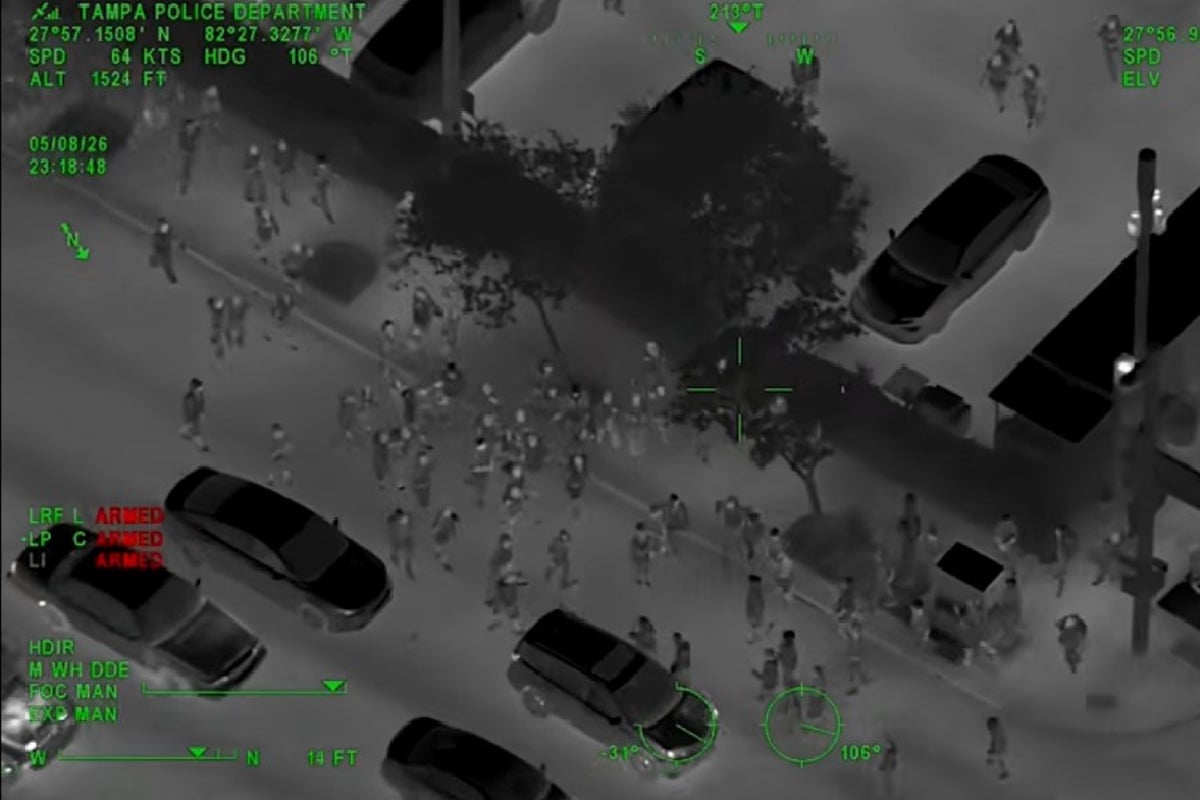
Viral videos of teen takeovers are flooding social media feeds, showing hundreds of adolescents swarming public spaces, shutting down traffic, and overwhelming local businesses. While mainstream commentary focuses heavily on law enforcement failures or shifting youth culture, the actual catalyst sits in the pocket of every participant. This is not a spontaneous breakdown of social order. It is a highly coordinated, algorithmically incentivized phenomenon driven by platforms that reward chaotic engagement over public safety.
To understand why these disruptive flash mobs occur with increasing frequency, one must look past the crowd itself. The core mechanism is a feedback loop engineered by modern content delivery systems. When a teenager joins a flash mob, they are not just looking for peer approval in the physical world. They are hunting for digital currency. A single video capturing a confrontation with police or a chaotic swarm inside a convenience store can garner millions of views within hours, translating directly into follower growth and algorithmic clout. Building on this theme, you can also read: The Architecture of Orbital Scale Low Earth Orbit Satellite Deployment Mechanics and Strategic Constraints.
The platforms do not merely host this content. They actively select it for distribution. Recommendation engines are designed to maximize watch time and user interaction. High-velocity video—characterized by erratic movement, loud noises, and high stakes—triggers the exact metrics that push content to the top of the "For You" pages. By the time a local police department issues a statement about a teen takeover, the digital infrastructure has already monetized the event, leaving cities scrambling to handle the physical fallout of a digital optimization strategy.
The Geometry of a Modern Flash Mob
The logistics of organizing a mass disruption have changed fundamentally. In the past, mobilizing hundreds of people required established networks, direct messaging, or public forums where law enforcement could intervene early. Today, the process is decentralized and rapid. Observers at Mashable have provided expertise on this matter.
The Burner Event Strategy
Organizers rarely use their primary, public-facing social media profiles to coordinate these events. Instead, they utilize temporary accounts or private, expiring group chats on platforms like Signal or Telegram, which are promoted via cryptic TikTok or Instagram Stories. A flyer will circulate for less than twenty-four hours, detailing a time and a general quadrant of a city. The exact location is often dropped mere minutes before the event begins.
This creates a structural disadvantage for local authorities. Law enforcement agencies rely on predictable patterns and early intelligence to deploy resources. When five hundred teenagers materialize at a specific transit station within a fifteen-minute window, the police are caught flat-footed. The crowd utilizes its sheer volume as a shield, knowing that overextended police forces cannot easily arrest hundreds of individuals simultaneously without escalating the tension.
Peer Enforcement and the Camera Effect
Within these takeovers, a distinct social hierarchy emerges. The individuals committing the most overt acts of vandalism or disruption are almost always surrounded by a ring of peers recording the action on smartphones. The camera acts as both a catalyst and a protective barrier.
[Organizer Drops Location] ➔ [Rapid Mass Transit Convergence] ➔ [The Recording Ring Forms] ➔ [Algorithmic Amplification]
This structural dynamic alters individual behavior. A teenager who might never shoplift or damage property in isolation feels insulated from consequences when surrounded by a hundred cameras. The act is performed specifically for the lens, transformed into a piece of content before the physical damage is even cleaned up.
Why Traditional Policing Models Are Failing
The public outcry following a teen takeover invariably includes demands for harsher policing and increased surveillance. However, deploying more officers to city centers does not solve the underlying issue. The problem is operational, not numerical.
Urban police forces are trained to handle crowds through containment and dispersal. When dealing with political protests or labor strikes, these tactics are effective because the crowd has a defined leadership structure and a clear geographic objective. Teen takeovers have neither. They are fluid, amorphous, and highly mobile.
"Dispersing a youth flash mob often just scatters the disruption across a wider radius."
When officers move in to clear a street corner, the crowd splits into smaller factions that board public transit, only to reconvene ten blocks away at a new target. The traditional playbook of riot shields and barricades is useless against a group that moves like a liquid. Furthermore, aggressive physical intervention against minors carries immense legal, political, and public relations risks for city administrations. Organizers understand this hesitance and exploit it, using the legal protections afforded to juveniles as a tactical advantage.
The Failure of Corporate Content Moderation
Social media executives frequently insist that their platforms prohibit the coordination of illegal activities and violence. They point to content moderation teams, automated keyword filters, and community guidelines designed to scrub dangerous material.
These defenses ignore how quickly youth subcultures adapt to algorithmic censorship.
Algospeak and Visual Coded Language
To bypass automated text filters, organizers use evolving slang, intentional misspellings, and emoji combinations—often referred to as algospeak. A gathering intended to disrupt a commercial district won't be labeled a "takeover" or a "riot." It will be framed as a "link up," a "meet," or a "function," accompanied by specific audio tracks that carry secondary meanings within the local youth community. AI moderation tools scanning for explicit keywords miss these nuances entirely.
The Whack-a-Mole Reaction Cycle
By the time a platform identifies a specific account or video violating its terms of service, the damage is already done. The event has occurred, the footage has been copied and re-uploaded by dozens of auxiliary accounts, and the algorithmic momentum has shifted elsewhere.
+-----------------------------------------------------------------+
|               The Content Moderation Delay Loop                 |
+-----------------------------------------------------------------+
|  1. Event Happens  -->  2. Algorithm Promotes Video  (Peak Views) |
|                                 |                               |
|  4. Account Banned <--  3. Human Review Flags Content            |
+-----------------------------------------------------------------+
As shown above, the peak viewership and social contagion effect occur well before the human review process triggers an account ban. The platform captures the ad revenue during the high-traffic surge, while the real-world cost is externalized onto small business owners and city budgets.
Economic Destruction in the Digital Wake
The collateral damage of these events falls squarely on the shoulders of local economies, particularly small business owners who operate in urban centers. Unlike major retail chains, independent businesses cannot easily absorb the costs of broken storefronts, stolen inventory, and prolonged closures.
When a takeover floods a commercial corridor, businesses are forced to drop their security grates and lock their doors during peak operating hours. The loss of revenue extends far beyond the immediate duration of the event. A psychological shift occurs among regular consumers, who begin avoiding these districts out of fear of being caught in the next disruption. Insurance premiums for businesses in affected areas spike, and some providers refuse to renew policies altogether, creating commercial deserts in neighborhoods that rely heavily on foot traffic.
City governments face a compounding fiscal crisis. They must allocate massive amounts of overtime pay to law enforcement and sanitation crews while witnessing a steady decline in sales tax revenue. The digital platform that facilitated the gathering incurs zero liability for these economic losses, maintaining a business model that profits from the documentation of the destruction without contributing to the recovery.
The Flawed Fix of Youth Curfews
In response to mounting pressure from business coalitions, mayors across the country have turned to a familiar, retrograde solution: citywide youth curfews.
While curfews offer a politically expedient way for elected officials to signal action to angry voters, decades of criminological data show they do little to reduce crime or public disorder. Curfews simply change the timing of offenses or push activity into unsupervised private spaces. More importantly, enforcing a curfew requires a massive redirection of police resources, forcing officers to act as truant officers rather than focusing on violent crime or targeted intelligence gathering.
Curfews also create hostile interactions between law enforcement and the vast majority of teenagers who are simply commuting home from work, school activities, or legitimate social gatherings. By criminalizing the mere presence of young people in public spaces after a certain hour, cities alienate the exact demographic they need to engage, while failing to deter the small percentage of organizers driving the takeover phenomenon.
Reclaiming the Digital Commons
Addressing the teen takeover crisis requires moving past theater-style policing and addressing the digital architecture enabling it.
If platforms were legally or financially accountable for the real-world violence and property damage explicitly organized through their services, their content moderation priorities would shift overnight. Currently, Section 230 of the Communications Decency Act shields tech companies from liability for user-generated content. While this protection is vital for a free internet, it has created a regulatory vacuum where platforms can profit from the algorithmic promotion of dangerous, coordinated public disruptions without facing legal discovery or financial penalties.
Municipalities must stop treating these events as localized juvenile delinquency and start treating them as network-driven security challenges. This means investing heavily in digital forensics units capable of identifying the organizers behind burner accounts before an event starts, rather than deploying riot police after the intersection is already blocked. It means establishing direct communication lines with tech companies to demand the immediate geofencing of video uploads from active takeover sites, severing the real-time digital audience that feeds the crowd's momentum.
Until cities force tech companies to dismantle the financial and social incentives driving these disruptions, the cycle will continue. The streets will remain a stage, the participants will remain performers, and the algorithms will continue to profit from the wreckage.