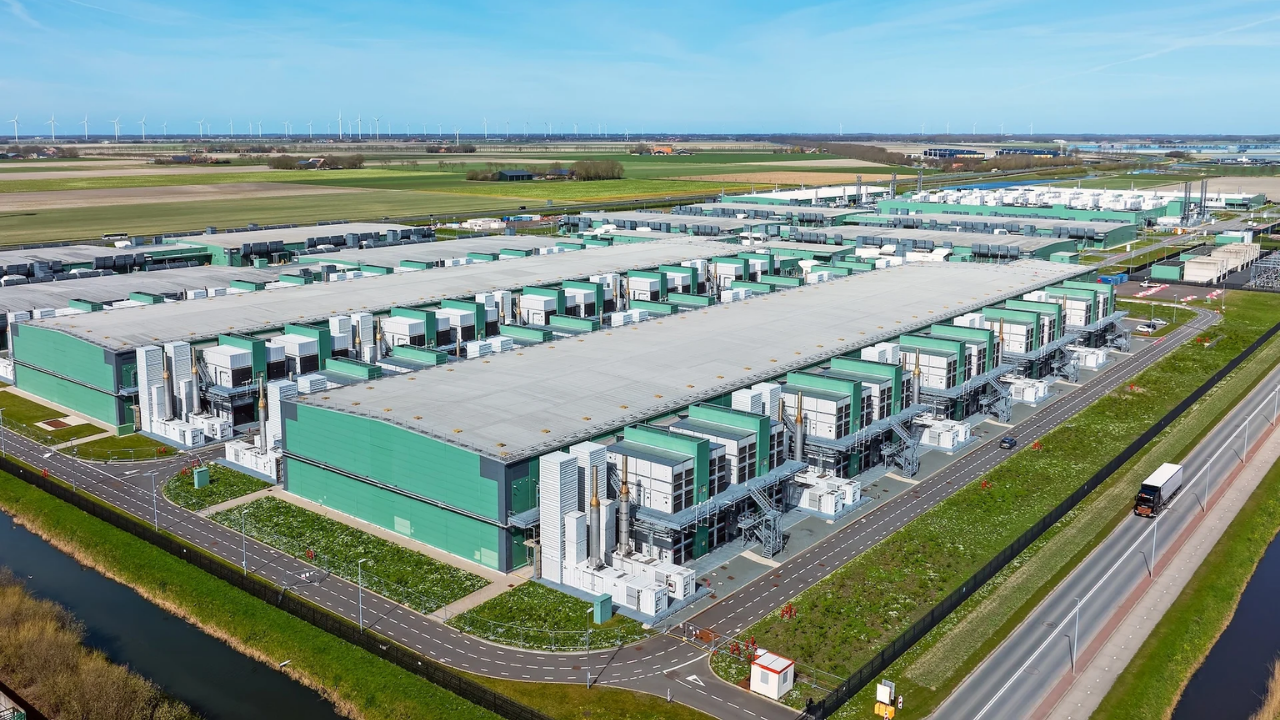
The horizon in West Texas is changing. Steel skeletons of massive industrial complexes now pierce through skies that have known only low-slung barns and wide-open crop dusters for generations.
When fourth-generation farmer Cheyenne Buerger was told he had sixty days to clear out of six hundred acres of rented farmland near Haskell County, the eviction notice did not come from an agricultural dispute. It came because a corporate developer bought the property out from under him to clear the way for a massive Google infrastructure project. Buerger’s family has worked thousands of acres in the region for over a century, growing wheat, cotton, and milo. Yet, overnight, utility-scale artificial intelligence demands rendered generational tenancy agreements completely obsolete.
This is not an isolated land dispute. It is the frontline of a statewide collision between traditional Texas agriculture and the insatiable physical expansion of Big Tech.
Data centers require vast expanses of flat, cheap, accessible land. Rural Texas offers millions of acres of it, combined with municipal tax incentives and permissive regulatory frameworks that make rapid acquisition frictionless. Tech giants are no longer just buying suburban office parks or expanding coastal campuses. They are moving into the heartland, hunting for square miles of dirt to house thousands of high-density server racks.
The consequences for local food production are severe. Texas agriculture pumps nearly one billion dollars into the economy annually and feeds international export markets. But the math of modern capitalism heavily favors the digital landlord over the dirt farmer. When a tech corporation or a third-party land speculator throws millions of dollars at an acreage owner, tenant farmers renting that same property cannot compete. Sixty days notice to harvest standing crops or pack up livestock operations is the harsh reality of an industrial transformation moving faster than legal protections can adapt.
The Resource Drain Beneath the Surface
Land acquisition is only the first phase of the disruption. The deeper crisis centers on what these facilities consume after the concrete is poured.
Artificial intelligence training and cloud storage generate immense heat. Cooling those server halls requires staggering volumes of water, often drawn from local aquifers already strained by decades of agricultural use. In towns like Hereford, southwest of Amarillo, massive multi-phase campus builds are projected to absorb thousands of acres and millions of gallons of regional water resources.
Local agricultural commissioners and rural advocates have raised alarms that turning fertile acreage into server campuses permanently removes that ground from the food supply. Once topsoil is stripped, graded, and covered in concrete slabs and security perimeters, it is gone for good. You cannot plant cotton on a substation or harvest wheat underneath a cooling tower.
The Loophole Economy
The rush to cash in on the tech infrastructure boom has also exposed deep cracks in municipal governance across the state. In Taylor, Texas, residents discovered a controversial property flip where land originally deeded by a farming family to be held in trust as a public park somehow wound up in the hands of a data center developer for ten million dollars. Through layers of non-profits, city economic development corporations, and zoning reclassifications, public assets were quietly funneled into private industrial corridors.
When communities try to push back, they find themselves blocked by local economic development boards that view tech investments as an unmitigated win for the tax base. The immediate cash injection of industrial property taxes blinds many municipal leaders to the long-term erosion of the rural economy.
Farmers caught in the middle face an impossible market. As developers buy up large, contiguous blocks of West Texas real estate, the pool of available replacement acreage shrinks. Rent prices spike. Land values detach entirely from agricultural yield capabilities, driven up entirely by tech speculation. A farmer whose profit margins depend on the price per bushel of cotton cannot match the deep pockets of a multinational conglomerate building the backbone of the generative AI revolution.
The Unseen Cost of Digital Progress
Every query processed, every synthetic image generated, and every large language model trained relies on physical reality. It requires electricity pulled from a stressed Texas power grid and concrete poured over rich loam.
Back in Haskell County, construction crews continue framing the massive facility on the horizon while Buerger hauls seed across his remaining pastures to feed his cattle. The cranes keep turning. The dirt keeps packing down. And the century-old rhythm of planting and harvesting is quietly being rewritten by code.
The Texas data center boom threatens agriculture
This video provides an on-the-ground look at how local communities and farmers in Texas are reacting to the sudden influx of data center developments and land conversions.