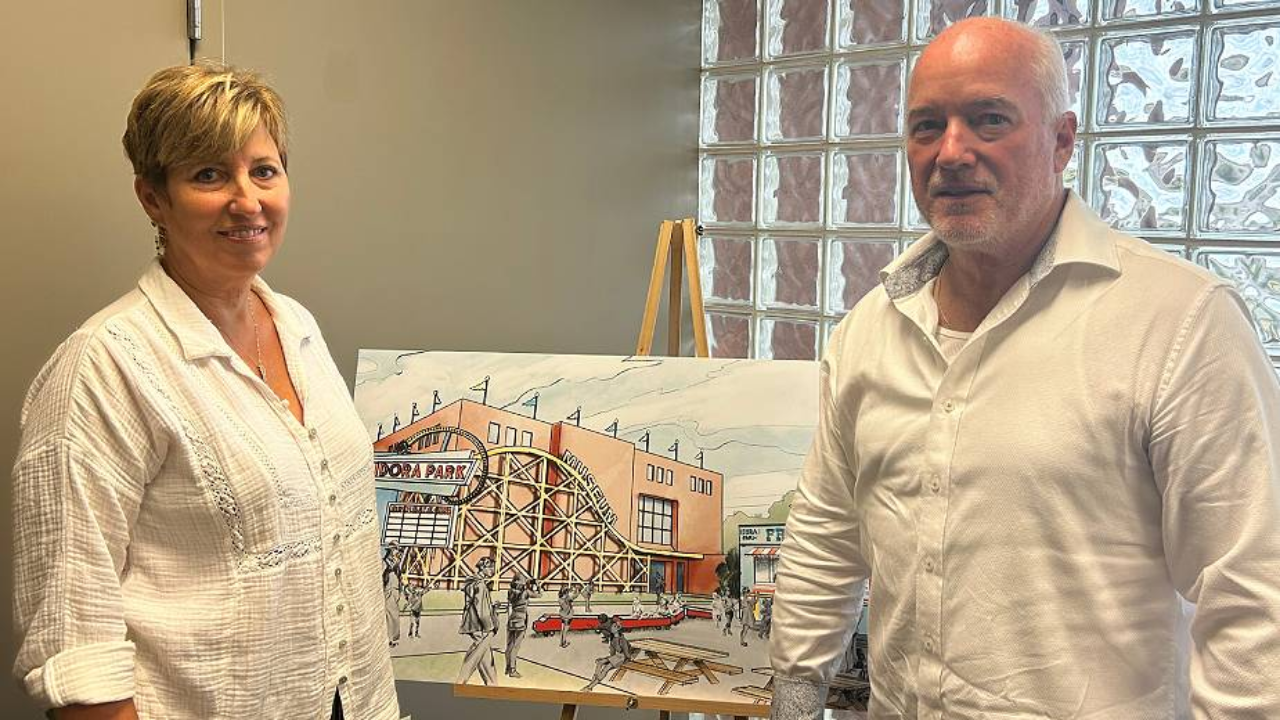
For thirty years, Jim and Toni Amey combed through scrap yards, barns, and auction listings across the United States to rescue the physical ghost of Idora Park. When Youngstown, Ohio's premier amusement destination burned and permanently closed in 1984, it took local memory down with it. Most people simply packed away their faded photographs and moved on. The Ameys instead spent a small fortune and decades of their lives building a private archive of roller coaster cars, turnstiles, neon signs, and ride components on their Canfield property. That quiet obsession has now transformed into an upcoming cultural anchor, anchoring an 11.5 million dollar museum project in downtown Youngstown managed by the Mahoning Valley Historical Society.
This preservation effort highlights a growing tension in regional history. Local landmarks vanish under the weight of economic shifts or devastating fires, leaving communities scrambling for identity. While municipal leaders typically chase shiny new corporate developments, grassroots archivists carry the actual weight of the past. The Amey collection proves that everyday citizens often act as the sole barrier against total cultural erasure.
The Cost of Collecting Industrial History
Saving a defunct amusement park is not a polite hobby. It is heavy, expensive, and often thankless physical labor. Roller coaster hardware does not fit neatly into a suburban garage.
Amusement parks from the early and mid-twentieth century relied on heavy timber, cast iron, and complex mechanical linkages. When Idora Park met its end following an April 1984 fire that consumed its legendary Wildcat coaster and main arcade, liquidation sales scattered its components to the winds. Scrap metal buyers melted down irreplaceable pieces of engineering. Private collectors hoarded profitable signs while leaving structural elements to rot in open fields.
The Ameys tracked down these scattered relics one by one. They negotiated with wary sellers, rented flatbed trailers, and hauled heavy steel back to Mahoning County. Over three decades, their private holding grew into tens of thousands of individual artifacts. They constructed buildings on their own land just to keep the collection dry and intact.
+-------------------------------------------------------------+
|               The Evolution of the Idora Archive            |
+-------------------------------------------------------------+
| 1984: Fire destroys Idora Park; liquidation begins          |
| 1994-2014: Jim & Toni Amey scour national auctions/barns    |
| 2024: Complete collection donated to Mahoning Valley HS     |
| 2026: Exterior restoration finishes for $11.5M museum home  |
+-------------------------------------------------------------+
Why Regional Icons Matter to the Rust Belt
Skeptics often question why millions of dollars should go toward preserving a collection of old amusement park rides when local economic revitalization remains an urgent necessity. This argument misses the psychological framework of post-industrial towns.
Idora Park was not merely a collection of roller coasters and cotton candy stands. Opened in 1899 as a trolley park, it served as a rare neutral ground where factory workers, executives, and diverse immigrant communities mingled without rigid social boundaries. It represented the high-water mark of regional prosperity before the collapse of domestic steel manufacturing.
When those industrial anchors broke, towns like Youngstown suffered a dual loss. They lost their financial footing and their collective narrative. Museums dedicated to local social history perform structural work. They ground a transient population in a shared heritage.
The Shift from Private Hoard to Public Institution
By 2024, the sheer scale of the Amey collection outgrew private stewardship. Maintaining thousands of brittle artifacts requires professional climate control, archival staff, and structural engineering that no individual couple can manage indefinitely. The formal handover of the archive to the Mahoning Valley Historical Society solved an existential crisis for the collection.
Securing a permanent home required aggressive public-private financing. The historical society acquired a four-story building on Federal Street, backed by state capital budget appropriations, community investment funds, and donations from local contractors who contributed labor and materials. With exterior roof and masonry renovations now complete, design firms are mapping out how to translate decades of loose metal and memorabilia into an immersive walkthrough experience.
The project proves that history preservation depends entirely on individual endurance long before institutional funding ever materializes. Without thirty years of stubborn persistence by two local residents, there would be nothing left to exhibit.
The physical pieces of Idora Park are finally coming home to downtown Youngstown, transforming private nostalgia into public architecture.