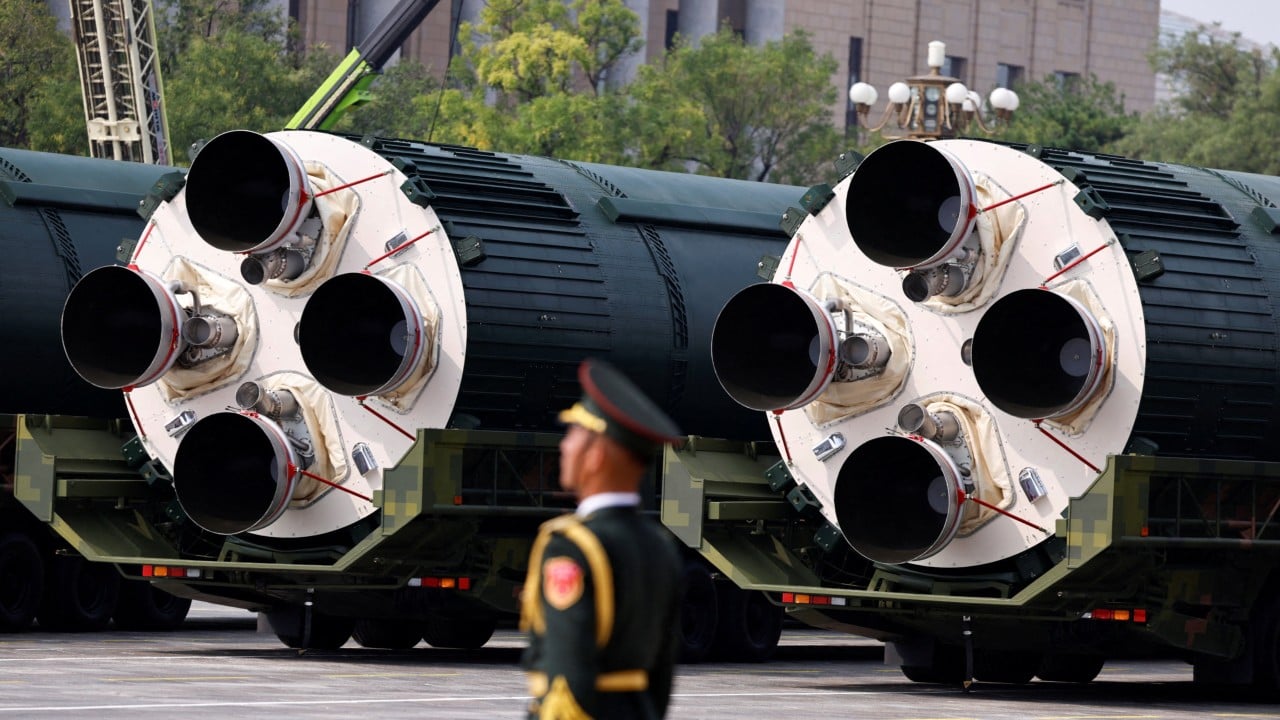
Tokyo maintains a stockpile of roughly forty-four tons of separated plutonium, sitting quietly within domestic storage and foreign reprocessing facilities. This staggering material reserve forms the invisible backbone of a quiet geopolitical tremor now rattling strategic commands across East Asia. The People’s Liberation Army Rocket Force and academic defense planners in Beijing have begun treating this stockpile not as a peaceful civilian energy byproduct, but as a critical security variable. When political figures in Tokyo openly suggest that the nation should discuss nuclear deterrence policies without traditional taboos, Beijing’s military apparatus interprets these statements through a lens of extreme operational suspicion.
The primary driver behind this anxiety involves the mechanics of breakout capacity. Unlike non-nuclear states that would require decades of uranium enrichment infrastructure to assemble a functional warhead, Japan possesses an advanced domestic nuclear fuel cycle alongside active reprocessing technology. The legal architecture of the post-war pacifist constitution, specifically Article Nine, explicitly renounces war and bars the acquisition of offensive arms. Yet, strategic doctrines evolve when regional missile threats multiply. Beijing's security analysts argue that the steady incremental shift in Japanese defense policy represents a calculated strategy of erosion against these legal boundaries.
This friction highlights a profound miscalculation risk in modern strategic positioning. Tokyo views its expanding counterstrike capabilities and discussions around extended deterrence as necessary adaptations to an aggressive neighborhood defined by North Korean missile launches and an increasingly assertive Chinese maritime posture. Conversely, the Rocket Force views these same defense acquisitions through a worst-case lens. A country with advanced space-launch delivery systems, precision guidance tech, and tens of tons of weapons-usable material occupies a unique shadow zone between a non-nuclear signatory of the Non-Proliferation Treaty and a virtual threshold nuclear power.
The operational danger lies in the acceleration of crisis instability. As regional actors integrate automated warning systems and maintain strategic forces on continuous launch readiness, the timeline for political decision-making shrinks dramatically. If Beijing treats Japanese political rhetoric as an imminent countdown to a nuclear threshold crossing, military countermeasures will inevitably follow. These responses include increased ballistic missile targeting allocations, aggressive grey-zone naval maneuvers around disputed maritime boundaries, and intense diplomatic pressure designed to choke off Tokyo's technological wiggle room.
This dynamic is further complicated by domestic political shifts inside Japan, where conservative factions increasingly frame regional volatility as justification for abandoning the historic three non-nuclear principles. By flirting with concepts akin to European-style nuclear sharing or welcoming allied strategic assets more overtly into home ports, Japanese policymakers risk triggering the very security dilemma they seek to avoid. A self-fulfilling prophecy of arms racing takes root when defensive preparations are read by adversaries as offensive preparations for a breakout.
Disentangling this knot requires looking past the public posturing of state media and official defense white papers. The technical reality of Japan's nuclear infrastructure ensures that any future administration could theoretically transition from civilian latency to weaponization far faster than traditional intelligence timelines account for. That latent capability is the permanent anchor of Beijing's strategic paranoia. As long as those stockpiles remain unburned and political norms continue to fray under the weight of regional friction, the margin for error in the Western Pacific narrows with every passing fiscal year.


