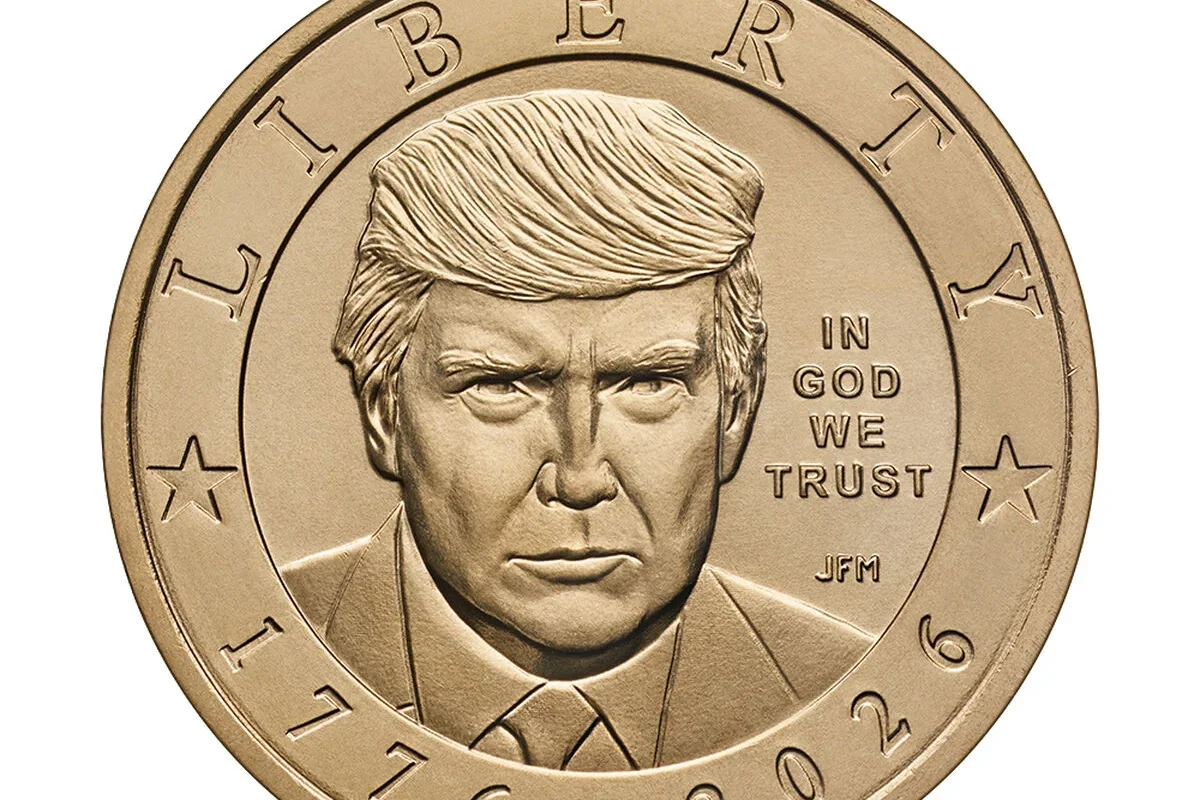
The United States Mint is rolling out a brand-new President Donald J. Trump one-dollar coin to mark the nation's 250th anniversary. Scheduled for release in the fall of 2026, this piece of circulating legal tender carries a face value of a single dollar. Yet anyone attempting to purchase uncirculated rolls or bags directly from the Mint will find themselves paying a steep premium well above that basic valuation. A standard 25-coin roll runs sixty-one dollars, while a 100-coin bag costs one hundred fifty-four dollars and fifty cents.
That heavy markup exposes a fascinating operational reality of modern minting economics. Governments rarely distribute commemorative currency at face value without administrative overhead charges. Collectors and casual observers alike often misinterpret how circulating commemorative programs function. The numbers reveal a stark divide between nominal currency face value and direct-purchase numismatic pricing.
The Anatomy of Mint Markups
Production costs do not stop at stamping metal. Minting facilities must account for packaging, secure warehousing, labor, and distribution logistics. When the public buys a standard box of currency from a bank, the Federal Reserve absorbs those internal handling costs as part of its mandate to manage the money supply. When the Mint packages uncirculated coins into specialized rolls and bags for direct consumer acquisition, those items shift into a different category altogether.
Consider a hypothetical example to clarify the process. If a manufacturing plant produces twenty-five individual dollar pieces, sealing them in plastic tubes requires specialized machinery, quality control checks, and custom shipping cartons. Those physical components carry a tangible price tag. The Mint prices its numismatic products to cover these operational expenditures entirely, ensuring the agency does not operate at a loss when catering to direct-to-consumer collectors.
This financial structure is not unique to the Trump semiquincentennial currency. Past presidential dollar series and commemorative coin programs featured identical premiums when sold in uncirculated rolls. Critics frequently point to the pricing gap as a political maneuver or an opportunistic cash grab. Bureaucrats point to standard statutory pricing formulas mandated by Congress. Both perspectives miss the broader structural mechanics governing how the United States Mint funds its operations.
Semiquincentennial Currency and the Politics of Design
The Trump dollar coin arrives as part of a sweeping, one-year-only overhaul of American circulating coinage for the nation's two hundred and fiftieth birthday. Alongside redesigned quarters, dimes, and half dollars highlighting various historical epochs, the inclusion of a living president on a circulating coin shattered decades of established precedent. Traditional U.S. coinage custom dictated that individuals featured on circulating money must be deceased.
Congressional authorization passed during a previous legislative cycle opened the door for semiquincentennial designs, setting off a complex bureaucratic chain reaction. The Treasury Department defended the initiative by emphasizing its role in celebrating American heritage and institutional continuity. Financial analysts note that numismatic programs generate millions of dollars in net revenue for the federal government.
Public reception remains sharply polarized. Supporters view the coin as a bold tribute to an unconventional leader who left an indelible stamp on American governance. Detractors argue that featuring a sitting or former president in this fashion bends longstanding democratic norms regarding public monuments and currency iconography. Beneath the political rhetoric lies a quiet truth about federal mint operations. Commemorative programs exist primarily to capture collector interest and drive non-tax revenue into government coffers.
Evaluating the Collector Value
Collectors entering the market this fall must weigh the long-term numismatic potential against the immediate acquisition cost. Buying a 25-coin roll for sixty-one dollars means paying roughly two dollars and forty-four cents per coin. Because these items will also enter general circulation, individuals may eventually encounter them in everyday transactions for the exact cost of a single dollar.
Condition dictates survival in the secondary market. Coins pulled directly from Mint rolls often command higher values among specialty traders if they achieve high grading standards from third-party authentication services. Mass production limits scarcity. Millions of these pieces will flood the market across Philadelphia and Denver production runs, suggesting that short-term appreciation is unlikely for standard uncirculated specimens.
Market saturation typically dampens speculative enthusiasm. Investors banking on rapid price spikes for modern circulating commemoratives frequently find themselves holding assets worth little more than face value over a multi-year horizon. True scarcity belongs to low-mintage precious metal variants, such as the companion 24-karat gold proof versions, rather than base-metal circulating issues composed of manganese, copper, nickel, and zinc.
The Broader Financial Mechanics
Understanding the economics requires looking past the political noise. The United States Mint operates as an enterprise fund, meaning it receives no annual tax dollars to finance its day-to-day manufacturing operations. Instead, it relies entirely on the sale of circulating coinage to the Federal Reserve and numismatic products to the public.
When demand for physical cash dips in an increasingly digital economy, the Mint must find alternative revenue streams to maintain its sprawling industrial footprint. Commemorative coin programs bridge the funding gap. By charging a premium on rolls and bags, the agency subsidizes the creation of everyday currency that costs more to manufacture than its actual face value. The penny and the nickel notoriously cost more in raw materials and production energy than they are worth.
Surplus revenue generated from popular commemorative releases offsets those systemic losses across the federal monetary system. The public outcry over a two-dollar-and-forty-cent coin roll highlights a broader misunderstanding of fiscal plumbing. Without these packaging markups and collector premiums, the operational model of the federal minting apparatus would require direct congressional appropriations or structural downsizing.
Navigating the Fall Release
Purchasing strategy dictates outcome as the autumn release window approaches. Household order limits established by the Mint aim to curb hoarding by bulk speculators and ensure fair distribution among retail collectors. Buyers should monitor official inventory updates rather than relying on secondary resellers who routinely inflate prices above initial government retail tiers.
The friction between cost and face value will continue to generate headlines as the first shipments leave the Philadelphia facility. Every administrative choice made by the Treasury Department undergoes intense public scrutiny in the current media ecosystem. Observers focusing exclusively on the portrait stamped onto the metal overlook the complex web of manufacturing expenses, legal mandates, and institutional funding mechanisms that dictate how America pays for its history.
Careful analysis separates political theater from fiscal reality. The coin will enter circulation as planned, carrying its nominal value alongside a permanent mark of a deeply contested political era. Whether it sits safely inside a collector's vault or changes hands at a local grocery store, its journey from a Philadelphia mint press to the open market lays bare the hidden machinery of modern state finance.