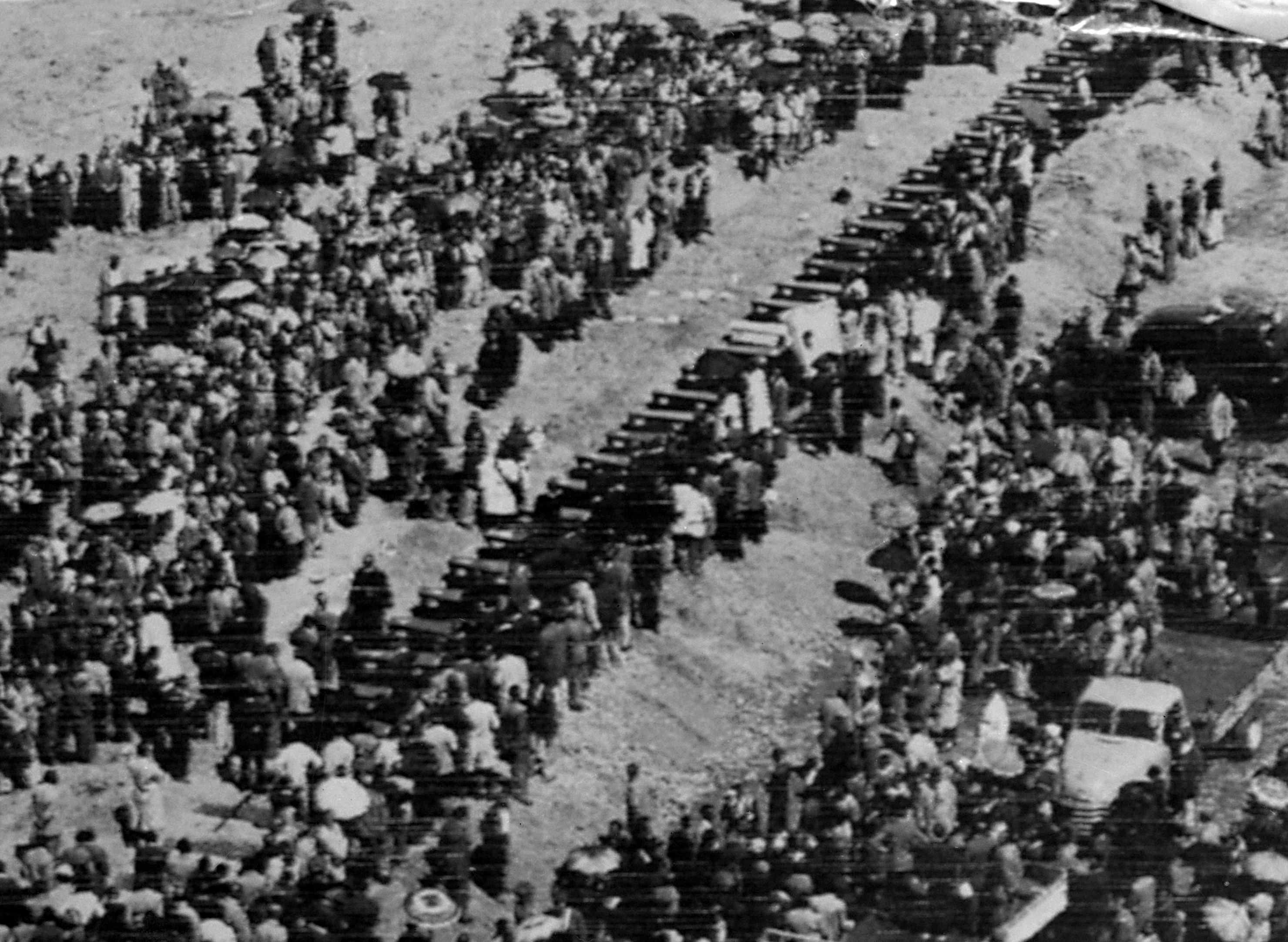
Decades after apartheid formally ended, thousands of South Africans are still fighting in courtrooms for basic accountability over state-sponsored killings, torture, and disappearances. The real reason justice has stalled is not a lack of historical evidence. It is a quiet political bargain struck during the transition to democracy, compounded by decades of prosecutorial drift, lost archives, and a shifting legal threshold for what counts as a crime against humanity.
I have covered transitional justice beats long enough to recognize when a story is being told backwards. Surface-level coverage treats the push for apartheid prosecutions as a simple story of delayed paperwork or slow courts. That reading misses the machinery underneath. When a negotiating table prevents a civil war, it often builds a trap for future prosecutors.
The Truth and Reconciliation Commission, known as the TRC, was designed as an extraordinary middle path. Rather than granting blanket amnesty or holding endless Nuremberg-style trials, lawmakers created a system where perpetrators could apply for amnesty if they made full disclosure of politically motivated acts and proved proportionality. Those who did not apply, or whose applications were rejected, were supposed to face prosecution by the National Prosecuting Authority.
That second half of the deal rarely happened. For years after the commission wound down its formal work around the turn of the millennium, hundreds of recommended cases sat untouched on shelves inside state offices. Families waited while aging security operatives grew older, retired, or died.
How Political Dealmaking Froze the Dockets
Look closely at the mechanics of a negotiated transition. You do not get peaceful handovers of state security apparatus without making concessions to people who still hold guns, intelligence files, and institutional clout.
During the early 1990s negotiations, outgoing apartheid officials and incoming liberation leaders faced a stark choice. Push for immediate mass prosecutions and risk violent sabotage by hardliners inside the police and military. Or trade short-term prosecution for a structured truth-telling process and hope the new democratic state could sort out the rest later.
They chose stability first. That choice worked in the short term by helping usher in the 1994 democratic election without full-scale collapse. Yet the cost was deferred rather than paid.
Once the immediate threat of a counter-coup receded, political priorities shifted toward governing, economic management, and party consolidation. Prosecuting former security branch officers required political backing from the top of the justice system. Without clear directives and dedicated resources, career prosecutors treated politically sensitive historical dockets like hot coals.
Consider a hypothetical example of how a single file stalls in practice. Suppose a family brings forward a 1986 disappearance involving a local police unit. A junior prosecutor opens the file, discovers key intelligence logs are missing from a provincial archive, asks for authorization to subpoena retired officials, and waits months for sign-off while senior leadership changes hands. By the time a new team reviews the docket, key witnesses have moved away or passed away. Multiply that friction across hundreds of cases, and inaction looks like routine bureaucracy even when political hesitation drives it.
The Hidden Role of State Archives and Institutional Memory
Accountability depends on paper trails. Authoritarian states are notoriously good at keeping records when they feel invulnerable, and equally skilled at scrubbing them when the end draws near.
In South Africa, covert security units operated through layered chains of command, euphemisms, and off-the-books operations. Files were destroyed, moved, or misclassified during the transition years. Even where records survived, locating them required institutional persistence that often fell short.
There is another uncomfortable angle that receives far less attention than courtroom drama. Apartheid policing and intelligence did not vanish overnight into a brand-new set of bodies with zero overlap. Some personnel retired with pensions; some retrained; institutional habits take generations to unlearn.
When South Africans ask why a particular case took twenty or thirty years just to reach a preliminary hearing, the answer often sits in file rooms and administrative silos. A missing ledger or an unindexed box can break a chain of command link that a defense lawyer will immediately attack in court.
| Obstacle | How It Operates | Practical Effect on Cases |
|---|---|---|
| Political Hesitation | Senior leadership avoids backing sensitive historical prosecutions | Dockets sit dormant for years without trial dates |
| Archival Gaps | Missing, destroyed, or poorly cataloged state records | Harder to prove command responsibility beyond reasonable doubt |
| Passage of Time | Witnesses, survivors, and accused individuals age or die | Crucial testimony is lost permanently |
| Legal Contestation | Disputes over amnesty validity, prescription, and international law | Pre-trial motions consume years before substantive evidence is heard |
Crimes Against Humanity and the Shifting Legal Arena
What happens when domestic dockets stall for decades? Lawyers and families start looking at broader legal frameworks, including international criminal law principles and statutory provisions governing crimes against humanity.
Arguments around crimes against humanity matter because they frame systemic apartheid abuses not merely as isolated local offenses committed decades ago, but as part of a widespread or systematic attack tied to an institutionalized racial regime. That framing carries heavy moral and legal weight. It challenges attempts to treat decades-old atrocities as ordinary stale cases that time should simply bury.
At the same time, legal battles in real courtrooms are never automatic wins. Defense counsel raise sharp procedural and constitutional questions. They test how domestic statutes interact with international norms, scrutinize old amnesty records, and argue about fair trial rights when events occurred thirty or forty years earlier.
As a court reporter, I have watched enough high-stakes trials to know that noble legal concepts still have to survive gritty evidentiary tests. A compelling moral argument does not automatically prove who ordered a specific raid or who signed off on a covert operation. Every link has to be established cleanly enough to withstand appellate scrutiny.
Why Victims and Families Keep Pushing
From the outside, pursuing cases decades later can look like reopening old wounds. Talk to families of the disappeared or activists who have stood beside them for years, and you hear something very different.
For many South Africans, closure without accountability feels like erasure. A death certificate or a public report is not the same as a court finding responsibility. When suspects walk free in the same neighborhoods or collect state benefits while families still do not know where loved ones were buried, the past refuses to stay in the past.
There is also a generational dimension. Younger activists and researchers are examining old TRC transcripts, cross-referencing records, and supporting surviving relatives who are running out of time. For them, these cases are not just about settling scores from the 1970s and 1980s. They are about whether the rule of law applies evenly to former state actors today.
We should also acknowledge the gray areas honestly. Decades after the fact, not every case can end in a conviction. Some suspects are dead. Some evidence is irretrievably gone. Pushing for accountability does not guarantee neat courtroom endings in every file, and pretending otherwise sets families up for fresh disappointment.
The Uncomfortable Truth About Justice and Reconciliation
Reconciliation is often spoken of as a destination you reach once enough speeches are given. In reality, it is a ledger that stays open until its accounts are settled fairly.
South Africa's transition earned global admiration because it avoided the worst-case bloodbath many feared. That achievement is real. Yet celebrating the miracle of 1994 should never become an excuse to ignore the unfinished business left behind by that same compromise.
When accountability is postponed for thirty years, justice becomes harder, more expensive, and more partial. Every year of delay shifts the advantage toward silence and attrition. Until prosecutions move with consistent urgency and transparency rather than episodic bursts after public pressure spikes, the promise of post-apartheid justice remains half-kept.