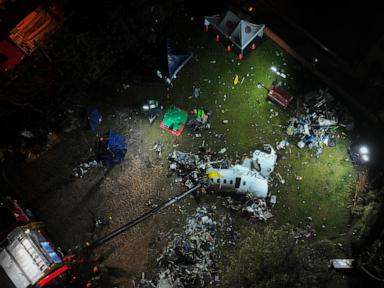
Brazil federal police have formally accused 16 current and former employees of regional carrier Voepass, including company owner and president José Luiz Felicio Filho, for the catastrophic August 9, 2024, crash of Flight 2283 in Vinhedo, São Paulo state, which claimed all 62 lives on board. This dramatic legal escalation shifts the tragedy from a standard air safety inquiry into an aggressive criminal investigation focused on corporate negligence, systematic maintenance failures, and a pervasive operational culture that permitted a doomed ATR 72-500 turboprop to pierce known severe icing conditions.
Aviation catastrophes rarely stem from a single miscalculation. They accumulate quietly over months of operational shortcuts, commercial pressures, and regulatory oversight gaps.
The Anatomy of a Descent
On that fateful August morning, the twin-engine turboprop operated by Voepass lifted off from Cascavel bound for Guarulhos International Airport. Cruising at 17,000 feet, the airframe encountered severe atmospheric icing. Modern aircraft are built to handle adverse weather, provided their de-icing systems function properly and flight crews execute correct emergency protocols. Neither happened.
Data recovered from the flight recorders revealed a chilling operational history. The aircraft de-icing system had repeatedly failed or been manually cycled on and off during 136 prior flights. On the day of the disaster, the plane was cleared to fly despite experiencing de-icing system anomalies on three separate trips earlier that very day.
When ice accumulates on the wings of an ATR 72 without adequate pneumatic boot activation or thermal clearance, airflow separates prematurely. Lift disappears. The aircraft experienced multiple cruise speed low warnings—eight separate alerts—before losing control entirely, pitching downward, and entering an unrecoverable flat spin that ended in a residential backyard.
The Culture of Normalized Deviations
Investigators from Brazil's air force accident investigation center, CENIPA, alongside federal police, pointed to a systemic internal failure within Voepass. This was not an isolated breakdown of machinery. It was an institutionalized normalization of deviance.
Pilots and maintenance personnel routinely omitted mechanical snags from official aircraft logbooks to keep airframes revenue-active. Grounding a plane means losing money. Flying it with degraded systems became an acceptable gamble in the boardroom, even if it risked the lives of passengers in the cabin. Federal investigators uncovered evidence that management actively fostered an environment where reporting technical discrepancies brought professional friction rather than safety resolution.
By targeting 16 individuals with accusations of endangering air traffic safety resulting in a fatal disaster—charges carrying potential prison sentences of up to 12 years—authorities are establishing a legal precedent. Accountability is moving past the flight deck. It is landing squarely on the desks of executives who signed off on commercial urgency over airworthiness.
Regulatory Blind Spots
The fallout from the Voepass indictment extends beyond a single carrier. It forces an uncomfortable look at Brazil's civil aviation oversight agency, ANAC. Critics and investigators argue that regulatory bodies must share scrutiny for failing to intercept persistent maintenance irregularities across regional operators operating under thin financial margins.
When regional airlines stretch resources to maintain route networks, safety margins shrink. If regulatory surveillance is reactive rather than preventative, carriers operating turboprops in tropical and subtropical regions prone to severe localized icing will continue to push safety envelopes. The European Union Aviation Safety Agency and manufacturers like ATR are now under pressure to reevaluate performance degradation guidelines and mandatory grounding criteria when de-icing systems malfunction.
The criminal indictments issued by federal investigators change the landscape for corporate aviation liability in South America. Prosecutors must now decide whether to formalize the charges in a court of law, setting up a landmark trial that will test how far the judicial system can pierce corporate shields when commercial negligence meets fatal reality.
Brazil releases preliminary report on Voepass plane crash
This video provides additional context regarding the initial investigative findings released by Brazilian authorities following the accident.