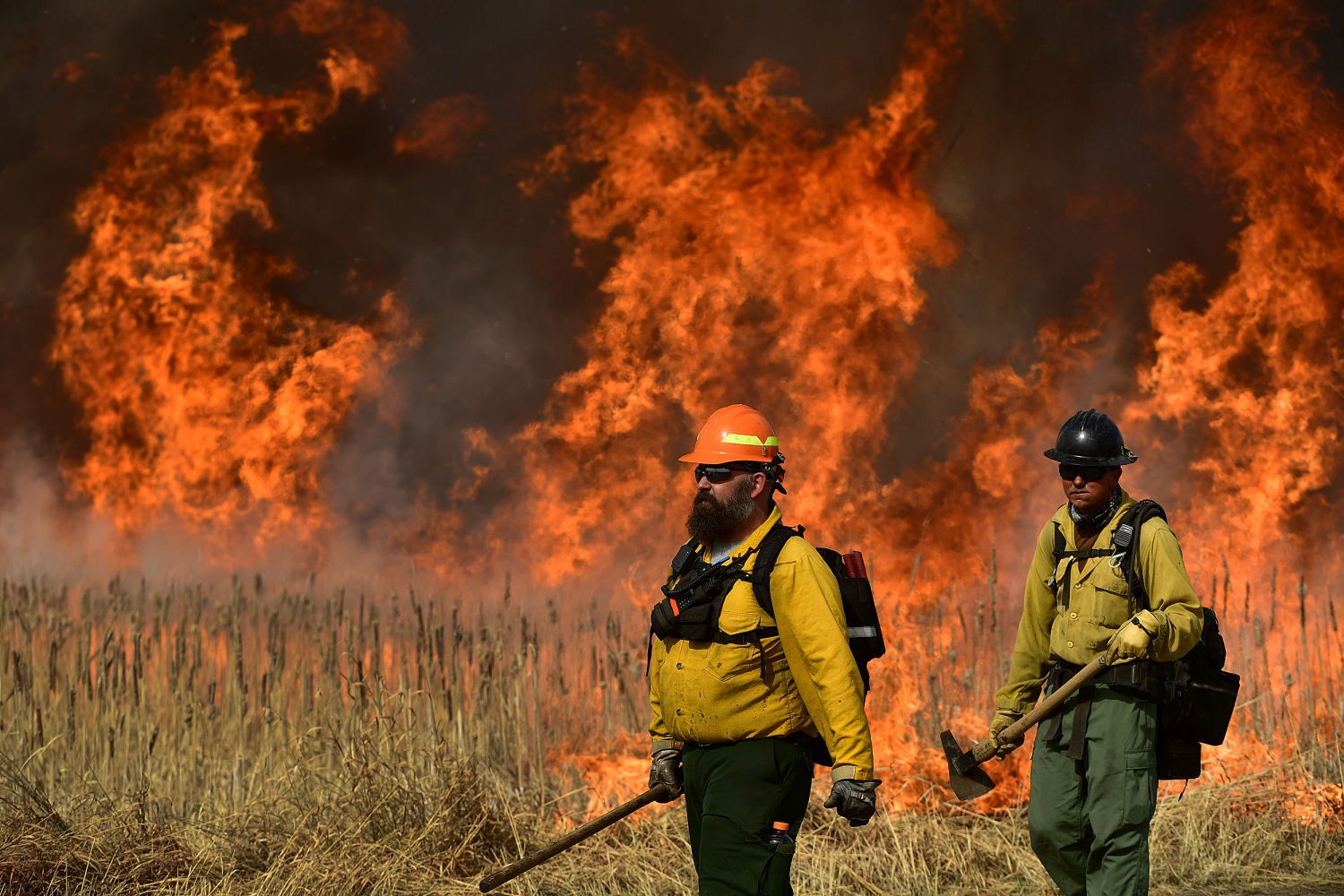
The federal government is reversing decades of occupational health policy by officially encouraging wildland firefighters to wear N95 respirators on the fire line. For generations, these crews faced toxic smoke with little more than a wet cotton bandana or a basic shroud. This sudden shift acknowledges a grim, modern reality. Wildfire smoke is no longer just burning timber and brush. It is a highly toxic slurry of synthetic chemicals, heavy metals, and industrial compounds generated when fast-moving blazes consume entire towns and vehicles.
For years, federal agencies maintained that respiratory protection was impractical for wilderness firefighting. They argued that the physical strain of hiking mountains with heavy gear made masks a suffocating hazard. That argument has crumbled under the weight of mounting medical data and rising cancer rates among young crew members. If you liked this post, you should read: this related article.
The Toxic Shift in the Air Crews Breathe
Wildland firefighting used to be viewed as a battle against nature. Today, it is increasingly an industrial hazard response. When a fire tears through a subdivision, it vaporizes asphalt shingles, vinyl siding, lithium-ion batteries, and treated lumber. The resulting smoke contains high concentrations of benzene, formaldehyde, and acrolein.
Crew members breathe this mix for weeks at a time. Unlike municipal firefighters, who wear heavy self-contained breathing apparatus with compressed air tanks, wildland firefighters cannot carry forty pounds of air gear up a mountain. They rely on the ambient air. For another angle on this development, check out the recent coverage from The Washington Post.
Medical studies have tracked the immediate impact of this exposure. Lung function drops significantly over the course of a single fire season. Particulate matter smaller than 2.5 micrometers penetrates deep into the lungs, crossing directly into the bloodstream. This causes systemic inflammation, straining the cardiovascular system when the body is already under extreme physical stress.
The decision to recommend N95 respirators is an admission that the old ways are killing the workforce. It represents a crack in the bureaucratic wall that long separated urban structural firefighting safety standards from the wildland sector.
The Operational Failure of the Bandana Culture
The culture of wildland firefighting has long resisted protective gear. "Eating smoke" was seen as a badge of honor, an unavoidable part of a grueling job. This mindset was actively reinforced by agency leadership, which continually pointed to the logistical difficulties of masking up.
An N95 mask restricts inhalation. When a firefighter is cutting a fire line with a chainsaw on a steep incline in hundred-degree heat, every breath matters. Early agency testing suggested that respirators would cause heat stress and hyperventilation, leading to accidents on the line.
This rationale ignored the long-term trade-offs. Crews were saving their lungs from temporary discomfort at the expense of chronic illness later in life. The reliance on bandanas was a visible symbol of this compromise. A piece of cotton filters out large ash particles, but it does absolutely nothing to stop microscopic particulates or toxic gases.
The policy shift forces a massive logistical re-evaluation. Federal agencies must now supply millions of respirators to remote base camps. They must train crews on how to achieve a proper seal, a task made difficult by the widespread presence of facial hair, which is a staple of wildland culture. If a mask does not seal tightly against the face, the dirty air simply bypasses the filter, rendering the protection useless.
The Logistics of Survival on the Fire Line
An N95 mask is far from a perfect solution for a wildland environment. It is a stopgap measure. These masks clog quickly when exposed to heavy smoke and ash, requiring frequent replacements that firefighters must carry in their packs.
When a filter clogs, breathing resistance increases dramatically. A firefighter working an eighteen-hour shift might go through half a dozen masks a day. Managing that waste and maintaining a clean supply in a active fire zone presents a major supply chain challenge for incident management teams.
There is also the issue of carbon monoxide and toxic gases. An N95 respirator filters out particulates, but it does not filter out gases. Firefighters working close to the flames will still be exposed to dangerous levels of invisible toxins. Specialized respirators that filter both particulates and gases exist, but they are heavier, more expensive, and even harder to breathe through during intense physical labor.
The federal recommendation focuses on the N95 because it is lightweight and readily available, but it highlights the technological gap in wildland safety. The industry has failed to develop a respiratory protection system specifically designed for the high-exertion, high-heat environment of wildland firefighting. Crews are left using healthcare gear to fight forest fires.
The Long Term Cost of Institutional Delay
The delay in implementing this policy has carried a steep human cost. Firefighters are developing rare cancers at younger ages than the general population. Cardiovascular events remain a leading cause of on-duty fatalities in the field.
By treating smoke inhalation as an occupational inevitability rather than a preventable hazard, federal agencies shifted the burden of proof onto the workers. For decades, retired firefighters struggled to get their medical costs covered, fighting bureaucratic battles to prove that their lung disease or colon cancer was directly caused by their service.
Recent federal legislation has eased that burden by creating a presumption that certain illnesses are work-related for federal firefighters. However, preventing the exposure in the first place is the only way to stem the crisis. The introduction of N95 masks is a late acknowledgment that the status quo was unsustainable.
This policy change will alter how fires are fought on the ground. Supervisors will have to monitor air quality indices alongside wind speeds and fuel moisture levels. Crews may need to be pulled back from smoke-heavy valleys even if the fire behavior itself is manageable, prioritizing lung health over total containment.
The era of the unprotected wildland firefighter is ending, not because the technology has advanced, but because the human cost of doing nothing has finally become too high for the government to ignore. Agencies must now ensure that these masks are actually distributed, fitted, and worn in the field, turning a paper policy into a practical defense against a toxic environment.