The corporate machinery of the 2026 FIFA World Cup planned for hyper-sanitized, luxury-insulated base camps. Instead, the tournament found its beating heart in a Midwestern college town booking out a mid-tier commercial hotel. While powerhouse nations like England, Argentina, and the Netherlands isolated themselves in boutique luxury enclaves within the Kansas City metropolitan grid, the Algerian national football team opted for a different path. They chose the humble DoubleTree hotel in Lawrence, Kansas, a city of 100,000 residents better known for college basketball than international soccer. What followed was an immediate, organic dismantling of predictable sports marketing, creating an aggressive counter-narrative to the standard commercialized spectacle.
This unexpected alliance between a North African football giant and a progressive Midwestern enclave did not happen by accident. It is the result of strategic infrastructure investments colliding with a distinct local culture that resisted the clinical isolation mandated by modern soccer governing bodies. If you enjoyed this post, you should check out: this related article.
The Infrastructure Gamble
When international football teams choose tournament bases, they look for sterile perfection. They want high walls, private security, and minimal contact with the outside world. Algeria broke the mold by selecting Rock Chalk Park, the University of Kansas athletic complex located in West Lawrence. The facility boasts a 2,500-seat soccer stadium that offers elite pitch conditions but lacks the imposing, fortress-like architecture of traditional professional training grounds.
This vulnerability became an asset. Rather than keeping local residents at a distance, the Algerian delegation, led by manager Vladimir Petković, leaned directly into the community fabric. While rival nations treated their training schedules like state secrets, Les Fennecs opened their gates. For another angle on this event, refer to the recent update from NBC Sports.
A standard recovery session turned into a massive community event. More than 2,000 local residents filled Rock Chalk Park just days before Algeria’s high-stakes opening match against Argentina at Kansas City Stadium. The team engaged in "footvolley" drills over short bridges, soundtracked by Algerian artists blasting over the stadium speakers. Instead of a clinical corporate press opportunity, the event morphed into a chaotic, vibrant exchange. Players signed autographs, posed for photos, and ran a soccer clinic for over 50 youth players from the Sporting Kaw Valley organization.
The Economic Undercurrents of Summer Cities
To understand why this relationship sparked so quickly, one must look at the economic reality of a major American university town during the summer months. When May ends, Lawrence undergoes a drastic demographic shift. Nearly 27,000 students depart, leaving local businesses, bars, and restaurants facing a predictable seasonal slump.
The arrival of the World Cup base camp completely inverted this trend. Local business owners adjusted their operations not out of abstract goodwill, but to capture a unique economic windfall.
- The Red Lyon Tavern, a legendary downtown soccer hub, prepared for packed houses of mixed international travelers and converted locals.
- Zen Zero, an Asian fusion staple on Massachusetts Street, bypassed standard tournament promotional materials to implement specific cultural accommodations for visiting fans.
- Johnny’s Tavern pushed content across social media channels, issuing welcomes in English, Arabic, and French.
Even the local McDonald’s drive-thru windows displayed signs welcoming the Algerian team and its global supporters. The sudden influx of international media, traveling fans, and team staff provided a direct economic cushion to an economy that usually goes quiet until August.
Defying the Geopolitical Narrative
The alliance between Lawrence and the Algerian national team offers a stark contrast to broader political realities. In a tournament frequently marred by complex border controls, visa delays, and standard geopolitical friction, a small city in a deep-red Midwestern state chose a completely different path.
Local artist Stan Herd notes that Lawrence operates as a distinct political island, characterized by a population where 30% of the university students represent minority or international backgrounds. Local organizers did not view the Algerian team as a logistical challenge to be managed behind security tape. Long before the team arrived, the city commissioned specific public art installations and lined the downtown lampposts with banners reading "1,2,3, Viva l'Algérie!"
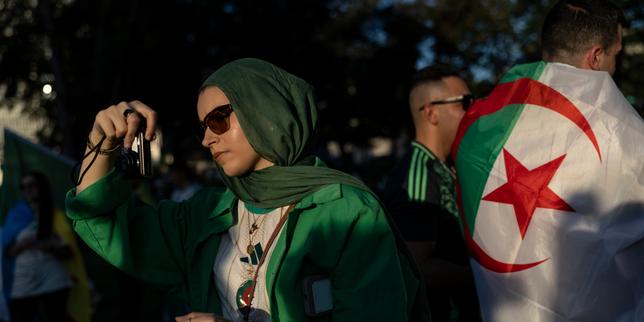
The diaspora community bridged the final gap. The local Algerian population, anchored by regional hubs like the Kanza Market in nearby Olathe, stepped in to facilitate the welcoming efforts. They distributed traditional green-and-white scarves to American families who had never previously watched a North African football match. This cultural integration stood out in sharp relief against the luxury isolation camps of European squads staying closer to the urban core.
The Dynamics of the Adoption
The prevailing media angle frames this story as a charitable American town adopting an underdog soccer team. That perspective misses the operational reality on the ground. The true dynamic is entirely reversed. The Algerian team, along with its traveling supporters, actively infused their own culture, intensity, and expectations into a space that was ready to receive them.
During the initial arrival at the team hotel, amid severe Kansas summer thunderstorms, hundreds of fans stood outside for hours just to catch a glimpse of stars like Riyad Mahrez and Ibrahim Maza. The sheer intensity of North African football fandom shocked a community accustomed to the more polite, structured atmosphere of American collegiate sports. The local population did not simply spectate; they adapted.
This mutual adaptation transformed the base camp into something far more volatile and interesting than a mere corporate marketing activation. By rejecting the traditional blueprint of luxury isolation, Algeria secured a genuine home-field advantage forty miles away from the tournament venue. When they stepped onto the pitch at Arrowhead to face the defending world champions, they did so backed by an entirely new, deeply fiercely loyal demographic engineered in the heart of the American Midwest.