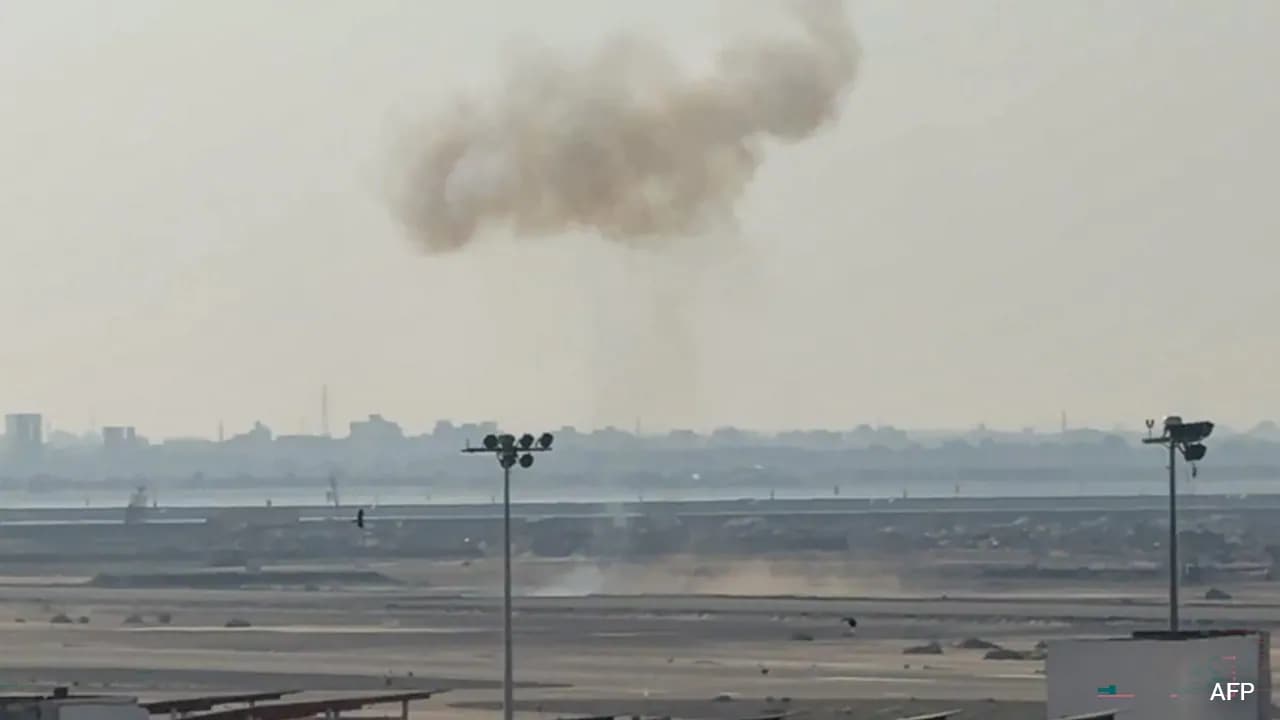
Headline says Saudi air defenses intercepted Houthi missiles and drones. Headline also says the Houthis deny targeting Mecca.
Read that again. Read it slowly.
If you treat that pairing as a straightforward story about a defensive success and a routine denial, you are falling for the oldest trick in modern asymmetric warfare. Worse, you are reading the conflict through the exact lens that keeps defense contractors rich and regional analysts wrong.
The lazy consensus goes like this: Houthi forces launch projectiles, Saudi air defenses intercept them, Riyadh frames it as proof of shield superiority, and the Houthis issue a denial whenever religious sensitivities get poked. Case closed. Move on.
Wrong question. Wrong frame. Wrong math.
The real question is not whether Saudi air defenses can knock down a ballistic missile or a one-way attack drone. The real question is whether winning tactical interceptions while losing the cost-exchange and narrative war is a victory at all.
And an even sharper question sits right behind it: why does a denial about Mecca matter so much in a theater where ambiguity is half the weapon system?
The Lazy Consensus Around Interceptions and Denials
Standard coverage treats every interception as a binary win. Missile launched. Missile destroyed. Civilian infrastructure saved.
That logic works great on a television chyron. It falls apart on a balance sheet.
In modern missile and drone warfare, air and missile defense is not just a physics problem. It is an economic attrition engine. A defender firing high-end interceptors against cheap drones or short-range ballistic missiles can run into a brutal cost asymmetry even when the hit rate looks impressive on paper. Intercepting a threat is necessary when lives and critical sites are in danger. Calling every interception a strategic triumph without checking what it cost, what stock got depleted, and what target was actually threatened is lazy analysis.
I have watched defense programs and security briefings over the years burn through credibility—and vast sums of money—by confusing tactical performance with strategic immunity. When a system stops ninety percent of incoming fire, people celebrate the ninety percent. Professionals look at the ten percent that gets through, the magazine depth left in the launcher, and how fast the attacker can rebuild the salvo.
Then there is the denial side of the story. Whenever reports or claims tie cross-border strikes near religious sites or the Hijaz region, denials arrive fast. Denials in irregular warfare are rarely honest confessions or complete fabrications. They are messaging instruments. A movement fighting a regional rival wants the pressure of escalation without handing its opponents—or wider Muslim audiences—an unforced political gift.
Treating a Houthi denial about Mecca as settled truth is naive. Treating it as automatic proof of guilt without hard verification is sloppy. Both reactions miss how information operations work alongside physical strikes.
Ballistic Missiles, Drones, and the Cost of Being Right
To understand why standard reporting misses the point, you have to separate the hardware. A ballistic missile and a long-range attack drone are not the same problem. Mixing them together in one breathless headline hides the real mechanics.
Terminal Velocity vs. Endurance
A ballistic missile follows a high trajectory and plunges back toward the target at high speed. Intercepting it requires sensors that spot the launch early, tracking radars that lock onto the warhead or its trajectory, command-and-control links that move fast, and a kinetic interceptor built to meet or destroy an incoming object closing at extreme speeds. Missiles carry heavier payloads and hit harder when they connect, which makes them dangerous even in small numbers.
One-way attack drones operate on a different curve. They are slower, often fly lower to complicate radar detection, stay aloft longer, and cost far less per unit than complex missiles or top-tier interceptors. Even when air defenses shoot down a high share of drones, volume and persistence create strain. Radars stay lit. Crews stay sharp. Interceptors get expended.
Defense analysts and military strategists—from institutional researchers at places like the Center for Strategic and International Studies and the International Institute for Strategic Studies to operational commanders who live with battery rotations—have hammered on this point for years. Air defense is a system of systems, not a magic wall. A patriot or terminal interceptor battery is only as good as its radar coverage, integration, replenishment pipeline, and resupply speed.
The Magazine Depth Problem
Here is the part most commentators skip because it sounds like boring logistics.
Magazine depth.
Every time a launcher fires an interceptor, that tube is empty until reloaded. Reloading takes time, transport, testing, and money. Manufacturing high-end interceptors takes months or years per batch. Manufacturing drones or assembling rockets and missiles in dispersed, concealed workshops takes far less capital and far fewer specialized components.
Imagine a scenario where a defender intercepts twelve incoming threats in a single wave using expensive interceptors, while the attacker loses a handful of drones that cost a fraction of a single interceptor to build. Tactically, the defender scored twelve saves. Economically, the attacker just taxed the defender's scarce inventory.
That does not mean air defense is useless. Far from it. Without layered air defense, critical oil infrastructure, ports, power grids, and cities face severe physical damage. Anyone who dismisses air defenses as worthless is ignoring reality.
The real error is assuming that an interception ends the exchange. In reality, an interception is just the middle of the exchange.
Why Mecca Keeps Surfacing in the Narrative
Mecca holds unique weight across the entire Islamic world. Any claim, rumor, or accusation linking missile or drone activity to Mecca or surrounding areas hits an emotional and political nerve instantly.
That is why information around strikes and denials gets distorted so quickly.
On one side, states defending their territory have every incentive to highlight threats to sacred or high-profile areas to rally domestic unity, justify robust defense posture, and draw international condemnation against the attacker. On the other side, armed groups have strong incentives to deny targeting sacred sites—even when their broader strike campaign presses deep into territory—so they do not alienate sympathizers or hand rivals a moral cudgel.
Meanwhile, social media and fast-moving news cycles strip away nuance in seconds. A rumor about direction, an unverified clip, or a vague military statement turns into a certainty before anyone checks flight paths, debris locations, or official statements.
Ask yourself: if a strike is aimed at strategic infrastructure, energy facilities, or military sites, how close does a trajectory or an interception have to be before someone claims—or denies—that a sacred city was in the crosshairs?
Close enough to spark a headline. Far enough to argue over forever.
The smart way to read these denials is not to ask, "Are they lying?" Ask instead, "What political cost are they trying to avoid right now, and what leverage are they trying to keep?"
What People Also Ask (And Why the Questions Are Loaded)
Did Saudi air defenses stop every threat?
No system stops every threat in active warfare, and claiming perfection sets an impossible standard that backfires the moment a single projectile slips through. What matters is layered defense—combining early warning, overlapping radar coverage, and tiered interceptors—paired with hardened infrastructure and rapid repair capacity. Interception rates matter, but survivability of critical assets matters more.
Why would the Houthis deny targeting Mecca if they launched projectiles toward Saudi Arabia?
Because launching cross-border projectiles at a rival state is one political act; claiming or appearing to target Mecca is another entirely. A denial lets the group project military reach without taking the PR hit of attacking Islam's holiest city. Even if a denial is politically convenient, assuming every claim of targeting Mecca is accurate without evidence is just as careless as taking the denial at face value.
Does intercepting missiles and drones end the threat?
Not even close. Interception blunts immediate harm, which is vital. It does not erase the launch sites, supply lines, regional backing, or political grievances driving the campaign. A purely reactive defense can keep absorbing blows indefinitely while the underlying conflict stays unresolved.
Where My Contrarian Take Can Burn You
I am going to push back against the hype around "cost-exchange" analysis just as hard as I push back against blind interception cheerleading.
There is a trap in becoming too clever with cost ratios. Analysts love to say, "A two-million-dollar interceptor shot down a fifty-thousand-dollar drone, so the attacker wins on cost."
That math is incomplete.
What is the cost of a refinery fire? What is the cost of a port shutdown, a spike in shipping insurance, a casualty in a populated area, or a hit on a key node? Sometimes spending two million dollars to prevent fifty million—or five hundred million—dollars in physical and economic damage is a bargain.
Furthermore, over-indexing on asymmetric cost narratives can make defenders second-guess using interceptors when they genuinely need them. Hesitation gets people hurt. If an incoming threat poses a real risk to human life or critical infrastructure, intercept it. Do not play spreadsheet games with live fire.
Good contrarian thinking knows where the edge is—and knows when to step back from it.
How to Actually Read the Next Headline
Stop reading defense stories like sports scores. Start reading them like operations and economics briefs.
- Separate the claims from the mechanics. Look at what was launched (ballistic missile, cruise missile, drone), where interceptions occurred, and what was actually verified versus claimed by either side.
- Watch the inventory and tempo, not just the count. One interception tells you very little. Repeated waves over weeks tell you who can sustain operations and who is burning through scarce stock.
- Treat denials as political signals, not forensic proof. When a group denies targeting a sensitive location like Mecca, look at the audience they are speaking to and the backlash they are trying to dodge.
- Pair military defense with deterrence and diplomacy. Shields buy time. They do not buy permanent peace. Real stability requires addressing escalation pathways, regional incentives, and the broader political stalemate.
Intercepting the missile is step one. Surviving the math, the narrative, and the next salvo is the real test.