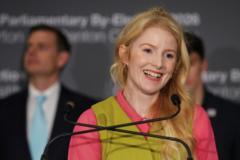
Westminster remains a place where power is measured by proximity, and for many women entering the Palace of Westminster, that proximity still feels gated. Despite a record number of female MPs currently sitting in the House of Commons, the institutional architecture of British politics continues to favor a traditional, male-centric model of networking and decision-making. The issue isn't just about the headcount; it is about an entrenched culture of informal power—the conversations in bars, the late-night votes, and a lack of basic human resources infrastructure—that makes the "Mother of Parliaments" feel like a hostile environment for anyone who isn't a man with a stay-at-home spouse.
To understand why the UK’s political heart beats with such an old-fashioned rhythm, one must look past the diversity quotas and into the windowless corridors where the actual deals are struck. Politics is a business of presence. If you aren't in the room, you aren't in the loop. For decades, those rooms have been the Strangers’ Bar or private clubs in SW1, environments where the currency is stamina and the schedule is erratic. This isn't an accident of history; it is a structural byproduct of a system designed by and for Victorian gentlemen.
The Tyranny of the Division Bell
The most glaring obstacle to a modern, inclusive Parliament is the voting system itself. The physical act of walking through a lobby to be counted might seem like a charming quirk of British tradition, but it serves as a functional tether. It demands that MPs remain on-site until late in the evening, often with little notice.
When votes are called at 10:00 PM on a Tuesday, the burden doesn't fall equally. Female MPs, who statistically still shoulder the lion's share of domestic and childcare responsibilities, are forced into a constant state of triage. They must choose between being present for a crucial legislative moment or being present for their families. While proxy voting was eventually introduced—a move accelerated by the pandemic—it was met with significant internal resistance from traditionalists who argued it would "dilute" the sanctity of the chamber.
This resistance points to a deeper truth. The grueling schedule is often viewed as a badge of honor, a test of "toughness" that serves to gatekeep high-office roles. If you cannot survive the hundred-hour weeks and the midnight finishes, the logic goes, you aren't fit for the Cabinet. It is a survival-of-the-most-available mindset that effectively filters out talent based on lifestyle rather than capability.
The Informal Power Brokerage
If legislation is the public face of Westminster, patronage is its nervous system. Power in the UK political system is rarely distributed through transparent, meritocratic channels. Instead, it flows through "the grid"—a complex web of personal loyalties and quiet favors.
Men in Westminster have long benefited from the "homosocial" nature of political networking. From elite private schools to university debating societies, many male politicians enter the building with a pre-made network of peers who share their language, their background, and their expectations of how things should work. For a woman from a different class or region, breaking into these circles is like trying to learn a language without a dictionary.
The Informal Power Brokerage doesn't stop at the pub door. It extends to the "boys' club" culture of special advisers and party officials who control the levers of the whips' offices. These figures are often the ones who decide which MPs are "promising" and which are "difficult." A woman who pushes back against a policy or demands better working conditions is frequently labeled "difficult," whereas a man who does the same is "ambitious" or "principled."
The Burden of Representation
The scrutiny faced by female MPs is of an entirely different magnitude than their male counterparts. This is especially true for women of color, who face a double bind of systemic sexism and racism.
Research has shown that female politicians are disproportionately the targets of online abuse, threats of physical harm, and intrusive commentary on their appearance. This isn't just a social problem; it is a professional tax. When a woman has to spend hours a week reporting death threats to the police or managing a barrage of misogynistic vitriol on social media, she has less time to focus on her legislative work.
The emotional labor of being a "pioneer" or a "role model" also takes its toll. Women in Westminster are often expected to speak on "women's issues"—from childcare to domestic violence—regardless of their actual policy expertise or interests. A female shadow minister for defense or energy is still asked by the media how she "balances it all," a question almost never posed to her male peers.
The Human Resources Void
One of the most profound failures of the Westminster system is its lack of a professional, centralized human resources department. Each MP is essentially a small business owner, employing their own staff and managing their own office. While this decentralization is meant to protect parliamentary independence, it creates a wild-west environment where there is no clear recourse for bullying, harassment, or discrimination.
The Independent Complaints and Grievance Scheme (ICGS) was a hard-won victory, but its existence is a reactive solution to a proactive problem. The power dynamics of the building—where a staffer's career depends entirely on the patronage of one MP—make it nearly impossible for people to speak out without fearing professional suicide.
For a woman in a junior role, the lack of a standardized HR structure means she is vulnerable. If an MP behaves inappropriately, there is no neutral ground to go to. This absence of professional standards reinforces the "chumocracy" that keeps the old guard in control. It's an environment where the most powerful person in the room is often the most protected, regardless of their behavior.
The Cost of Entry
The financial barrier to entry into British politics is another silent gatekeeper. Prospective MPs must often fund their own campaigns, travel to their constituencies on their own dime, and survive months or years without a steady income while seeking a seat.
Because of the gender pay gap and the systemic lack of capital among women, this economic hurdle hit them hardest. A man with a corporate background or a private income can afford to take a year off to campaign. A woman who is a primary caregiver or who works in the public sector rarely has that luxury. The result is a parliament that is not only male-dominated but also wealth-dominated.
The Persistence of the Status Quo
There is a sense of "change fatigue" among some veteran parliamentarians. They point to the rise of the 2019 and 2024 intakes as evidence that the problem is solving itself. But a change in demographics is not the same as a change in culture.
The physical environment of Westminster—the narrow corridors, the lack of changing facilities, the scarcity of decent food options during late-night sittings—all signal that the building was never intended for anyone but its original occupants. Every time a new mother has to argue for the right to bring her baby into a committee room, it sends a clear message: you are a guest here, not an owner.
The problem isn't that women aren't capable of surviving the Westminster "gauntlet." The problem is that the gauntlet exists at all. It is a system that rewards exhaustion over efficiency and loyalty over innovation. Until the institutional bones of the place are broken and reset, it will remain a boys' club, no matter how many women are invited to sit in the chairs.
The solution requires more than a few more seats at the table. It requires a complete overhaul of how we value political labor, how we manage the physical space of power, and how we dismantle the informal networks that serve as a gate for the privileged few. Anything less is just window dressing on a crumbling façade.
We must stop asking women to adapt to Westminster and start demanding that Westminster adapts to the twenty-first century. This isn't just about fairness; it is about the quality of our democracy. A parliament that excludes half the population’s perspective by design is a parliament that is fundamentally broken, and no amount of "tradition" can justify its continued existence in its current form.
The real challenge for the next generation of leaders is to be the ones who finally turn the lights out on the old-boy network. They will need to be the ones who insist on a professionalized, modern workplace that prioritizes results over performative late-night votes. The era of the "gentleman amateur" is over, and it's long past time the architecture of our government reflected that reality.
If we want a government that looks like the country it serves, we have to stop treating the barriers as inevitable and start treating them as what they are: choices. Every rule that makes the job harder for a woman is a choice. Every late-night vote is a choice. Every lack of a nursery is a choice. The only way forward is to make better ones.
The status quo is a fortress, but even the strongest fortresses have cracks. The work begins with refusing to accept the "way things have always been" as a valid reason for why they should remain so.
The push for a modern Parliament isn't just a feminist project; it's a project for a more effective, professional, and representative British state. It’s time to stop waiting for the culture to change and start forcing the institutions to evolve.