The ink on an arrest warrant dries quickly, but the shadow it casts can last a lifetime.
We tend to think of international law as an abstraction—a distant theatre of mahogany benches, solemn robes, and translated speeches broadcast from The Hague. We picture justice as a grand, unbothered monument, towering above the messy fray of geopolitics. But laws do not enforce themselves. They are read, signed, and delivered by human beings sitting in quiet offices, drinking lukewarm coffee, watching the weather turn outside a window they cannot safely open.
Consider what happens when a court established to judge the worst atrocities on earth becomes a target itself.
Step inside a modest, non-descript study. The books on the shelves are heavy with treatises on genocide, war crimes, and crimes against humanity. On the desk sits a laptop, its camera lens covered by a small piece of sliding plastic—a mundane precaution that feels entirely necessary when your daily correspondence involves indicting heads of state and military commanders with entire armies at their disposal.
The judge sitting at this desk is not a general. They command no battalions. They hold no territory. Their only weapon is a piece of paper bearing a signature and a legal rationale. Yet, for wielding that pen, they find themselves locked in an invisible cage.
Financial institutions that once processed mortgage payments and utility bills suddenly freeze accounts without warning, citing risk compliance regulations. Credit cards are declined at grocery stores, not because of a lack of funds, but because the mere association with an international arrest warrant triggers automated compliance tripwires across global banking networks. Travel plans require clandestine logistics. A simple flight to visit family or attend an academic conference transforms into a high-stakes calculation of transit hubs, extradition risks, and diplomatic immunities that exist only on paper and vanish the moment a plane touches down on unfriendly tarmac.
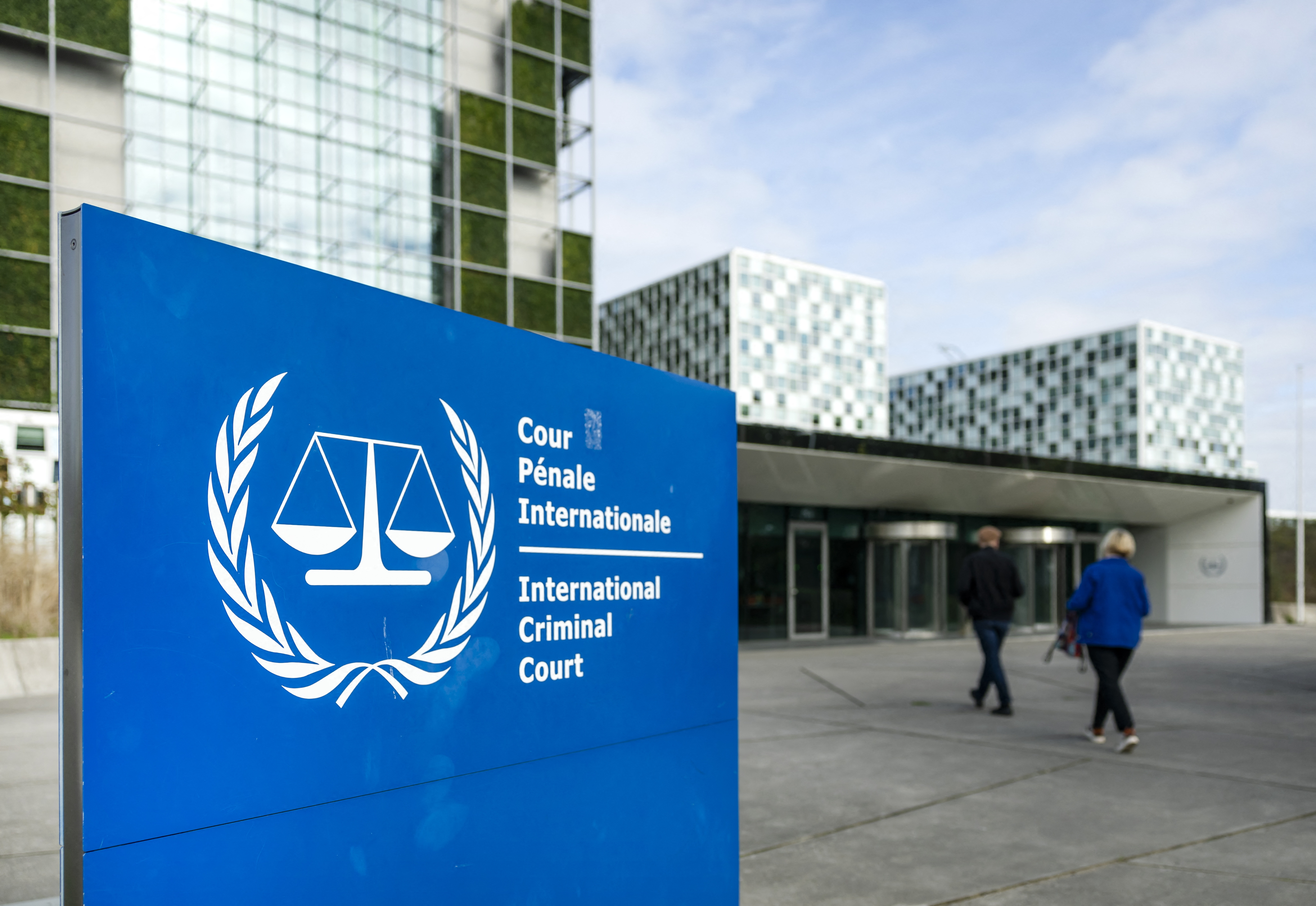
This is life under U.S. sanctions for those tasked with upholding the International Criminal Court.
It is a strange and disorienting reality. You are asked to sit in judgment of the powerful, assured by treaties and international charters that your independence is sacred. Then, the economic machinery of the world's preeminent superpower turns its gaze toward you. There are no dramatic midnight raids, no cinematic showdowns in dimly lit alleys. Instead, the punishment is administered through spreadsheets, algorithmic risk scores, and the slow, suffocating constriction of ordinary life.
To understand the weight of this, we have to look past the legal briefs and examine the psychology of the courtroom.
Judges are trained to be detached. They weigh evidence, listen to testimonies, and ignore the noise of public opinion. But neutrality is easier to maintain when you are insulated from consequence. When your grocery purchases become a geopolitical incident, when your children’s university tuition payments are flagged by compliance officers thousands of miles away, detachment requires a superhuman act of will.
Every ruling becomes a personal ledger. Every signature on a warrant is weighed against the immediate, tangible cost to one's livelihood and personal safety.
This is the hidden design of economic coercion. It rarely destroys a target outright; instead, it creates an atmosphere of ambient dread. It signals to every other jurist, investigator, and clerk in the international system that accountability has a price tag, and the bill is payable immediately, in personal comfort, security, and peace of mind.
We have built a global order that paradoxically demands moral courage while punishing the manifestation of it.
When the rules-based international order was forged in the wake of twentieth-century devastation, the core promise was simple: law would triumph over might. Courts would stand as neutral arbiters between the weak and the violent. But law without enforcement relies entirely on institutional legitimacy. And legitimacy, once squandered or systematically undermined, is nearly impossible to recover.
When sanctions are deployed against the arbiters of justice, the message sent to the world is unambiguous. It tells every dictator, every war criminal, and every perpetrator of mass violence that power ultimately supersedes principle. It suggests that international law is a luxury to be deployed when convenient and discarded when it inconveniences an ally.
The judge closes the laptop. Outside, the evening traffic hums along familiar streets, oblivious to the quiet storm raging inside the room. There are more warrants to review tomorrow. More testimonies to parse. More evidence of human suffering waiting in the files.
The cage is invisible, yes. But the walls are made of steel. And the pen, despite everything, is still in the hand.