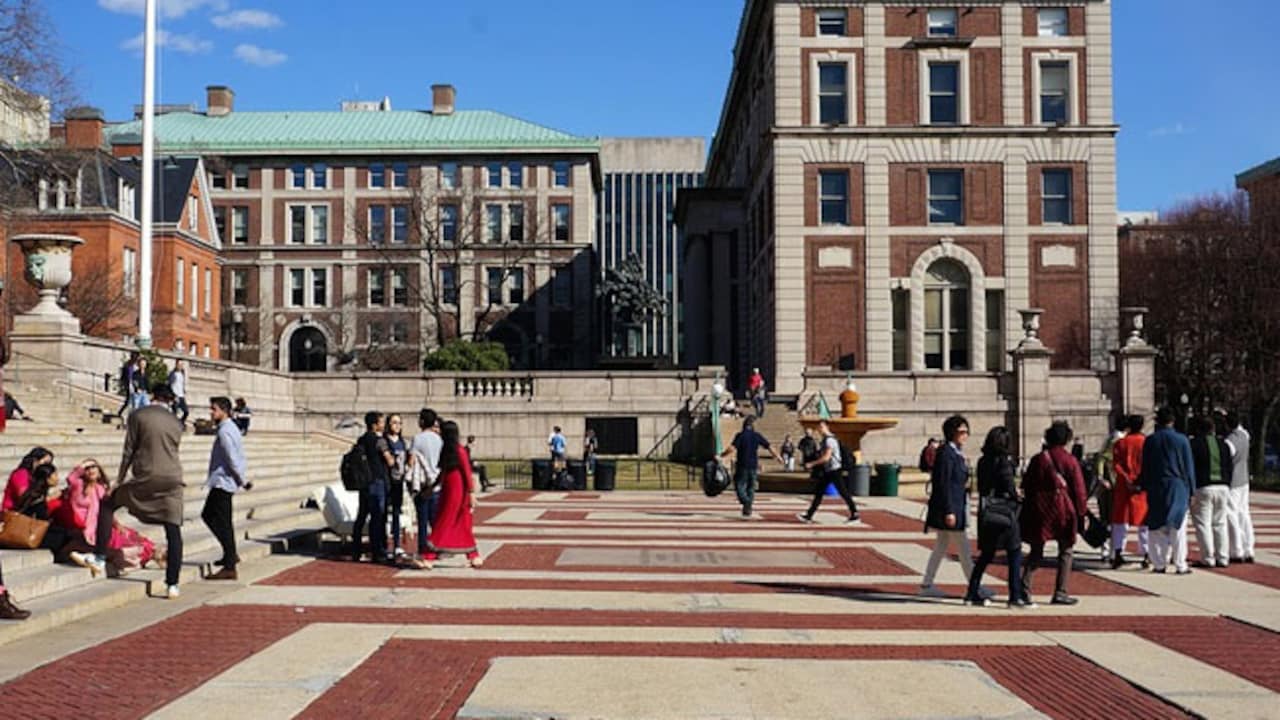
Walk through the iron gates of Morningside Heights or the historic brick archways of Cambridge, and the air smells distinct. It smells of old paper, roasted espresso beans from corner bodegas, and the quiet, heavy certainty of history. For generations, universities like Columbia and Harvard have stood as sovereign islands. They are places where young minds unpack the universe, where tuition checks clear, and where the world outside feels safely muffled by thick stone walls and ivy.
Or so we are told. Don't forget to check out our earlier coverage on this related article.
Listen closer to the murmur of the quad. Beneath the debate team arguments and the clatter of cafeteria trays, a different kind of current runs through these institutions. It is silent. It is immense. And it is funded by checks written thousands of miles away, moving through channels that most students never see, let on tuition bills, or question during freshman orientation.
To understand how money from abroad shapes the American mind, we have to look past the glossy brochures. We have to follow the ledger. To read more about the background here, The Washington Post offers an excellent breakdown.
The Architecture of Quiet Influence
Picture a sleek glass conference room in Tel Aviv or a mahogany-paneled office in Jerusalem. A grant is proposed. A memorandum of understanding is drafted. On paper, it looks mundane—a line item for Middle Eastern studies, a fellowship in international law, or an endowment for a visiting chair in geopolitical conflict.
To the university administrator balancing budgets in an era of tightening margins, it looks like a godsend. To the donor, it is something else entirely: an investment in the future narrative of the superpower nation across the ocean.
Money is never just money. Money is a voice. When foreign capital flows into the endowment funds of elite American universities, it buys more than bricks, mortar, or graduate stipends. It buys intellectual real estate. It establishes what gets studied, who gets hired, and crucially, what questions remain unasked.
Consider the hypothetical case of Maya, a brilliant doctoral candidate specializing in international relations at an Ivy League institution. Maya does not think of herself as a pawn in international diplomacy. She thinks of herself as a truth-seeker. She spends her nights under the amber glow of a desk lamp, combing through declassified documents and regional newspapers, trying to trace the human cost of policy decisions in the Eastern Mediterranean.
One evening, she submits a proposal for a symposium exploring the lived realities of displaced populations. Her faculty advisor looks over her abstract, sighs, and gently steers her toward a safer topic.
"We need to be careful with the framing," the advisor says, adjusting wire-rimmed glasses. "Certain funding streams tied to our department chairs have strict reporting guidelines. Let's keep the focus broad. Let's keep it academic."
Maya is not fired. Her funding is not pulled. There is no dramatic knock on her dorm room door. Instead, her curiosity is quietly, efficiently sanded down by the invisible friction of institutional pragmatism. That is how foreign money works inside American higher education. It does not smash doors down; it oils the hinges so the door only opens one way.
Following the Paper Trail Across Oceans
For decades, the Department of Education has required universities to report foreign gifts and contracts above a certain threshold under Section 117 of the Higher Education Act. For a long time, those reports sat gathering digital dust in federal databases, ignored by the public and barely scrutinized by administrators.
Then investigators started digging.
What they uncovered was not a conspiracy thriller movie plot, but a massive, legal, and largely invisible pipeline of capital. Billions of dollars from foreign governments, sovereign wealth funds, and private donors flowed into American lecture halls. Nations from the Gulf, Europe, and notably Israel poured significant resources into academic institutions.
Why Israel? The answer is simple and complex at once. The United States and Israel share an umbilical cord of military, technological, and cultural alliance. For an academic institution in a nation facing fierce ideological debates about foreign policy, shaping how the next generation of American diplomats, journalists, and politicians understand the Middle East is an ultimate strategic priority.
Endowments were established. Research centers were christened with corporate and familial names. Visiting professorships brought prominent voices to campus. On the surface, this looked like cultural exchange. In practice, it created an echo chamber where institutional survival depended on keeping well-heeled benefactors happy.
When a university relies on foreign endowments to balance its books, caution becomes institutionalized. A president thinking about a new science complex cannot afford to alienate a major donor trust. A dean building a curriculum cannot easily champion perspectives that challenge the geopolitical consensus funded by that same trust.
The Human Cost of Abstract Capital
We talk about geopolitics as if it were a game of chess played by men in suits moving plastic pieces across a board. It is not. It is human lives colliding with economic gravity.
When foreign money funds academic discourse, the shockwaves hit the lecture halls where young people are trying to figure out who they are and what they believe.
Imagine a lecture hall packed with two hundred undergraduates. The professor stands at the podium, projecting a map of the Middle East splashed with data points and historical markers. He speaks with calm authority, presenting a narrative of security, necessity, and historical grievance.
In the third row, a student named Tariq sits in silence. Tariq’s family lived through the rubble of a conflict zone thousands of miles away. He knows the smell of smoke, the sound of sirens, and the heavy grief of a lost home. He listens as the professor presents a sanitized version of events—a version underpinned by research grants funded by entities deeply invested in one side of the story.
Tariq wants to raise his hand. He wants to speak up. But he looks around the room, sees the nodding heads of his peers, and feels the terrifying, suffocating weight of an entire institutional apparatus telling him that his truth is invalid, radical, or impolite.
That is the true friction point. When money dictates the boundaries of acceptable thought, universities stop being incubators of truth and start becoming fortresses of narrative management.
The Mechanics of Influence Without Footprints
How does a foreign nation influence a university without ever touching a faculty hire directly? They don't have to. They use the power of anticipation.
Behavioral psychologists know that humans adapt quickly to their environment to avoid friction. Academia is no different. Junior faculty members hoping for tenure learn early which research directions attract grant money and which ones lead to administrative headaches. Department chairs aiming for deanships learn which donor names look good on a plaque in the entryway.
Israeli philanthropy and government-linked foundations understood this dynamic long before critics started counting the zeros on Section 117 disclosures. By funding prestigious fellowships, joint cyber-security initiatives, and innovation hubs on American campuses, they wove themselves into the operational fabric of the university.
When Columbia or Harvard partners with foreign entities for cutting-edge technology or geopolitical research, the partnership is hailed as a bridge between nations. And sometimes, it is. Brilliant breakthroughs happen. Scholars collaborate across borders.
Yet, the price of admission is often silence on the uncomfortable questions. If a research center is heavily supported by funds tied to a foreign military-industrial complex, do you expect its scholars to publish scathing critiques of that military's tactical doctrine? Of course not. That is not censorship by decree; it is censorship by design.
The Reckoning Inside the Quad
Today, the illusion of the ivory tower as an uncorrupted sanctuary of pure thought has shattered. Students are marching across quads, occupying administration buildings, and demanding transparency. They are asking the kinds of questions that make trustees sweat in their leather chairs.
Where does this money come from? What are the strings attached? Whose interests are our professors serving—ours, or the foreign benefactors footing the bill?
These are not easy questions. They scrape against the comfortable myth that higher education is above the fray of global power struggles. Universities are multi-billion-dollar corporations masquerading as monasteries. They buy real estate, manage massive investment portfolios, and compete fiercely on the global stage for prestige and capital.
When foreign money flows into that machinery, it accelerates the momentum. It builds bigger labs, funds glossier magazines, and attracts star professors. But it also binds the institution tighter to foreign agendas.
We are left standing at a crossroads.
We can pretend that money has no smell and that endowments are neutral gifts from benevolent patrons who want nothing in return. Or we can look at the ledger honestly. We can acknowledge that when capital crosses oceans to buy influence in American classrooms, it changes the character of the education we offer our children.
The gates of Morningside Heights and Cambridge remain heavy and old. The espresso still smells rich in the morning. But the air inside has changed. A quiet ledger is being balanced every single day, line by line, dollar by dollar, in the dark corners where ambition meets capital. And the students walking beneath the ivy are the ones who will eventually have to pay the balance.