A window seat at thirty-five thousand feet offers a comforting illusion. Below, the borders of Europe blur into a quiet expanse of green and brown, sliced only by rivers and mountain ranges. From up here, the continent looks unified, a single piece of fabric. But look closer at the flight paths, the policy drafts, and the intense, closed-door debates in Brussels, and a jagged fracture appears. It is a divide between the urgent necessity of a cooling planet and the stubborn defense of national economic champions.
At the center of this fracture sits France, a nation torn between its proud green rhetoric and its fierce protection of its aviation crown jewel.
While public speeches from Paris frequently champion the green transition, the reality inside the negotiating rooms tells a different story. When the European Union attempts to tighten the screws on aviation emissions, French diplomacy consistently pulls the emergency brake. They are pushing for a standstill. A pause. A preservation of the status quo that risks turning Europe’s ambitious climate goals into a series of missed connections.
To understand why this matters, step away from the bureaucratic jargon of emissions trading systems and look at a crowded terminal at Charles de Gaulle airport.
The Weight of an Extra Euro
Imagine a traveler named Amandine. She is twenty-four, working a grueling entry-level job in Lyon, and saving for months to visit her sister in Berlin. For Amandine, a weekend trip is not a luxury taken for granted; it is a mathematical equation balanced down to the single euro. When she books her ticket online, she glances past the small checkbox offering to "offset" her carbon footprint for an extra twelve euros. She clicks past it because twelve euros is the price of her lunch tomorrow.
Now, multiply Amandine by millions.
The European Union’s Fit for 55 package is designed precisely to change the math for people like Amandine, and more importantly, for the airlines carrying them. The core mechanism is simple: force airlines to pay for the true environmental cost of their pollution. Currently, European aviation enjoys massive tax exemptions on fuel and a generous allocation of free carbon allowances. The EU's plan is to phase out these free allowances entirely, making it progressively more expensive to burn fossil kerosene.
The logic is clear. If burning fossil fuel becomes expensive, airlines will have a powerful financial incentive to switch to Sustainable Aviation Fuels (SAF) or invest in radical new technologies like hydrogen propulsion.
But change induces panic.
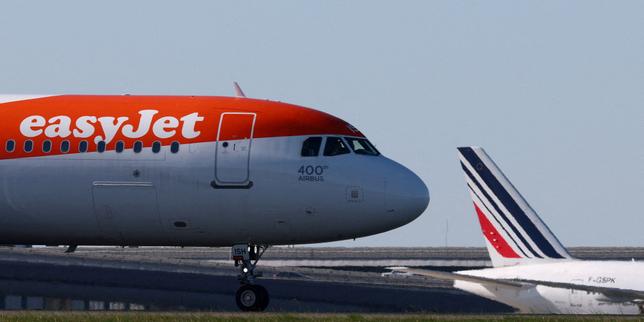
For major network carriers, particularly Air France, these impending regulations represent a massive financial hurdle. Air France operates on a hub-and-spoke model. It relies on funneling passengers from all over the world through Paris-Charles de Gaulle before sending them to their final destinations. If the EU unilaterally raises the cost of carbon allowances for flights departing from European airports, a passenger flying from New York to Mumbai might choose to transfer through Istanbul or Doha instead of Paris. Why? Because the Turkish or Qatari hubs do not face the same strict European carbon pricing.
This is the argument that keeps French policymakers awake at night. They call it carbon leakage, but in reality, they are terrified of traffic leakage. They fear losing their competitive edge to mega-hubs just outside the EU's regulatory border.
The Master of the Slowdown
Behind the grand glass facades of Brussels, diplomacy is a game of millimeters. France has mastered the art of the tactical delay. Rather than directly opposing green legislation—which would look terrible on the global stage—French negotiators employ a strategy of subtle dilution.
They argue for prolonged transition periods. They ask for exemptions for outermost regions. They champion "impact assessments" that push implementation dates further down the road.
Consider the debate over the ReFuelEU Aviation initiative. The mandate requires fuel suppliers to ensure that an increasing percentage of aviation fuel sold at EU airports is sustainable. It starts small, at just a few percent, aiming to scale up drastically by mid-century. While northern European nations pushed for an aggressive, fast-tracked timeline, France led a coalition advocating for a more measured, cautious ramp-up.
The justification sounds reasonable on the surface. French officials argue that the domestic industry needs time to scale up SAF production. If the mandates are too aggressive too quickly, there will not be enough green fuel to go around, driving prices sky-high and crippling European airlines.
But the real problem lies elsewhere. By fighting for a slower pace, France is effectively subsidizing the present at the expense of the future. Every year of delay is another year of cheap fossil fuel burning, another year of rising global temperatures, and another year that the aviation industry avoids the painful but necessary restructuring it requires.
It is a high-stakes game of political procrastination.
The Fuel Paradox
The aviation industry loves to talk about Sustainable Aviation Fuels. It is the perfect narrative. It promises that we can keep flying exactly as we do now, guilt-free, without changing our lifestyles or our business models.
But look at the physics.
True sustainable fuels—cooking oils, agricultural residues, or synthetic e-fuels made from captured carbon and green hydrogen—are incredibly energy-intensive to produce. Currently, they account for less than one percent of global aviation fuel consumption. To scale that up to meet the demands of even a fraction of today's air traffic requires an astronomical amount of clean electricity. Electricity that is also desperately needed to power electric cars, heat homes, and decarbonize heavy industry.
There is a deep vulnerability in relying on a technology that barely exists at scale.
Current Global Aviation Fuel Mix:
[==================================================] 99% Fossil Kerosene
[*] 1% Sustainable Aviation Fuel (SAF)
We are betting our climate future on a supply chain that has not even been built yet. When France pushes to delay stricter penalties on fossil fuels while simultaneously banking on SAF as the ultimate savior, it creates a dangerous paradox. Without a high carbon price, there is no real economic pressure to invest the billions needed to build SAF factories. The status quo becomes a self-fulfilling prophecy.
The Unequal Horizon
This diplomatic tug-of-war does not happen in a vacuum. It directly affects the lives of citizens across the continent, creating a deep sense of regulatory unfairness.
While a rail passenger traveling from Paris to Marseille pays a hefty premium that reflects the infrastructure costs and taxes of a clean train network, a passenger flying the same route often enjoys artificially cheap tickets. The sky remains a tax haven. This imbalance frustrates regional leaders and climate activists who watch France preach environmental virtue while actively protecting cheap domestic flights from the full weight of European climate policy.
The tension reached a boiling point during the discussions surrounding the ban on short-haul domestic flights. The French government made headlines by announcing a ban on flights where a train alternative under two and a half hours existed. It sounded revolutionary.
But when the decree was finally written, the loopholes were massive.
Because of pressure from airlines and regional hubs, connecting flights were exempted. In the end, only a tiny handful of routes were actually canceled. It was a masterclass in political stagecraft: a loud environmental victory for the headlines, paired with a quiet protection of the aviation status quo behind the scenes.
The Flight Path Ahead
The fundamental question is one of timing. Air travel cannot be decarbonized overnight; everyone agrees on this. The dispute is over the angle of the slope. Do we take the steep, painful path now, forcing rapid innovation through strict economic penalties? Or do we take the gentle, flat path favored by Paris, hoping that technology will magically mature before the climate tipping points are crossed?
If Europe succumbs to the French pressure for a standstill, the consequences stretch far beyond the runways of Charles de Gaulle. It signals to the rest of the world that when the economic chips are down, even the most progressive continent on earth will choose its corporate champions over its climate commitments.
The next time you sit in a departure lounge, listening to the hum of jet engines and watching the ground crew prepare a massive wide-body aircraft for a transatlantic journey, look past the sleek branding. Think of the invisible diplomatic battle raging over the very air that plane is about to pierce.
A jet engine is a magnificent piece of engineering, compressing air and fuel to achieve the impossible. But the political machinery keeping it aloft on cheap fossil fuel is far more complex, and far more dangerous.
The sky cannot afford another decade of looking backward.