Silence.
That is the first thing a cargo ship captain notices when the engines cut out in the middle of the Bab el-Mandeb Strait, a twenty-mile-wide ribbon of seawater separating the Arabian Peninsula from the Horn of Africa where the low thrum of a twelve-cylinder marine diesel normally vibrates through the soles of your boots like a heartbeat. When that vibration stops, the ocean suddenly feels very large, very dark, and entirely indifferent to the forty thousand tons of steel floating on its skin. You might also find this similar coverage useful: The Logistics of Atlantic Irregular Migration and Mothership Towing Operations.
Consider a hypothetical sailor we will call Mateo, a thirty-four-year-old second mate from Manila standing on the bridge of a Panamax container vessel at three in the morning. Mateo is not a geopolitical strategist, nor does he care about the centuries-old sectarian grievances simmering in the mountains of Yemen. He cares about the five-month-old daughter he has only ever seen on a pixelated WhatsApp screen, the salt crusting on his eyelashes, and the radar sweep that just painted three small, fast-moving blips skimming across the swells from the port side.
For months, the world watched the crisis in the Red Sea through grainy, sanitized drone footage released by militants and naval coalitions alike—tiny explosions blooming on distant hulls, helicopters descending onto decks like mechanical locusts, and talking heads on cable news pointing at digital maps. We treated it like a distant maritime traffic jam, an inconvenience happening somewhere between the desert and the deep blue. As highlighted in latest articles by Al Jazeera, the results are widespread.
We got the story completely backward. What is happening in the Red Sea is not a regional skirmish; it is a stress test on the central nervous system of modern civilization, and the Houthi movement has discovered how to press a thumb directly onto the carotid artery of global trade.
The Chokepoint You Never Knew You Depended On
To understand why a militant group operating out of one of the poorest nations on earth can rattle boardrooms in Chicago, factories in Stuttgart, and grocery aisles in London, you have to stop thinking of the ocean as an open highway.
The ocean is an illusion of freedom. In reality, global trade moves through narrow hallways, and the Red Sea is the most vital hallway on the planet. Think of the global supply chain not as a sprawling, resilient web, but as a single, miles-long garden hose supplying water to a city—and the Bab el-Mandeb Strait is the spot where someone has just stepped on the rubber with a heavy boot.
Under normal conditions, roughly twelve percent of all global trade—and nearly thirty percent of all global container traffic—squeezes through this narrow corridor on its way to and from the Suez Canal. Every day, billions of dollars' worth of crude oil, liquefied natural gas, grain, lithium batteries, auto parts, fast fashion, and children's toys glide past the volcanic coastline of Yemen. It is the shortcut that built the modern consumer economy, shaving weeks off the journey between Asian factories and European or American ports.
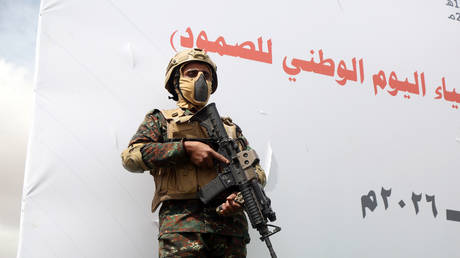
Then, in late 2023, the Houthis began firing anti-ship ballistic missiles, launching explosive-laden drone boats, and deploying armed boarding parties from helicopters against commercial vessels. Their stated goal was solidarity with Palestinians in Gaza, a campaign aimed at ships linked to Israel, the United States, and the United Kingdom.
Yet steel does not carry a passport, and global shipping is a labyrinth of shell companies, flags of convenience, and multinational crews. A vessel owned by a Greek firm, flagged in Liberia, insured in London, crewed by Filipinos and Ukrainians, and carrying German auto parts made with Chinese microchips is a floating United Nations. When a missile strikes that hull, it does not hit a single nation; it hits the invisible machinery that keeps the modern world humming.
The Anatomy of a Detour
Walk down any supermarket aisle today, or try to order a replacement part for a washing machine, and you are feeling the echo of a decision made by shipping executives in Copenhagen, Geneva, and Tokyo.
Faced with the prospect of multimillion-dollar vessels burning in the Gulf of Aden and insurance premiums skyrocketing by hundreds of percent overnight, the world's largest shipping lines—Maersk, MSC, Hapag-Lloyd, CMA CGM—did the only thing they could do. They abandoned the shortcut.
Instead of threading the needle through the Red Sea and the Suez Canal, giant container ships began turning south, pointing their bows toward the bottom of the world: the Cape of Good Hope at the southern tip of Africa.
On a classroom globe, tracing your finger around Africa looks like a minor adjustment. In the brutal physics of maritime logistics, it is a tectonic shift.
Adding the Cape of Good Hope detour tacks roughly 3,500 nautical miles onto a voyage from Asia to Europe. That translates to ten to fourteen extra days at sea, burning tens of thousands of extra gallons of heavy fuel oil per trip, battling some of the most violent, unpredictable winter swells on earth where the Atlantic and Indian oceans collide.
Consider what happens next, because shipping is not a collection of isolated boats; it is a synchronized ballet.
When hundreds of ships are suddenly trapped at sea for two extra weeks, the ballet collapses into chaos. A vessel that was supposed to unload electronics in Rotterdam on a Tuesday does not arrive until two Fridays later. Because it is late, the empty shipping containers sitting on the docks in Shanghai waiting for that specific ship to return and pick them up remain stranded. Factories in Vietnam run out of boxes to pack shoes. Port cranes in Singapore sit idle for three days, then suddenly get slammed by twelve mega-ships arriving at once, creating bottlenecks that ripple backward across the Pacific.
You cannot simply conjure extra cargo ships out of thin air. Building a modern ultra-large container vessel takes years and costs upward of two hundred million dollars. To maintain a weekly delivery schedule between Asia and Europe on the longer African route, shipping companies had to absorb almost every spare vessel on the planet, pulling capacity away from routes serving South America, West Africa, and the United States.
Spot freight rates—the price to move a single forty-foot steel box across the ocean—did not just creep upward; they erupted, doubling and tripling within weeks.
Why High-Tech Navies Cannot Solve a Low-Tech Problem
At this point, a reasonable person asks an obvious question: Why hasn't the most powerful military alliance in human history simply cleared the water?
Since the crisis began, the United States and a coalition of allies have launched Operation Prosperity Guardian, deploying billion-dollar guided-missile destroyers, aircraft carriers, and stealth fighters to patrol the Red Sea and strike Houthi radar sites and missile launchers deep inside Yemen.
The uncomfortable truth, which military planners admit quietly behind closed doors, is that naval warfare in the Red Sea is an asymmetric nightmare.
Imagine trying to defend a glass greenhouse from a neighborhood kid with a slingshot while you are only allowed to use a priceless antique vase to block the stones. That is the financial math currently playing out off the coast of Yemen. The Houthis are firing one-way attack drones and crude anti-ship missiles that cost anywhere from two thousand to twenty thousand dollars to assemble using commercially available electronics and smuggled Iranian components. To shoot a single one of those drones out of the sky before it hits a merchant ship, an American or British destroyer often fires an interceptor missile that costs between two million and four million dollars.
You do not need a degree in economics to see who loses that math problem over time.
Even more sobering is the sheer durability of the adversary. The Houthis—officially known as Ansar Allah—are not a fragile ragtag militia that crumbles at the sound of jet engines. They are hardened veterans of a brutal, nearly decade-long civil war against a Saudi-led coalition that dropped tens of thousands of bombs on Yemen without breaking their grip on the capital, Sanaa. They know how to hide mobile missile launchers inside mountain caves, disguise radar trucks as civilian vehicles, and melt into rugged terrain within minutes of firing a salvo.
Air strikes can degrade their stockpiles, destroy underground storage bunkers, and blind coastal radar stations. What air strikes cannot do is guarantee a shipping insurance underwriter in London that a stray drone will not slip through the radar clutter tomorrow morning and set fire to a tanker carrying one million barrels of jet fuel.
And in global trade, uncertainty is just as lethal as an explosion.
The Human Toll Beneath the Waterline
It is dangerously easy to talk about shipping routes in the language of macroeconomics—basis points, inflationary pressures, supply-side shocks, TEUs. That vocabulary is a sedative. It numbs us to the reality that global trade is not moved by algorithms; it is moved by human beings locked inside floating steel cities for nine months at a time.
If you have ever stood on the open deck of a cargo ship at night, miles from any coastline, you know the peculiar vulnerability of a seafarer's life. There is nowhere to run. There are no concrete bunkers, no sirens warning you to head to the basement, no emergency rooms ten minutes down the road. A merchant vessel is unarmed, slow, and massive—a floating warehouse packed with flammable cargo and pressurized fuel lines.
When the bulk carrier Rubymar was struck by Houthi missiles in early 2024, it did not sink immediately. It drifted helplessly for days, taking on water, leaking an eighteen-mile oil slick across one of the world's most fragile marine ecosystems while carrying over twenty thousand metric tons of ammonium phosphate sulfate fertilizer—a chemical cocktail that threatened to poison the Red Sea's coral reefs and coastal fisheries for decades.
Weeks later, a missile hit the True Confidence, killing three seafarers—two Filipinos and a Vietnamese crewman—and severely burning others. They were not combatants. They were fathers, sons, and brothers working twelve-hour shifts in blistering engine rooms so that people thousands of miles away could buy affordable sneakers and fresh produce out of season.
Back on our hypothetical bridge in the dark, Mateo watches the radar screen with a dry mouth. Every fishing skiff bobbing in the swells looks like a suicide drone boat. Every flicker on the horizon triggers a spike of adrenaline that leaves his hands trembling long after the watch ends. Seafarers are now demanding—and rightly receiving—hazard pay just to transit the region, while maritime unions plead for safe passage. Many sailors simply refuse to sign contracts for vessels scheduled to enter the Red Sea, creating a quiet crewing crisis on top of a hardware crisis.
The Silent Rewiring of the World
Look closely at what happens when a vital artery stays blocked long enough: the body begins growing new veins, even if they are weaker, slower, and more painful to use.
We are watching the early stages of a historic rewiring of global commerce. Because the Red Sea no longer feels reliably safe, companies are rethinking the entire philosophy that governed business for the last forty years.
For decades, the religion of global corporate management was "just-in-time" manufacturing—keeping warehouses nearly empty and relying on ultra-predictable container ships to deliver parts the exact day they were needed on the assembly line. The Red Sea crisis, coming right on the heels of the pandemic and the blockage of the Ever Given in the Suez Canal, has driven a stake through the heart of that model.
Manufacturers are now scrambling toward "just-in-case" logistics—building expensive regional warehouses, holding larger inventories, and shifting production closer to home in places like Mexico, Eastern Europe, and India. Meanwhile, overland rail corridors stretching from China across Central Asia into Europe have seen a sudden surge in demand, as businesses pay a premium to bypass the ocean altogether. Even a nascent land bridge running from ports in the United Arab Emirates across Saudi Arabia and Jordan into Israel has gained new urgency as an emergency bypass valve.
Every single one of these alternatives costs more money.
You may not see a line item on your grocery receipt or your car loan labeled Houthi Maritime Tax, yet it is baked into the price of the steel in your refrigerator, the fabric on your back, and the fuel in your tank. Central banks spent two years raising interest rates to wrestle inflation back down toward earth, only to find a militant group in Yemen quietly propping prices back up from eight thousand miles away.
The Illusion of Distance
History has a habit of reminding comfortable societies that geography still matters.
For a generation, we lived under the spell of the frictionless world. We tapped a button on a glass screen in Seattle or Berlin, and forty-eight hours later a cardboard box appeared on our doorstep, stripped of any evidence of the sweat, diesel, diplomacy, and fragile peace treaties required to bring it there. We forgot that the global economy rests entirely on an unspoken agreement that narrow stretches of water remain open to everyone.
Now, that agreement has fractured. The Houthis have demonstrated a terrifyingly scalable blueprint for asymmetric power: you do not need a blue-water navy to hold global commerce hostage; you only need a coastline next to a chokepoint, a supply of cheap drones, and the willingness to absorb punishment. Other actors around the globe—from the Strait of Hormuz to the Taiwan Strait—are watching closely and taking notes.
Out in the darkness of the Bab el-Mandeb Strait, the swells keep rolling against the hulls of the few ships still brave or desperate enough to make the run, their lights dimmed, their crews scanning the black water for the faint whine of an approaching engine, carrying the weight of a world that still believes the ocean is open.


