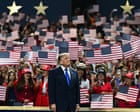
Donald Trump loves talking about making deals. For years, he has suggested that Tehran would eventually come crawling back to the negotiating table once American economic pressure squeezed hard enough, or once he returned to the Oval Office. Yet time and again, Iranian officials have looked straight at Washington and said no.
It happened again recently when Trump suggested talks were either underway or right around the corner, only for Iran’s leadership to flatly deny any plans to negotiate with the United States. The disconnect is jarring. One side projects imminent diplomacy; the other slams the door shut in public.
If you're trying to figure out who is bluffing, you're asking the wrong question. Both sides are playing to entirely different audiences, and understanding the gap between Trump’s claims and Iran’s refusal requires looking at what actually broke down between Washington and Tehran—and why neither side can easily back down without looking weak at home.
The Core Standoff Between Washington and Tehran
Let’s get the basics straight. When Iran says it has no plans to negotiate with the US, it isn't just posturing for a better opening offer. Tehran’s leadership operates under a deep, institutional distrust of American diplomacy that solidified in May 2018.
That was the month Trump unilaterally withdrew the United States from the Joint Comprehensive Plan of Action (JCPOA), commonly known as the 2015 Iran nuclear deal. Iran had spent years negotiating that accord with the Obama administration alongside European powers, Russia, and China. International inspectors from the International Atomic Energy Agency (IAEA) repeatedly verified that Tehran was complying with the agreement's limits on uranium enrichment.
Then Washington tore it up and reimposed sweeping economic sanctions under a "maximum pressure" campaign.
From Tehran’s perspective, the lesson was brutally simple. Why spend political capital negotiating with an American president if the deal can be shredded with a stroke of a pen? Supreme Leader Ayatollah Ali Khamenei has stated repeatedly that negotiating with the United States solves nothing and carries severe political risk. Even reformist or pragmatic figures inside Iran—like President Masoud Pezeshkian or former Foreign Minister Javad Zarif—have had to tread carefully around Khamenei's red lines.
When Trump claims talks are happening or suggests Iran wants a deal, he is leaning into his signature political brand as the ultimate dealmaker. For his domestic base, projecting strength and suggesting adversaries are ready to fold is pure political gold. For Tehran, however, entertaining those claims publicly is poison.
Why Trump’s Dealmaking Narrative Clashes With Iranian Reality
There is a massive cultural and strategic mismatch in how Washington and Tehran approach diplomacy. Trump treats foreign policy much like high-stakes real estate. You apply maximum leverage, float rumors of an imminent breakthrough, keep the other side off balance, and force a bilateral sit-down where personalities drive the outcome.
Iranian statecraft works the exact opposite way. It is slow, bureaucratic, deeply ideological, and obsessively focused on regime survival.
Think about what happens inside Tehran every time Trump claims negotiations are on the horizon. Hardliners in the Islamic Revolutionary Guard Corps (IRGC) and the Iranian parliament immediately demand public pushback. If the Iranian Foreign Ministry stays silent, it looks like they are secretly capitulating to Washington while sanctions are crushing ordinary Iranians' purchasing power.
So Tehran issues a blunt denial. Every single time.
I’ve watched this exact cycle play out across multiple US administrations, and it rarely changes. Washington floats a trial balloon about backchannel talks or potential diplomatic openings. Within hours, a spokesperson in Tehran—whether from the Foreign Ministry or the Supreme National Security Council—steps up to a microphone to declare that direct talks with the US are off the table.
Does that mean zero communication happens behind closed doors? Not necessarily. Indirect messages routinely pass through intermediaries like Oman, Qatar, or Switzerland, which represents US interests in Tehran. Passing a note through an Omani diplomat about prisoner swaps or regional de-escalation is worlds apart from sitting across a table from American officials to negotiate a comprehensive nuclear and regional pact.
What Iran Actually Demands Before Talking
Iranian officials haven't just said "no" in a vacuum. They have laid out clear preconditions for any serious diplomatic engagement, and almost all of them are non-starters in Washington.
First, Tehran wants sanctions relief upfront, or at least concrete guarantees that economic benefits will actually materialize. Under the 2015 deal, many foreign banks and corporations stayed away from Iran even before Trump pulled out, terrified of running afoul of the US financial system. Iran refuses to enter another negotiation where it gives up tangible nuclear capabilities in exchange for paper promises that get blocked by secondary sanctions.
Second, Iran insists that talks stay strictly limited to its nuclear program.
Washington wants the exact opposite. Both Republican and Democratic administrations—and certainly Trump’s foreign policy team—have argued that any new agreement must address Iran’s ballistic missile program and its regional network of allied militias, often called the "Axis of Resistance," which includes Hezbollah in Lebanon, the Houthis in Yemen, and various groups in Iraq and Syria.
To Tehran, those missiles and regional proxies are its primary deterrent against direct military strikes from the United States or Israel. Giving them up in a negotiation isn't seen as a compromise; it’s viewed as unilateral disarmament.
Third, there is the issue of accountability for past US actions. Beyond abandoning the nuclear deal, the Trump administration ordered the January 2020 drone strike in Baghdad that killed Qasem Soleimani, the powerful commander of the IRGC’s Quds Force. For Iran’s military and political establishment, sitting down with the administration responsible for killing one of its top generals carries an almost insurmountable domestic cost.
How Domestic Politics Trap Both Sides
It is easy to look at foreign policy as a chess match between rational actors, but domestic politics usually dictate the moves. Right now, both Washington and Tehran are boxed in by their own political realities.
In the United States, being seen as "soft" on Iran is a bipartisan political liability. Trump built much of his foreign policy identity on dismantling Barack Obama’s diplomatic legacy and taking a hard line against Tehran. If he were to offer Iran the kind of upfront sanctions relief or legal guarantees it demands just to get talks started, critics in Congress—including hawks within his own party—would immediately accuse him of appeasement.
Meanwhile, Iran’s leadership faces intense internal pressure. Years of severe sanctions, high inflation, a plummeting rial, and widespread public frustration have eroded living standards across the country. Many ordinary Iranians are exhausted by economic isolation and want their government to find a way out.
Yet the ruling establishment fears that looking eager to negotiate with Washington projects weakness at a moment when the regime needs to project total control. In authoritarian systems, perceived vulnerability invites further pressure—both from foreign adversaries and from domestic protest movements.
So you end up with a stalemate where both sides talk past each other:
- Washington claims pressure is working and talks are near.
- Tehran denies any plans to negotiate and doubles down on resistance rhetoric.
- Indirect backchannels stay narrowly focused on crisis management rather than big breakthroughs.
The Nuclear Clock Is Still Ticking
While politicians trade public denials and claims, the technical reality on the ground keeps getting more dangerous. Since the collapse of the 2015 nuclear deal, Iran has steadily expanded its nuclear capabilities far beyond the limits it once accepted.
According to quarterly reports from the IAEA, Iran has accumulated significant stockpiles of uranium enriched up to 60 percent purity. That is a short, technical step away from weapons-grade levels of 90 percent. Before 2018, Iran’s enrichment was capped at 3.67 percent, which is suitable for civilian power generation.
Tehran maintains that its nuclear program is strictly for peaceful purposes and points to a religious decree (fatwa) by Ayatollah Khamenei banning nuclear weapons. US intelligence agencies have assessed at various points that Iran is not currently building a bomb, though they note Tehran has undertaken activities that better position it to produce one if it chooses to do so.
Here is the problem with having no direct diplomatic channel while enrichment climbs toward weapons-grade territory. Without verified limits and full inspector access, miscalculation becomes much easier. A single intelligence failure, a cyberattack, or a regional escalation involving Israel or US forces in the Middle East could trigger a broader conflict before either side even realizes how close they are to the brink.
How to Read Future Headlines on US-Iran Diplomacy
When you see headlines announcing that Iran has rejected US talks despite Trump’s claims, don't treat it as a sudden diplomatic shock. It is the baseline reality of a relationship broken by decades of hostility and the 2018 collapse of the JCPOA.
If you want to track whether real diplomacy is actually happening—rather than political theater—ignore the sweeping statements from podiums and watch for three concrete signals instead:
- Changes in IAEA access. Real diplomatic progress almost always starts with technical concessions, like Iran allowing international inspectors to reinstall monitoring cameras or resolve outstanding questions about undeclared nuclear sites.
- Quiet movement on frozen assets or prisoner releases. Washington and Tehran rarely jump straight into nuclear talks. Historically, major negotiations are preceded by confidence-building steps mediated by Oman, Qatar, or European partners.
- Shifts in Khamenei’s public framing. Iranian diplomats do not freelance on US relations. Until Supreme Leader Ayatollah Khamenei signals flexibility—using phrases like "heroic flexibility," as he did prior to the 2015 deal—any claim that Tehran is ready for direct talks with Washington is wishful thinking.
Until those signs appear, expect Trump to keep claiming a deal is within reach, and expect Tehran to keep telling him no.