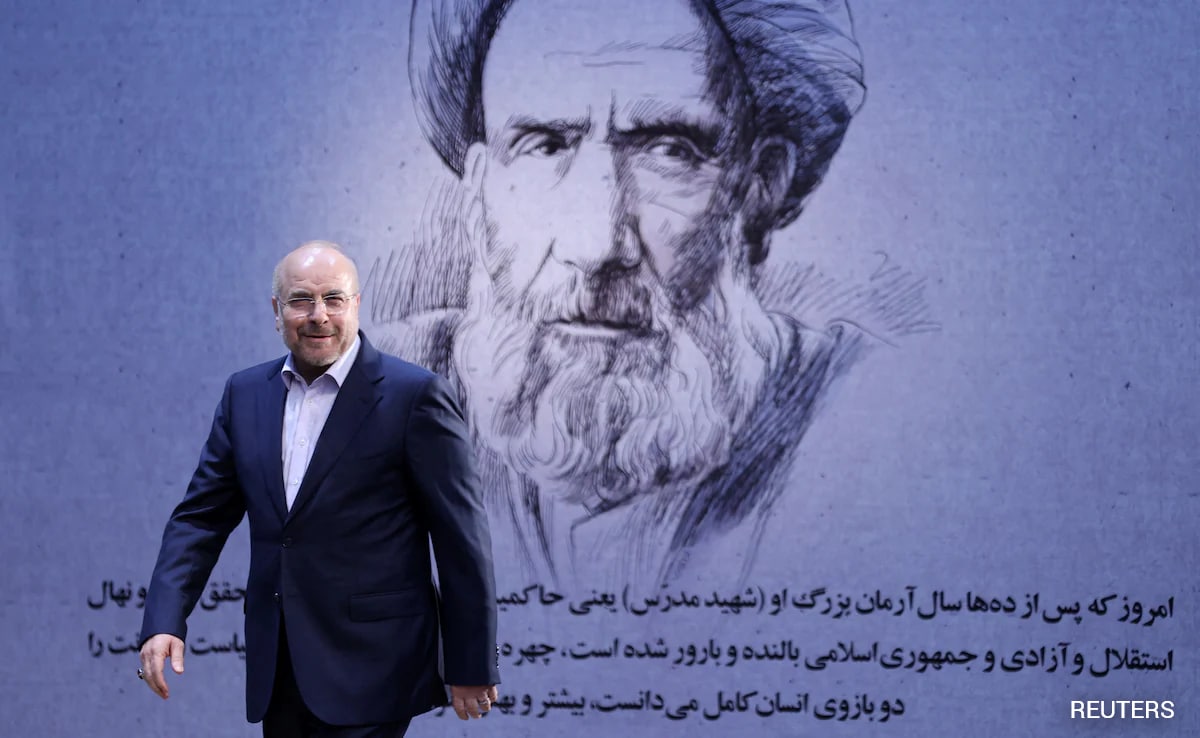
The political theater in Tehran isn't just a high-stakes drama; it's a fight for the very soul of the Islamic Republic. While the world focuses on the external threats from the U.S. and Israel, the real "Game of Thrones" is happening inside the halls of the Majlis. At the center of this storm sits Mohammad Bagher Ghalibaf, the Speaker of Parliament. He's currently trying to navigate the impossible: managing a war-torn economy, negotiating with the West, and surviving a coordinated hit job from the ultra-hardline Paydari Front.
If you think Iranian politics is a monolith, you're missing the most dangerous part of the story. There’s a group—often called the "Group" or the Paydari—that doesn't just hate the West; they hate Ghalibaf’s brand of pragmatic survival. They want him gone, and they’re willing to let the country burn to ensure no deal is ever signed with Washington.
The Group that Prefers Collapse over Compromise
The Paydari Front (Front of Islamic Revolution Stability) isn't just another conservative wing. They’re the ideological purists who believe that any negotiation is a betrayal of the 1979 Revolution. For them, Ghalibaf is a "technocrat" at best and a "traitor" at worst.
Why is the heat turning up now? Because Ghalibaf has emerged as the unlikely face of Iranian diplomacy. Following the death of Supreme Leader Ali Khamenei and other top officials, Ghalibaf has stepped into a vacuum. He’s been meeting with figures like U.S. Vice President JD Vance in Islamabad, trying to find a way out of a conflict that’s pushing Iran’s inflation toward 180%.
The Paydari see this as their moment to strike. They’ve mobilized figures like Saeed Jalili and Amirhossein Sabeti to paint Ghalibaf as a weakling. Their logic is simple: if Ghalibaf succeeds in brokering a ceasefire or a "Permanent Peace Deal," the radical right loses its reason for existing. They thrive on the narrative of permanent struggle. Without a "Great Satan" to fight, their grip on the security apparatus slips.
Ghalibaf vs the Paydari Power Struggle
The rift isn't just about ideology; it's about who controls the scraps of the Iranian economy. The Revolutionary Guard (IRGC) and their political allies in the Paydari front control an estimated 30–40% of Iran’s GDP. A deal that includes transparency or nuclear dismantling would dismantle their smuggling empires and sanctions-evasion networks.
Ghalibaf, despite his own history in the IRGC, understands a truth the Paydari ignore: the street is screaming. The 2025–2026 protests have seen shopkeepers in Tehran closing their doors as the rial hit 1.45 million per dollar. Ghalibaf knows that if the economy collapses completely, even the most loyal Basij forces won't be able to hold the line.
- The Paydari Strategy: Use state media to frame negotiations as a "coup" against the revolutionary path.
- The Ghalibaf Strategy: Frame diplomacy as "war by other means" to pacify the hawks while actually looking for an exit ramp.
The tension reached a breaking point on April 11, 2026, when the Iranian negotiating team was abruptly ordered back to Tehran from Islamabad. Reports suggest the Paydari-aligned security officials claimed Ghalibaf had "deviated from his mandate." It was a public slap in the face.
The Mojtaba Factor and the Succession Void
With the Supreme Leader gone and his son, Mojtaba Khamenei, reportedly wounded or at least keeping a very low profile, there's no "final arbiter" to settle the dispute. Historically, the Supreme Leader would let these factions bicker and then step in to keep the balance. Now, it’s a free-for-all.
Ghalibaf is playing a dangerous game by positioning himself as the indispensable man. He’s briefing Ahmad Vahidi, the IRGC commander, directly, effectively bypassing President Masoud Pezeshkian. Pezeshkian has been sidelined, his warnings of "total collapse" falling on deaf ears within the Paydari camp.
The Paydari don't just want Ghalibaf out of the speakership; they want him politically neutralized. They’re using the "10 Strategic Demands" approved by the National Security Council as a cage. If Ghalibaf moves an inch outside those demands to secure a deal, they'll pounce with charges of treason.
What This Internal War Means for You
If you're watching the prediction markets for a US-Iran peace deal, you’ve seen the odds plummet from 40% to 14.5% in just a few days. That’s the "Paydari Effect." Every time Ghalibaf gets close to a breakthrough, the hardliners trigger a crisis—be it a military provocation in the Strait of Hormuz or a domestic crackdown—to poison the well.
The Paydari don't care if the rial becomes worthless. They don't care if the airports are in ruins. They believe that a "pure" Islamic Republic can survive in a North Korea-style isolation. Ghalibaf, for all his flaws, is at least tethered to the reality of governance.
Don't expect a clean resolution. The next few weeks will see Ghalibaf fighting for his job while the Paydari try to install a "loyalist" who will end the Islamabad talks for good. If the hardliners win, the chance for a regional de-escalation dies with Ghalibaf's career.
Keep a close eye on the Iranian state television broadcasts. When you see Ghalibaf being forced to use more "war-like" rhetoric, it’s not for the Americans—it’s a survival tactic to fend off the wolves in his own parliament. He’s a man running out of time and allies.
Move your focus away from the foreign ministry and start looking at the internal votes in the Majlis. That’s where the real war is being won or lost. If Ghalibaf is ousted, any hope of a "No Deal" scenario being avoided goes right out the window. Watch for the Paydari to move for a vote of no confidence; if that happens, the Islamabad talks aren't just paused—they're dead.