The dirt in the Pilbara isn't just red. It is a deep, bruised crimson, the color of dried blood and ancient rust. Beneath that crust lies a wealth so vast it defies the human imagination, a literal mountain of iron ore that has fueled the rise of skyscrapers in Shanghai and the bank accounts of dynasties in Perth. For ten years, this dust hasn't just been settled by the wind. It has been stirred by the relentless, grinding gears of a legal war that pitted the wealthiest woman on earth against the ghost of her father’s oldest friend.
Money at this scale ceases to be about math. It becomes a matter of legacy, ego, and the weight of a handshake made half a century ago.
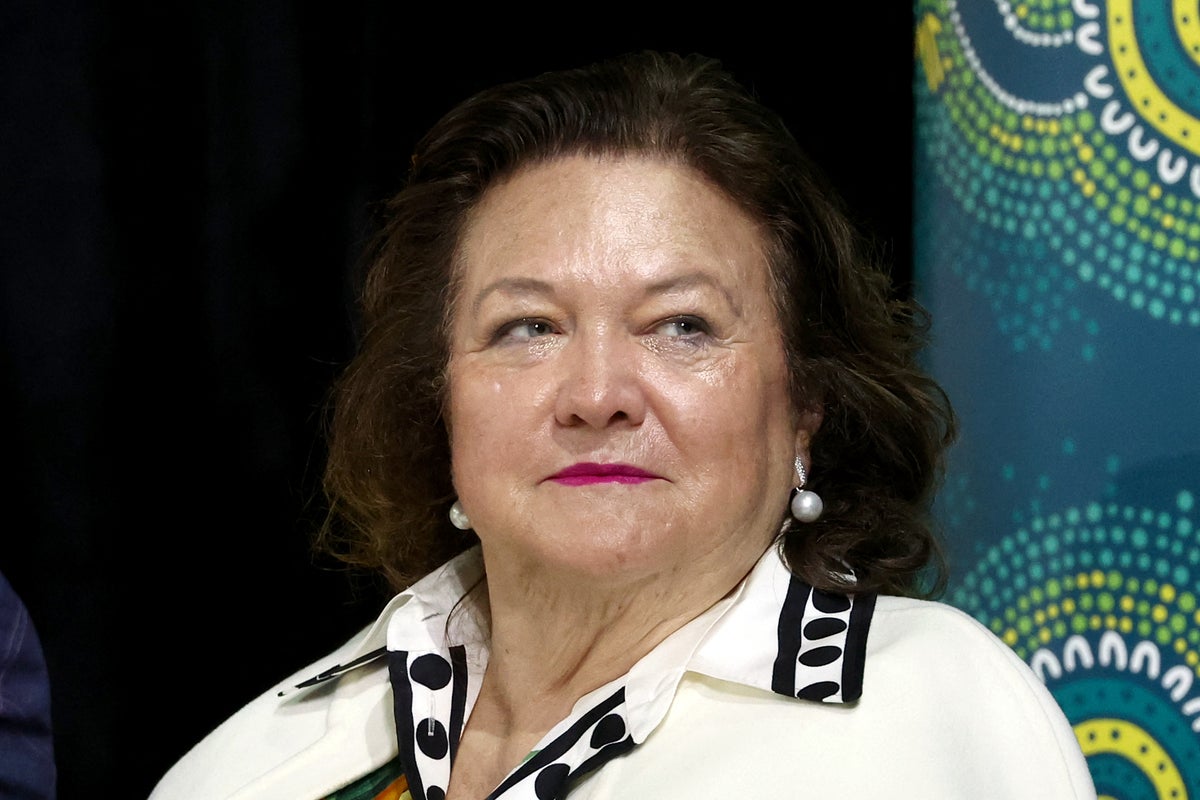
Gina Rinehart, the formidable matriarch of Hancock Prospecting, has spent a decade defending a fortress of royalties. On the other side stood the family of the late Peter Wright, the man who sat beside Gina’s father, Lang Hancock, as they surveyed the desolate reaches of Western Australia from the cockpit of a light plane in 1952. They were pioneers in a landscape that most of the world considered a wasteland. They saw what others didn't. They struck a deal. But as the decades passed and the millions turned into billions, the clarity of that deal began to blur like a heat haze on a desert highway.
The Ghost in the Machine
To understand why a judge recently ordered Rinehart’s company to hand over a fortune in back-dated royalties, you have to look at the shadows cast by the titans who started it all. Imagine two men in khaki, sweating in the Australian sun, imagining an empire. Lang Hancock was the visionary, the loud, often controversial face of the operation. Peter Wright was the strategist, the partner in the shadows. Together, they formed Hanwright.
Their agreement was simple in theory: they would share the spoils of the earth they claimed. However, the earth is rarely simple. In the world of high-stakes mining, a "tenement" isn't just a piece of land; it is a legal puzzle. As the Hope Downs mines—vast pits of wealth operated in partnership with Rio Tinto—began to produce millions of tonnes of ore, the question arose: who truly owned the right to the percentage?
Rinehart’s side argued that the specific areas being mined weren't covered by the original royalty agreements. She fought with the tenacity of someone who believes every grain of sand is a family heirloom. The Wright family, through their company Wright Prospecting, argued that the map was clear. They weren't just asking for money. They were asking for the recognition of a founding father’s contribution.
The court case became a sprawling, multi-billion-dollar labyrinth. It involved thousands of documents, aging maps, and the kind of forensic accounting that would make a sane person’s head spin. But at its heart, it was a story about whether a promise made in the 1960s holds its shape when it is subjected to the crushing pressure of modern corporate law.
The Weight of the Verdict
Justice Jennifer Smith of the Western Australian Supreme Court didn't just deliver a ruling; she dismantled a defense. The verdict was a seismic shift in the Australian mining world. It confirmed that Hancock Prospecting owed Wright Prospecting—and another company, DFD Rhodes—royalties that had been withheld for years.
The numbers are staggering. We are talking about hundreds of millions of dollars in back payments, plus the ongoing rights to a slice of every tonne of ore pulled from the Hope Downs mines for years to come.
Consider the mechanics of a royalty. For every ship that leaves the Port Hedland harbor, loaded to the waterline with heavy, red rock, a small fraction of its value is diverted. Usually, it’s a few percentage points. It sounds like a pittance. But when the volume of ore is measured in the tens of millions of tonnes, that "pittance" becomes a river of gold.
For Rinehart, this wasn't just a financial blow. It was a rare crack in the armor of a woman who has spent her life consolidating her father’s empire and fiercely guarding its borders. She has battled her own children in court. She has battled the government over taxes. She is a woman who views the world through the lens of absolute ownership. To be told by a judge that she must share the bounty of the Pilbara with the descendants of her father’s partner is a bitter pill, coated in iron dust.
The Human Cost of Constant Combat
What does it feel like to spend ten years in a courtroom?
Think of the lawyers who have made entire careers out of this single dispute. Think of the heirs who have grown from children to adults while the "royalty war" raged in the background. There is a specific kind of exhaustion that comes from generational litigation. It turns names into case files and memories into evidence.
While the legal teams argued over the definition of a "mining lease" versus an "exploration license," the actual mines of Hope Downs never stopped working. The giant trucks, the size of two-story houses, continued to roar. The conveyor belts hummed. The dust rose and fell. The physical reality of the work is a stark contrast to the sterile, air-conditioned silence of a courtroom in Perth.
In the courtroom, the struggle is over words. On the ground, the struggle is over rock.
The tragedy of the "Handshake Deal" is that it relies on the honor of the men who made it. Once those men pass into history, the handshake becomes a ghost. Without their living breath to verify the intent, the words on a yellowing piece of paper are all that remain. And words, as any lawyer will tell you, are flexible. They can be stretched, twisted, and squeezed until they mean the opposite of what was intended.
A Legacy Written in Stone
This ruling does more than just move money from one billionaire’s pocket to another. It sets a precedent for how the history of the Australian mining boom is written. It validates the idea that the "silent partners" and the secondary claimants cannot be simply erased by the passage of time or the sheer force of a dominant personality.
The Pilbara is a place of long memories and deep grudges. This case is a reminder that in the world of natural resources, you don't just own the land. You own the obligations that come with it. You own the debts of your ancestors. You own the promises made in the cockpits of small planes over a red horizon.
The fight might not even be over. In the world of the ultra-wealthy, an appeal is often just the next chapter in a never-ending book. But for now, the scales have tipped. The Wrights and the Rhodes families have been granted their share of the red earth's treasure.
As the sun sets over the Hammersley Ranges, casting long, purple shadows across the pits of Hope Downs, the machines keep moving. They don't care about Supreme Court rulings. They don't care about the names on the stock certificates. They only know the weight of the ore.
The iron doesn't care who owns it. It only knows that eventually, everything returns to the dust. But until then, every dollar, every cent, and every grain of sand will be fought for, as if the very soul of the desert depended on it.
The red dust settles, but the ledger remains open.