Saltwater tastes different when you are waiting. It tastes like rust and old oil, heavy on the back of the tongue, sticking to the inside of a captain's teeth after hours spent staring at a horizon that refuses to change.
Captain Aris knows that taste well. From the bridge of a heavily laden container ship idling twenty miles outside the Strait of Hormuz, the world looks deceptively quiet. The water is a flat, blinding sheet of turquoise under the Persian Gulf sun. A few white-capped wakes from passing patrol craft cut distant lines through the glare. But down in the engine room, the massive diesels hum at a nervous, choked idle, burning fuel just to stay still, bleeding money into the dark salt water with every passing minute.
Nobody on board is talking about supply chain logistics. They are talking about water rations, and whether the fresh fruit in the galley will last until Thursday, and the terse voice that crackled over the VHF radio six hours ago from an Iranian naval cutter telling them, with bureaucratic finality, that the gate is locked.
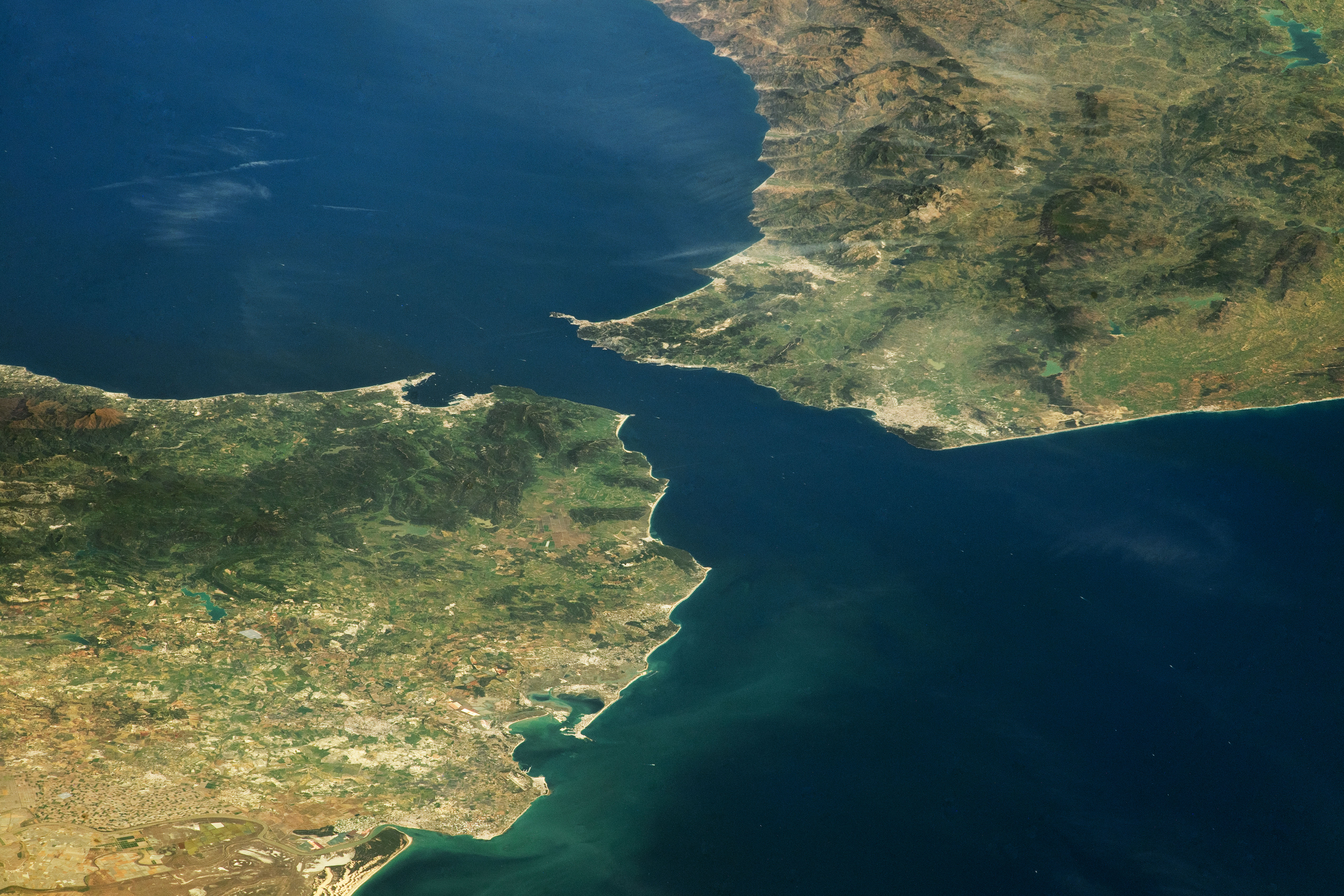
The Strait of Hormuz is not merely a body of water. It is a narrow throat, barely twenty-one miles wide at its slimmest point, through which a staggering fraction of the world’s petroleum lifeblood must squeeze. When the Islamic Republic of Iran announces—via state-aligned outlets like Nournews—that this throat will remain firmly shut until specific, non-negotiable conditions are met, the tremor does not stay in the Gulf. It travels instantly. It travels to the pump stations in Rotterdam, to the trading desks in Singapore, to the quiet anxiety of a commuter in Chicago watching the price per gallon tick upward on a roadside digital sign.
To understand why this digital bulletin from a Tehran news agency can paralyze a tanker half a world away, you have to look past the geopolitical headlines and understand the psychology of a bottleneck.
Imagine a single lane bridge spanning a deep chasm, controlled by a gatekeeper who has grown tired of compromise. You can see the green fields on the other side. You can smell the market. But the heavy iron bar stays down.
For months, negotiations have circled each other like tired fighters in a ring. Sanctions, maritime security coalitions, counter-sanctions, covert frictions in the shadows of the Gulf of Oman—all of it has built an enormous wall of mutual distrust. The recent pronouncement via Nournews was not an opening salvo. It was a slammed door. The official stance from Tehran is explicit: until certain economic guarantees are realized and regional pressures abate, the commercial vessels that feed global energy markets will find no safe passage through Iranian territorial waters or the contested traffic separation schemes within the Strait.
And so, the ships stop.
Consider the cargo master on a supertanker carrying two million barrels of crude. He is holding a cup of stale instant coffee, looking out at the silhouettes of other stationary vessels—hulking leviathans of steel riding high in the water because their tanks are full, or sitting low because they are waiting to load. They look like a city of ghosts parked in the middle of nowhere. Every hour of delay costs tens of thousands of dollars in charter fees, insurance premiums, and diverted crew contracts.
Insurance companies are the first to panic. When a state actor declares a chokepoint restricted or hazardous, marine war risk underwriters do not deliberate; they rewrite the math. Rates spike overnight. Suddenly, moving oil through a twenty-mile corridor becomes an act of financial recklessness. Shipowners look at the numbers, calculate the risk of detention or worse, and tell their captains to drop anchor and wait.
This is the invisible machinery of modern civilization grinding to a halt. We live in an era that worships speed and seamless connectivity, yet our entire energy architecture depends on a few narrow maritime highways that can be choked off by political will and a handful of coastal batteries.
The geopolitical stakes here are dizzying. On one side, regional capitals watch with mounting alarm as the economic tourniquet is tightened. On the other, Tehran calculates that holding the key to the world's oil supply provides a unique leverage point against a wall of international pressure. It is a high-stakes game of economic chicken where the bumper is made of global inflation and the passengers are ordinary citizens thousands of miles from the coastline.
Down on the water, the human reality is far simpler and much more exhausting.
A young marine engineer named Dariush, wiping grease from his knuckles in the stifling heat of a auxiliary generator room, listens to the rhythmic thrum of the ship's generators. He is thousands of miles from his home in the Caspian region. He was supposed to sign off his contract next week, fly through Dubai, and hug his daughter for her birthday. Now, his phone has no signal worth mentioning, and the company email is a monotonous loop of updates telling him to stand by.
"We are waiting for politics," the chief engineer tells him, tossing a wrench onto the workbench with a sharp, echoing metallic clang. "And politics doesn't care about your flight tickets."
That is the true weight of the Nournews announcement. It is not just a policy position or a diplomatic bargaining chip. It is a wall built across the paths of thousands of individuals whose lives are put on hold by decisions made in marble-columned halls they will never see.
When the Strait of Hormuz closes, the ripple effects move outward in concentric circles. First come the financial markets, reacting with algorithmic spasms. Then come the freight forwarders, scrambling to re-route what little they can around the Cape of Good Hope, adding weeks of transit time and burning massive reserves of bunker fuel. Finally, the reality settles into the bones of the global economy: energy scarcity is not an abstract theory from an economics textbook. It is a heavy, bitter pill swallowed at the docks, in the refineries, and eventually, at the checkout counters of a world that forgot how fragile its supply lines truly are.
The sun dips below the western desert haze, turning the Gulf into a sheet of bruised purple and molten gold. Out on the water, the anchor chains groan as the great ships shift slightly against the tide. The red and green navigation lights of dozens of tankers blink in the gathering dusk, an endless chain of floating city blocks trapped in the amber of political stalemate.
No one turns back. No one moves forward.
The iron gate remains shut, and the dark water holds its breath.