The sound reaches you before the light does. It is not the cinematic thunder of a blockbuster explosion, but a dry, tearing rip in the air—the sound of canvas tearing in a hurricane—followed by the heavy, leaden thump of a concrete wall absorbing a kinetic punch.
Then comes the silence.
For the people living in the shadow of a regional power station or a water treatment plant in Belgorod or Voronezh, that silence is the most terrifying part. It is the moment the hum of the turbines dies. It is the sudden stillness of refrigerators defrosting, of electric heating coils turning cold against a bitter winter wind, of digital clocks blinking out across entire neighborhoods.
Over the past two years, the skies over Russia have grown crowded with a new kind of visitor. Ukrainian long-range drones, silent metal insects guided by satellite constellations and sheer ingenuity, have begun testing the perimeter of the world's largest nation. They do not target grand monuments or glittering government plazas. They hunt the veins and arteries of modern civilization: sub-stations, fuel depots, transformer yards, and grid junctions.
And as those sparks fly, a quiet, bureaucratic machinery in Moscow has begun to turn.
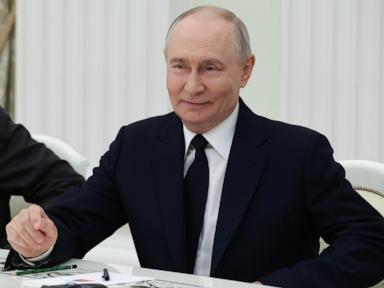
A single stroke of a pen can change the gravitational pull of property ownership. Under a recent presidential decree signed by Vladimir Putin, the Kremlin has claimed a sweeping, unprecedented power. When a drone strikes a piece of critical infrastructure—whether it is owned by a private energy conglomerate, a municipal utility, or a regional cooperative—the state does not wait for insurance claims or board meetings. It reaches in. It takes control.
To understand what this means, you have to strip away the dry language of international sanctions and military strategy and look at a hypothetical control room. Let us call it Substation Seven, located ninety miles from the border.
Before the decree, if a strike blew the roof off a transformer bay, a chaotic dance of liability would begin. The private owners, protective of their balance sheets, would argue with regional authorities over who owed what for the repairs. Insurers would demand independent audits. Contractors would inflate estimates. Weeks would bleed into months while residents boiled water on camp stoves in freezing apartments.
Now, the legal friction is simply swept away by executive fiat.
The state steps onto the floor in heavy boots. Private titles are suspended or overridden. Emergency management teams, backed by federal funds and direct orders from the top of the vertical power structure, take over the procurement of steel, copper, and circuit breakers. The lights come back on faster. That is the promise, at least. In the calculus of wartime survival, speed is currency, and private property rights are an expensive luxury that a beleaguered economy can no longer afford.
Yet, every centralization of power carries a hidden gravity.
When you give a central authority the right to seize broken assets, you also give it the right to permanently redraw the map of who owns the wealth of the nation. For decades, the post-Soviet landscape was defined by the chaotic, often ruthless privatization of state assets—a wild era where oligarchs carved up power grids, oil pipelines, and manufacturing plants like holiday turkey.
This decree reverses the current. It is a form of reverse privatization, executed not through the stock market, but through the barrel of an ongoing war.
Consider the psychological weight of this transition for a regional director. Imagine standing in the smoking crater of a substation you spent twenty years building, maintaining, and profiting from. You know every fuse, every hum, every quirk of the local grid. In the old days, your autonomy was your shield. Today, a federal official walks through your gate, flash drive in hand, and informs you that your board of directors has been sidelined. The state is now the captain of the ship. You are merely crew.
Some citizens welcome this with a grim sense of relief. In an existential crisis, people do not care about corporate governance; they care about warmth, water, and continuity. If a centralized state can mobilize thousands of engineers, tons of reinforced concrete, and battalions of air defense units to patch a hole in the grid within forty-eight hours, few will shed a tear for the shareholders who lost control of their ledger books.
Others feel a cold knot of dread in their stomachs.
Because once power is centralized during an emergency, it rarely finds its way back to where it started. The state apparatus that absorbs a damaged regional power grid today retains that muscle tomorrow. The emergency powers become permanent architecture.
The drone attacks are the catalyst, but the transformation runs much deeper. They are burning away the remnants of corporate autonomy in the energy sector, forging a hyper-consolidated command economy out of the ashes of regional capitalism. Every time a low-flying aircraft hums across the night sky toward a transformer, it leaves behind not just a scar of soot and twisted metal, but a reshaped nation.
Out in the provinces, the repair crews are already at work. Floodlights cut through the freezing fog, illuminating the skeletal frames of giant transformers. Welders throw blinding showers of blue sparks against the dark sky. They work with frantic, desperate energy, racing against the next warning siren.
They are fixing the machine. But while they weld the copper back together, the hand holding the welding torch belongs to someone else entirely.
The night closes in around the substation, vast and indifferent, illuminated only by the brief, brilliant flashes of men trying to hold a fragile world together against the dark.


