In a quiet suburb of Kobe, an elderly man named Hiroshi tends to a garden of bonsai trees. He trims the needles of a Shimpaku juniper with the patience of a saint, a skill passed down through generations that learned to find beauty in the small, the contained, and the peaceful. For nearly eighty years, Japan has been like Hiroshi’s garden. It was a nation that took the jagged, scorched earth of 1945 and decided to grow something different: a "peace constitution" that functioned as a biological limit on how much the country could flex its muscles.
But outside the garden gates, the weather is changing. The wind smells of cordite and salt. Discover more on a related issue: this related article.
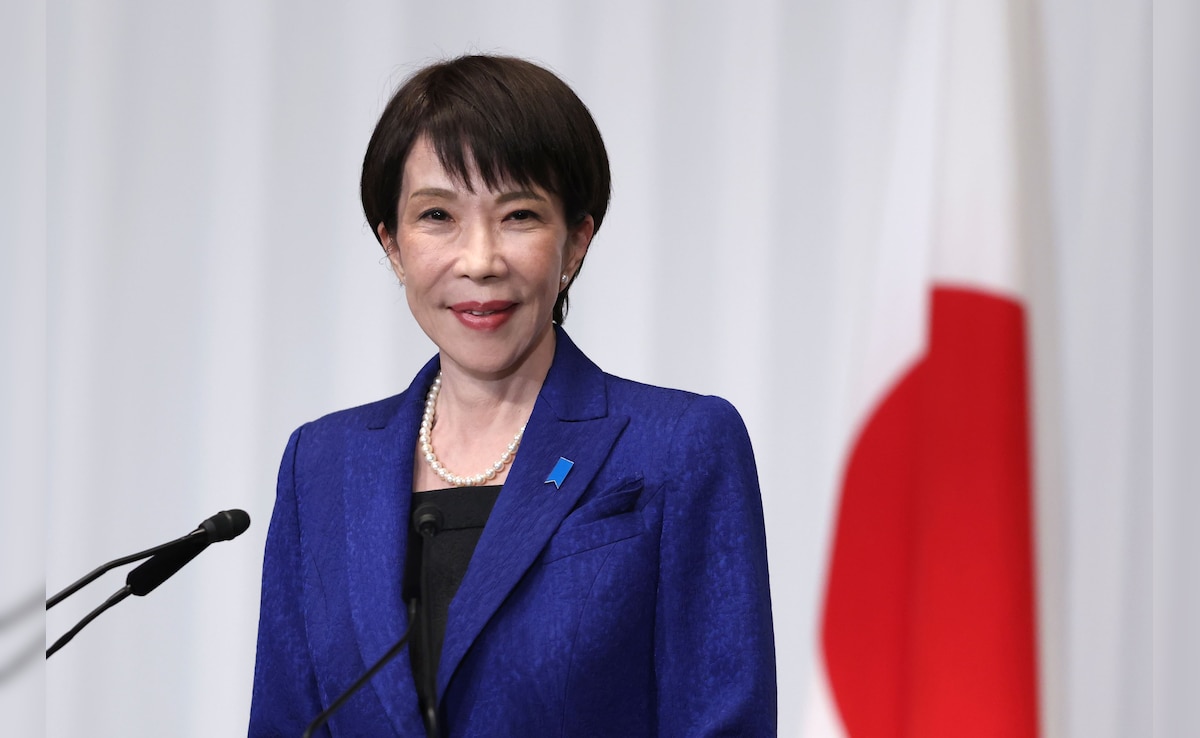
Japan is currently dismantling the very constraints that defined its modern identity. By loosening its strict ban on arms exports, Tokyo isn't just changing a trade policy; it is exhaling a breath it has held for eight decades. The world sees headlines about "regulatory shifts" and "defense equipment transfers." What they are actually witnessing is the rearming of a ghost.
The Weight of the Gavel
To understand why this matters, you have to feel the weight of Article 9. Imagine a person who, after a terrible outburst of violence in their youth, takes a vow of silence. They spend decades building hospitals, designing the world's most efficient cars, and creating art. They become a pillar of the community. Then, one day, they walk into a gun store. Additional journalism by TIME explores similar views on this issue.
Since the end of World War II, Japan’s "Three Principles" on arms exports acted as a self-imposed straightjacket. They couldn't sell weapons to countries involved in conflicts. They couldn't export lethal hardware. They were the world’s pacifist workshop. But the reality of 2026 is a cold shower. With a bellicose neighbor in North Korea, an increasingly assertive China, and the haunting spectacle of the war in Ukraine, the "silence" of Japan started to look less like a moral choice and more like a strategic liability.
The decision to allow the export of a next-generation fighter jet, developed alongside the UK and Italy, is the first major crack in the dam. This isn't a small-scale deal. This is the Global Combat Air Program (GCAP). We are talking about a machine that uses artificial intelligence to coordinate swarms of drones and sensors—a digital predator designed for a sky that is becoming increasingly crowded.
The Dying Breath of the Domestic Factory
Walk through the heavy steel doors of a Mitsubishi Heavy Industries plant. For years, these engineers have lived in a strange limbo. They possess the brilliance to build the world’s most advanced tech, but their "market" was a single customer: the Japan Self-Defense Forces.
Imagine being an architect who is only allowed to build houses for one specific family. Eventually, your tools rust. Your best apprentices leave for tech startups in Tokyo or Silicon Valley because there is no growth, no competition, and no future in a closed loop.
Japan’s defense industry was dying on the vine. By the time the government moved to loosen these rules, over 100 Japanese firms had already exited the defense sector. These weren't just big conglomerates; they were specialized workshops that made the precise sensors and high-grade bolts that keep a jet in the air.
By opening the door to exports, the Japanese government is attempting a frantic resuscitation. They need the "Global" in the Global Combat Air Program because Japan can no longer afford to be an island of pacifism in an ocean of rising costs. Modern warfare is expensive. Developing a sixth-generation jet costs tens of billions. If you can’t sell it to partners, you can’t build it.
The Ghost in the Room
There is a specific kind of tension in the Japanese Diet when these laws are debated. It’s a ghost that everyone sees but no one wants to name. It’s the fear that by exporting the tools of death, Japan loses its moral high ground—the "Peace Brand" it spent eighty years cultivating.
Critics argue that once you start selling the "sword," you eventually become the swordsman again. There is a visceral fear among the older generation, the ones who remember the fire raids and the hunger, that this is a slippery slope. They worry that a Japanese-made missile hitting a target in a foreign land brings a karmic debt the country isn't ready to pay.
However, the counter-argument is framed in the cold, hard language of deterrence. In the offices of the Ministry of Defense, the talk isn't about aggression; it’s about "interoperability."
The Arithmetic of Survival
If a conflict breaks out in the South China Sea, the ability for Japan, Australia, and the United States to share parts, data, and ammunition isn't just a convenience. It is the difference between holding the line and being swept away.
Consider the Patriot missile system. Under the new rules, Japan—which manufactures these interceptors under license from U.S. firms—can now ship them back to the United States. This allows Washington to replenish its own dwindling stockpiles, which have been drained by the desperate need to protect Ukrainian cities.
Japan isn't sending the missiles directly to a war zone—that’s still a bridge too far for the Japanese public. But they are providing the "backfill." It is a delicate, almost lawyerly dance. Japan provides the shield to the person holding the shield for someone else.
A New Kind of Power
The shift is also about diplomatic leverage. In the past, if a Southeast Asian nation wanted to bolster its maritime security, it looked to the U.S. or Russia. Now, Tokyo can walk into the room with more than just development aid and infrastructure loans. They can offer high-tech patrol boats, radar systems, and eventually, the very jets that patrol their own borders.
This changes the "business" of Japan. It turns a silent partner into a stakeholder in the global security architecture.
Yet, for the average citizen in Osaka or Sapporo, this doesn't feel like a triumph. It feels like a loss of innocence. The country that gave the world the walkman, the hybrid engine, and the Nintendo Switch is now officially back in the business of the "Long Shadow."
The Silent Transition
The change didn't happen with a bang. There were no victory parades. Instead, it happened through a series of quiet administrative "clarifications" and cabinet decisions. It was a slow-motion pivot, a ship turning so gradually that you only notice the change in direction by looking at the stars.
The "Three Principles" haven't been deleted; they have been "reinterpreted." In the world of international relations, that is a polite word for "gutted." The new framework allows for the export of equipment that performs "rescue, transport, warning, surveillance, and minesweeping." But when you add the caveat that these platforms can be armed for self-defense, the line between a "surveillance" craft and a "combat" craft becomes as thin as a piece of washi paper.
The Price of the Future
Back in the Kobe garden, Hiroshi might look at his bonsai and see the beauty of restraint. But he also knows that if he doesn't water the tree, it dies. If he doesn't prune it, it becomes wild and unmanageable.
Japan has decided that its "peace" can no longer be a passive state. It has to be an active, guarded, and heavily armed stance. The cost of this realization is the end of an era. The "Post-War" period is over. We have entered the "Pre-Whatever Comes Next" period.
The factories in Nagoya and the shipyards in Nagasaki are humming again with a different kind of energy. It is the sound of a nation realizing that in a world of wolves, even the most beautiful garden needs a wall—and someone on that wall holding a very modern, very Japanese-made rifle.
The sun is rising on a Japan that looks a lot more like the rest of the world. Whether that makes the world safer or just more crowded with weapons is a question that won't be answered in a boardroom or a parliament. It will be answered in the skies where those new jets will eventually fly, silent and invisible, carrying the weight of a pacifist's broken vow.
The shears have been put away. The iron is being forged. The garden is still there, but the gates are finally, irrevocably open.