The air inside the currency exchange shop in central Tehran tastes of copper and old paper. Mina sweeps a strand of graying hair from her forehead, her eyes fixed on the digital ticker overhead. The numbers do not crawl; they plummet. Every drop is a hammer blow against the rhythm of ordinary survival. Medicine for her mother's failing heart costs more today than it did yesterday. By tomorrow, it will be a memory slipping further out of reach.
Down the coast, cargo ships sit quiet against gray horizons. Engines idle. Anchors drag through silt. This is not the thunder of falling artillery or the sudden flash of a midnight airstrike. There are no dramatic headlines of ground invasions or armored columns crossing borders. Instead, a different kind of architecture is being erected. It is an architecture of silence.
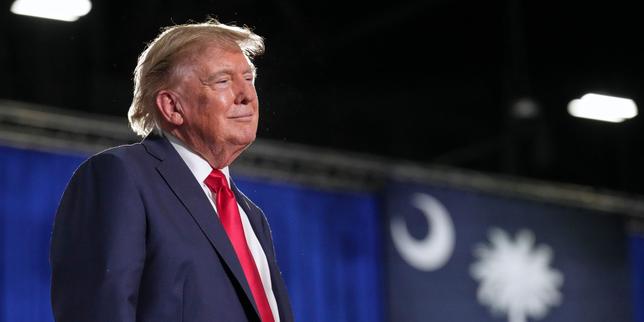
When direct confrontation carries costs too steep to calculate, strategy shifts. Power retreats behind ledger books, banking corridors, and invisible walls of trade restrictions. Donald Trump’s approach to Iran relies on this quiet gravity. Without deploying divisions of troops, the strategy bets on an old, brutal truth: a nation can be pressured not by meeting it on the battlefield, but by cutting off the oxygen it breathes.
The Architecture of the Squeeze
Consider what happens when a state loses its ability to sell what it digs from the earth. Oil is the lifeblood of modern governance. For decades, pipelines and tankers served as the veins pumping revenue directly into state budgets, funding everything from infrastructure projects to regional ambitions.
When those valves are slowly cranked shut, the pressure does not vanish. It compresses inward.
The mechanics of economic pressure resemble a slow-acting poison. Tariffs, secondary sanctions, and the systematic freezing of international financial channels do not strike with the speed of a missile. They work through attrition. A merchant in Isfahan cannot clear a payment for spare parts. A factory in Tabriz slows its assembly lines because raw materials are stranded in a foreign port.
[Oil Fields] ---> [Sanctioned Ports] ---> [Blocked Financial Networks] ---> [Domestic Strain]
This is the invisible battlefield. Generals in Washington and strategists in allied capitals look at spreadsheets instead of topographical maps. They track currency devaluation rates, inflation spikes, and the volume of crude exports dropping month over month. The objective is stark: squeeze the financial arteries until the cost of maintaining foreign policy objectives becomes unsustainable for Tehran.
The Human Toll Behind the Numbers
Abstract terms like maximum pressure obscure the reality of life on the ground. Mina does not care about geopolitical leverage when she stands in a pharmacy line. She cares about a specific vial of medication that now requires three weeks of salary.
Sanctions are often debated in sterile halls of diplomacy as clean, bloodless alternatives to war. Yet, the human cost accumulates in quiet, devastating ways. When national currency loses its purchasing power, the middle class evaporates. Teachers, engineers, and shopkeepers find themselves sliding below the poverty line, not because they lack skill or industry, but because the broader economic machinery has broken down.
We often imagine international conflict as a clash of grand ideologies. But on the receiving end, it is deeply personal. It is the postponement of a wedding because rent has doubled. It is the student who abandons dreams of studying abroad because visa fees and exchange rates have made the impossible a reality.
Power speaks in grand strategies, but ordinary people bear the translation.
The Limits of Economic Gravity
Yet, history suggests that cornering a sovereign state rarely yields simple compliance. Nations under severe economic distress often react in ways that defy tidy projections.
When a government faces an existential financial squeeze, it frequently hardens its posture rather than capitulating. Hardliners point to the external pressure as proof of hostile intent, rallying public grievance against the outside world. Nationalism surges where economies stall.
Furthermore, systems adapt. Black markets flourish. Shadow fleets of tankers turn off their transponders, slipping through midnight waters to move crude oil under cover of darkness. Barter systems emerge. Alternative financial channels form beneath the gaze of regulators.
As a strategy, economic asphyxiation offers a seductive promise: all the leverage, none of the body bags. It avoids the political disaster of protracted military entanglement in the Middle East. It sidesteps the ghosts of past wars.
Strategy           | Mechanism             | Typical Result
-------------------|-----------------------|-----------------------
Military Invasion  | Direct force          | High cost, occupation
Economic Pressure  | Financial isolation   | Hardened political stance
But gravity cuts both ways. While the squeeze tightens, the target shifts its internal priorities, insulating the apparatus of power while the civilian population absorbs the shock. The state endures, even as its people fray at the edges.
The Final Calculation
Back in Tehran, the digital ticker continues its downward march. Mina folds her receipt, tucks her head against the autumn wind, and steps back out onto the crowded pavement. She does not know the names of the architects designing her economic reality, nor does she care about the complex calculus of sanctions waivers and shipping lanes.
She only knows the weight of the day ahead.
The strategy of economic warfare remains a preferred instrument of modern statesmanship. It promises control without chaos, leverage without combat. But as the ledger grows heavier and the margins for ordinary survival grow thinner, the true cost remains hidden in the quiet corners of daily life—paid not in territory or treaties, but in the unyielding resilience of people caught between an iron wall and an empty market.